

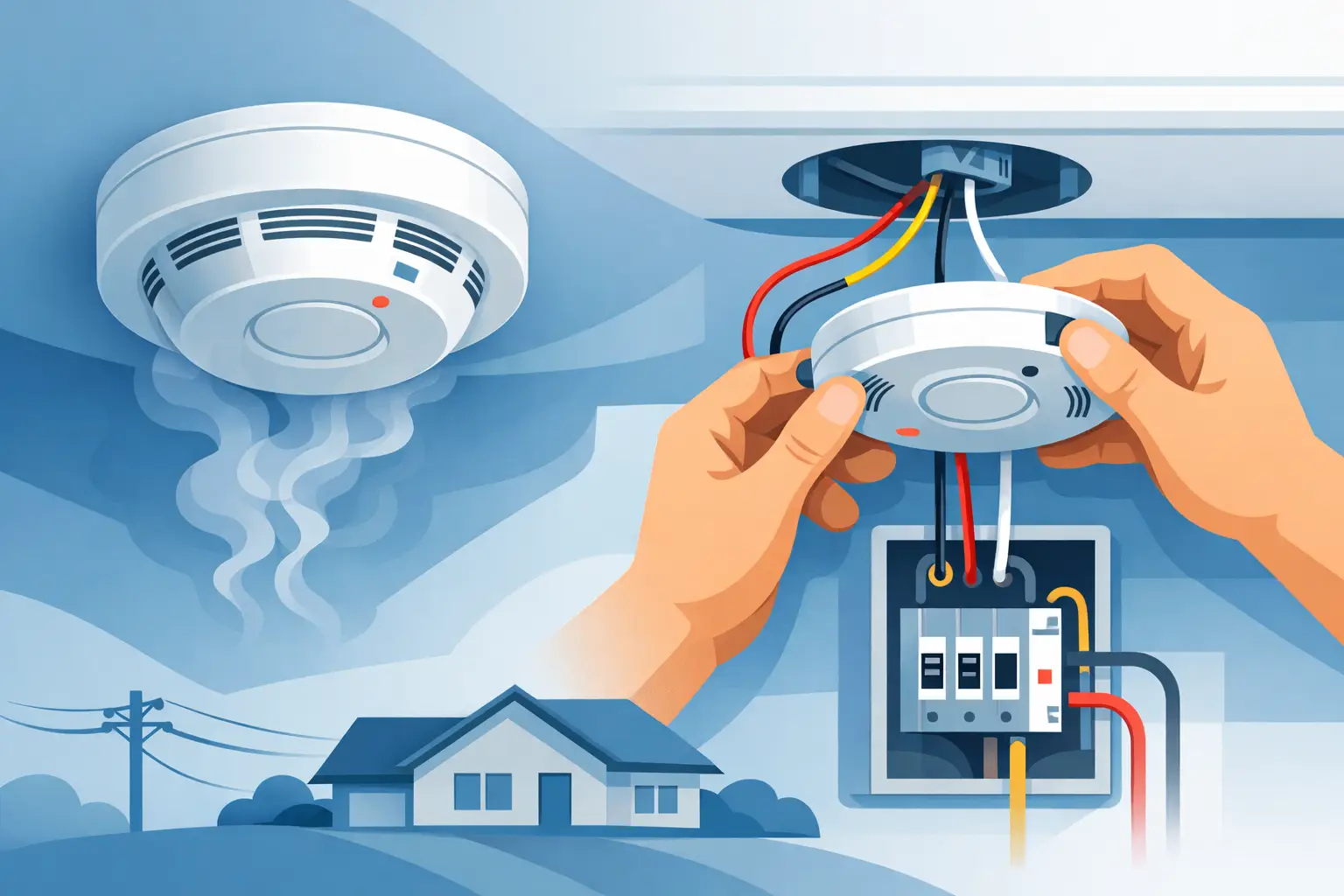
A chirping alarm at 2 a.m. is annoying. A smoke detector that fails when you need it is far worse. That is why smoke detector hardwired installation matters for homeowners who want more than a quick battery-powered fix. When the system is installed correctly, it gives your home a more dependable layer of protection and helps every alarm work together when seconds count.
For many homeowners, the question is not whether they need smoke alarms. It is whether their current setup is still doing the job. Older homes, remodeled spaces, and add-on rooms often end up with a patchwork of battery units, outdated devices, or alarms placed in the wrong spots. A hardwired system brings the protection back into a more reliable, coordinated plan.
What smoke detector hardwired installation actually means
A hardwired smoke detector is connected directly to your home’s electrical system. Most models also include a backup battery, so the alarm can still operate during a power outage. That combination is one reason many homeowners prefer hardwired protection over stand-alone battery-only units.
In a typical smoke detector hardwired installation, alarms are placed in key areas of the home and connected so that if one alarm detects smoke, the others sound too. This interconnection can make a major difference, especially in larger homes or in homes where bedrooms are far from the kitchen, garage, or living areas.
The real value is not just that the units have power. It is that the system works as a team. If smoke starts in one part of the home, everyone has a better chance of hearing the warning quickly, even if they are sleeping behind a closed door.
Why homeowners upgrade from battery-only alarms
Battery-operated smoke alarms still have a place, but they come with limits. People forget to replace batteries. Some units get removed during a battery chirp and never go back up. In other cases, homeowners assume an old alarm is fine simply because it still makes noise during a test.
Hardwired systems reduce some of that risk. You are not depending on someone to remember every battery change in every part of the house. You also get a more permanent installation that is less likely to be ignored or delayed.
That said, hardwired does not mean maintenance-free. The units still need backup batteries, testing, and eventual replacement. Like most home safety systems, they work best when they are both properly installed and properly maintained.
Where hardwired smoke detectors should go
Placement matters just as much as wiring. A quality installation is not only about getting power to the device. It is about putting alarms where they can provide the best warning.
Most homes need smoke alarms inside each bedroom, outside sleeping areas, and on every level of the home. Depending on the layout, additional alarms may be needed in hallways, stair areas, or near living spaces. If the home has been remodeled or expanded over time, the original alarm layout may no longer make sense.
There are also places where the wrong placement causes nuisance alarms. A detector too close to a bathroom with heavy steam or a kitchen with normal cooking smoke can lead to frequent false alarms. Once that starts happening, people often disable the unit or stop taking it seriously. Good placement helps avoid that problem while still keeping the home protected.
The wiring side is where professional work matters
Smoke alarms may look simple from the outside, but the wiring behind them needs to be right. Hardwired units require the correct circuit connection, proper interconnection between alarms, and secure electrical terminations. If any part of that is done poorly, the system may not perform as expected.
This is especially important in older homes. Wiring conditions can vary from room to room, and what looks like a straightforward upgrade can uncover outdated wiring methods, crowded boxes, or panel capacity concerns. In some homes, adding or replacing hardwired alarms is simple. In others, it takes a more careful plan.
That is where licensed electrical experience matters. A homeowner may be focused on getting alarms installed, but the electrician is also looking at the condition of the wiring, the compatibility of devices, and whether the system is set up to meet current safety expectations.
New installation vs. replacement
Not every job starts from scratch. Some homes already have hardwired smoke alarms, but the units are old, inconsistent, or no longer working properly. In that case, replacement may be the main goal. Even then, it is worth checking whether the existing wiring, locations, and interconnection still make sense.
A new smoke detector hardwired installation is more involved because it may require running new cable, cutting in boxes, or updating parts of the circuit. This is often the case in older homes that were built before current smoke alarm practices became standard.
Replacement work can sometimes be more straightforward, but it is not always plug-and-play. Different brands and generations of alarms may not use the same connectors or communication methods. Swapping units without checking compatibility can create gaps in performance or cause the alarms to stop interconnecting the way they should.
When it makes sense to replace smoke alarms
Many homeowners are surprised to learn that smoke alarms do not last forever. Even if they still beep during a test, the sensor itself can age out. Most manufacturers recommend replacement around the 10-year mark, though homeowners should always check the label and product guidance for the specific unit.
If your alarms are older, yellowed, inconsistent, or randomly chirping despite battery changes, it may be time to replace them. The same goes for homes where some alarms have been updated but others are much older. A mixed system can create confusion and may not provide the dependable whole-home warning you want.
A home renovation is another smart time to review smoke alarm coverage. New bedrooms, converted offices, finished garages, and expanded living spaces can all change where alarms should be located.
What to expect during a professional installation
For most homeowners, the goal is simple: have the system installed correctly, with as little disruption as possible. A professional visit typically starts with evaluating the home’s layout, existing alarm locations, electrical access, and whether the current setup supports replacement or needs a more complete upgrade.
From there, the work may involve replacing old units, adding new locations, updating wiring, and testing the full interconnection. Once complete, the alarms should be tested as a system, not just one at a time. That final check matters because the benefit of hardwired protection is tied to all units responding together.
In homes around Palmdale and Lancaster, summer heat, aging construction, and long-term wear can all make electrical reliability more important. Smoke alarm wiring may not be something you see every day, but it is part of the larger health of the home.
Hardwired smoke alarms and code concerns
Homeowners do not need to memorize electrical code to make a smart decision here. What matters is understanding that smoke alarms are one of those systems where code-conscious work protects both safety and future resale concerns.
Requirements can vary depending on whether you are replacing existing units, remodeling, or adding entirely new wiring. The age of the home and the scope of the project can also affect what is expected. That is why a one-size-fits-all answer is not always accurate.
The safest approach is to have the installation evaluated based on the actual home, not on a guess from a video or a forum thread. Residential electrical work often looks easy until details start to matter.
A safer home starts with reliable warning
Smoke alarms are easy to overlook because they spend most of their life sitting quietly on the ceiling. But when they are needed, there is no substitute for dependable performance. A properly planned hardwired system offers better consistency, better whole-home warning, and better peace of mind than a scattered collection of aging battery alarms.
If your current alarms are outdated, unreliable, or no longer fit your home’s layout, this is one upgrade worth taking seriously. A trusted electrical repair company like A1 Home Electric can help homeowners make practical safety improvements without overcomplicating the process. The goal is simple – quality and safety that protect your home when it matters most.
A smoke alarm should never be something you hope is working. It should be something you know is ready.