
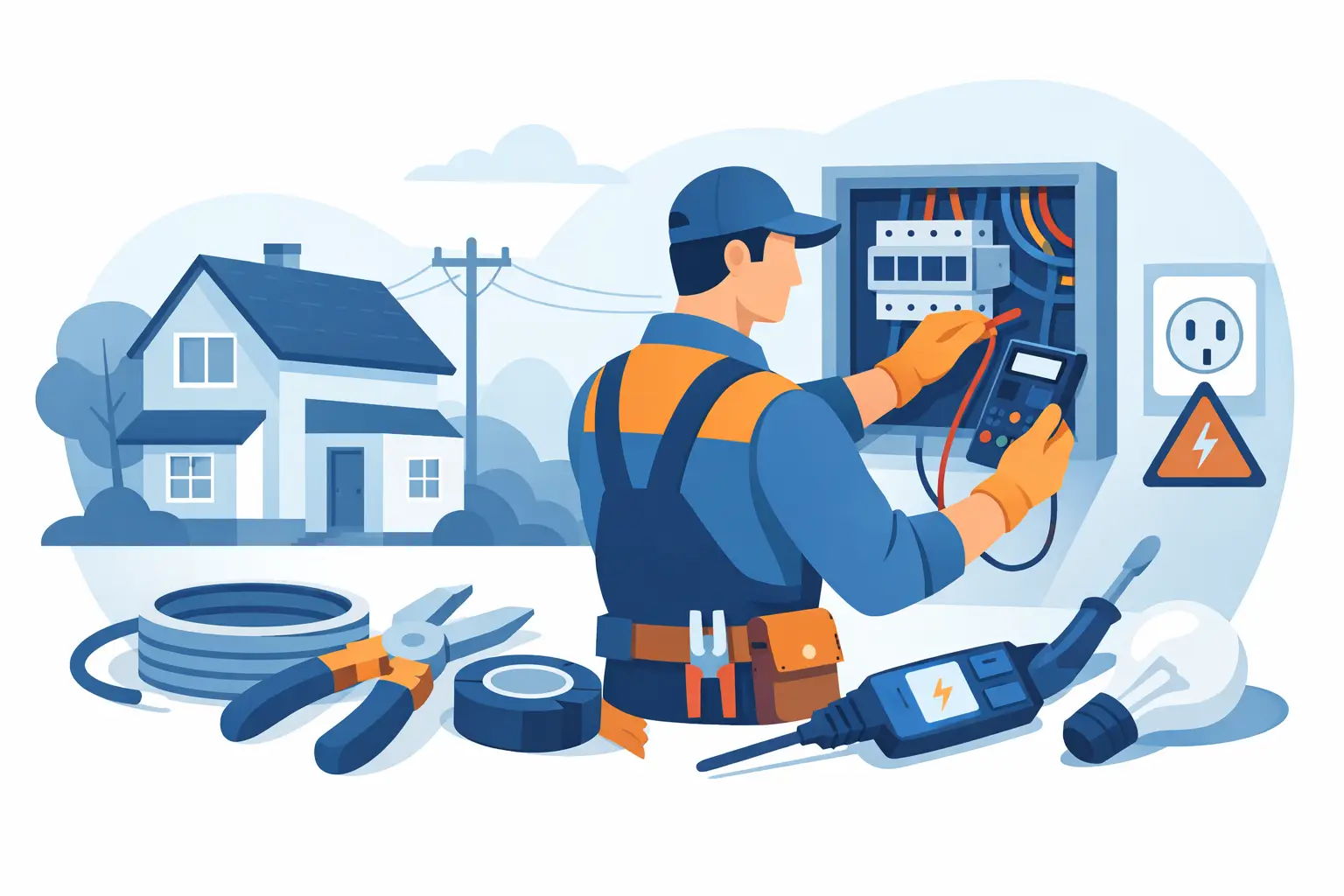
A breaker trips once after a storm and you reset it. A light flickers for a week and then stops. An outlet feels a little warm, but everything still works. This is how many electrical problems begin – small, easy to ignore, and quietly risky. A residential electrical repair guide should help you spot what matters early, understand what can wait, and know when a licensed electrician is the safest next step.
For most homeowners, the goal is not to learn electrical theory. It is to keep the house safe, comfortable, and working the way it should. That means recognizing warning signs, avoiding temporary fixes that create bigger problems, and treating your electrical system as part of the home’s long-term health.
What a residential electrical repair guide should actually help you do
The best residential electrical repair guide is not a list of ambitious DIY projects. It is a practical way to think about electrical issues inside a real home, especially one with aging wiring, added appliances, remodeled rooms, or a panel that may no longer match current demand.
Electrical repair is rarely just about the one outlet, switch, or fixture that stopped working. Often, the visible problem points to a larger issue such as a loose connection, a damaged circuit, overloaded wiring, moisture exposure, or panel wear. That is why accurate diagnosis matters as much as the repair itself.
A good guide also separates inconvenience from danger. A dead hallway light is frustrating. A burning smell near the panel, repeated breaker trips, buzzing from a wall switch, or scorch marks around an outlet is different. Those are signs to stop using the affected area and call for expert electrical repairs right away.
The most common residential electrical problems
In everyday service calls, the same categories appear again and again. Outlets stop working, switches fail, breakers trip, lights flicker, panels show signs of age, and older homes reveal wiring that has been patched over time instead of properly corrected.
Outlets can fail for simple reasons, but they can also indicate hidden trouble. A tripped GFCI outlet may cut power farther down the line. A loose connection behind the receptacle can cause heat buildup. If an outlet is warm, discolored, sparking, or no longer holds a plug tightly, it should be evaluated rather than reused.
Light problems are also easy to underestimate. Flickering can come from a bad bulb, but it can also point to a failing switch, loose wiring, voltage fluctuation, or an overloaded circuit. If the flicker happens in multiple rooms, the issue may be broader than a single fixture.
Breaker problems deserve attention because they are often doing exactly what they are supposed to do – stopping an unsafe condition. A breaker that trips once after a clear overload may not mean much. A breaker that trips repeatedly without a clear reason should not be forced back on over and over. That pattern usually signals a fault that needs proper diagnosis.
Then there is the panel itself. Many homes still rely on panels that were adequate years ago but are now stressed by modern living. Added garage equipment, larger HVAC loads, kitchen upgrades, home office demand, and EV charging can all expose the limits of an older system. In those cases, repair may solve the immediate problem, but the long-term answer may involve panel work or circuit upgrades.
Signs you should call a licensed electrician now
Some issues leave very little room for delay. If you smell burning, hear buzzing inside walls or at the panel, see sparks, notice smoke, or find outlets and switches that are hot to the touch, treat that as urgent. The same is true if part of the home loses power while the rest stays on and the cause is not obvious.
A sudden power loss in one area can mean anything from a failed connection to damaged wiring. It depends on the age of the home, the condition of the circuit, and whether there has been previous electrical work. This is where homeowners are best served by a calm, professional inspection instead of guesswork.
Moisture changes the picture too. If an electrical issue appears after roof leaks, plumbing leaks, irrigation overspray, or heavy weather, the repair needs to address both the electrical component and the exposure risk. Water and electricity do not leave much margin for error.
What homeowners can safely check first
There are a few basic checks that make sense before you call. See whether a breaker has tripped and reset it once if there is no sign of heat, odor, or visible damage. Test whether a nearby GFCI outlet has tripped, since that can affect standard outlets farther along the circuit. Replace a light bulb if you are dealing with one flickering fixture and there are no other symptoms.
Beyond that, caution is the right approach. Removing outlet covers, replacing breakers, opening the panel, or trying to trace wiring without training can turn a manageable repair into a safety issue. The line between minor inconvenience and hidden hazard is not always visible from the surface.
Why electrical problems tend to come back
One reason homeowners get frustrated with recurring issues is that the first repair did not address the real cause. A breaker may get replaced even though the circuit is overloaded. A receptacle may be swapped out even though the wire connection feeding it is damaged farther upstream. A flickering light may be blamed on the fixture when the problem is at the switch or in the panel.
This is why quality and safety go together. A repair should restore function, but it should also protect the home from the same problem repeating under load, heat, or seasonal demand. In a place like the Antelope Valley, where HVAC systems work hard through hot weather, electrical components can show strain faster if the system is already marginal.
Older homes need a different repair mindset
Not every house has the same repair needs. Newer homes often have issues related to device failure, isolated wiring faults, or added equipment. Older homes are more likely to have layered electrical history – additions, replaced fixtures, garage conversions, outdated panels, mixed wiring methods, or circuits that were never designed for current use.
In those homes, one repair can reveal another concern. That is not upselling. It is the reality of systems that have been modified over time. If a licensed electrician recommends further inspection after finding heat damage, improper splices, or panel issues, that recommendation is usually about preventing the next failure, not selling extra work.
Repair versus upgrade – how to think about the difference
Sometimes repair is the right answer. If a switch fails, an outlet wears out, a GFCI stops functioning, or a single circuit has a clear and isolated issue, a focused repair may be all you need.
Other times, repair alone is short-term. If breakers trip because the home is demanding more power than the circuit can provide, or if the panel is outdated and showing wear, the better investment may be an upgrade. That could mean adding dedicated circuits, improving panel capacity, or replacing aging components before they fail under pressure.
The right choice depends on usage, age of equipment, and future plans. If you are thinking about a kitchen remodel, workshop equipment, or EV charger installation, it makes sense to view repair decisions in that bigger context. Solving today’s outage is important, but so is making sure the electrical system can support how you actually live.
What to expect from a professional residential repair visit
A professional repair visit should begin with diagnosis, not assumptions. The electrician should look at the symptom, the affected devices, the circuit path, and the panel conditions before recommending a fix. That approach usually saves time and prevents repeat problems.
You should also expect straightforward communication. Homeowners do not need dense technical language. They need to know what failed, why it matters, whether it is a safety issue, and whether repair or upgrade is the smarter path. Trusted electrical repair is as much about clear judgment as it is about tools and parts.
For local homeowners, this is where experience matters. A company such as A1 Home Electric, serving homes since 2006, understands the mix of newer developments, aging properties, heat-related system strain, and everyday service needs that show up across Palmdale, Lancaster, and nearby communities.
Preventing the next repair
The most cost-effective repair is often the one you never need. That starts with paying attention to small changes. A switch that crackles, a breaker that starts tripping more often, lights that dim when appliances start, or outlets that stop holding plugs firmly are all signs worth acting on early.
Preventative maintenance also matters more than many homeowners realize. Panel inspections, checking exterior and garage devices, evaluating circuits after major appliance additions, and correcting older problem spots can reduce the chance of sudden failure. It also gives you a clearer picture of how your home is performing before a hot weekend, holiday gathering, or busy workweek exposes a weak point.
Electrical systems do not usually ask for attention politely. They hint first, then interrupt your day, and sometimes create real danger. If something in your home feels off, trust that instinct and get it checked before a small repair turns into a larger one.