
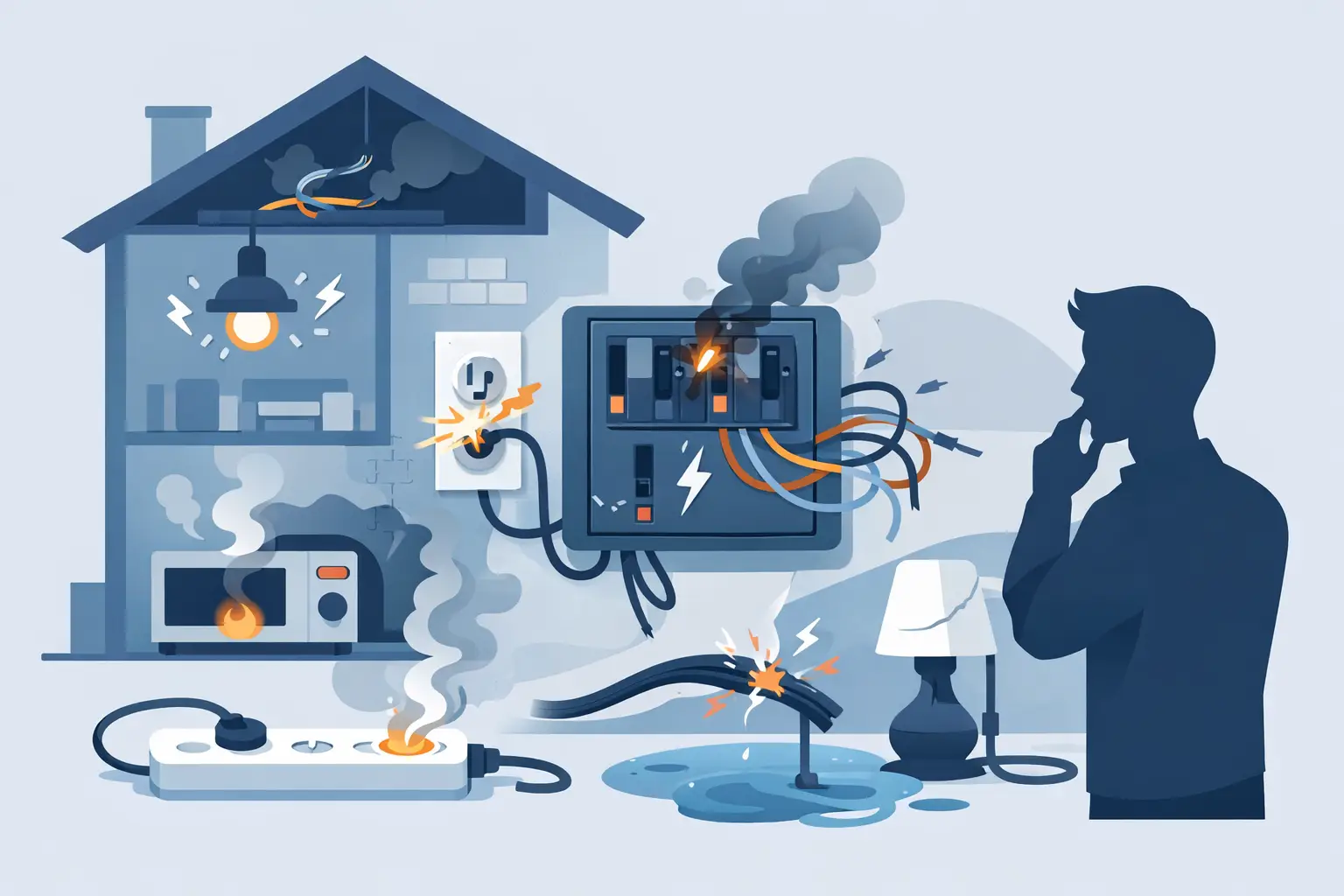
A light that flickers when the AC kicks on might seem minor. An outlet that feels warm may be easy to ignore. But those small problems are often among the top signs of bad wiring, and they can point to a larger issue behind your walls.
For homeowners, wiring problems are not just an inconvenience. They can affect safety, comfort, appliance performance, and the long-term condition of the home. Some issues come from age, some from poor past repairs, and some from electrical systems that were never designed for today’s power demands. The key is knowing what to watch for before a small warning turns into a serious repair.
Why bad wiring should never be brushed off
Your home’s electrical system is supposed to work quietly in the background. When wiring starts causing visible or noticeable symptoms, that usually means something is already under strain. Heat, loose connections, damaged insulation, and overloaded circuits do not usually fix themselves.
That does not mean every flicker or tripped breaker points to a dangerous emergency. Sometimes the cause is relatively straightforward, such as a worn outlet or a single failing switch. But the reason diagnosis matters is that similar symptoms can come from very different problems. What looks minor on the surface may be tied to a larger safety concern.
Top signs of bad wiring homeowners should watch for
Flickering or dimming lights
If one lamp flickers because of a loose bulb, that is one thing. If multiple lights flicker, dim, or brighten unexpectedly, especially when major appliances turn on, it can suggest a wiring issue, a loose connection, or a circuit that is struggling under load.
This is especially worth paying attention to in older homes. Electrical systems that once handled basic lighting and a few small appliances may now be supporting larger HVAC systems, home offices, kitchen equipment, entertainment centers, and EV charging needs. When power demand has grown but the wiring or panel has not kept up, lights often show the first warning signs.
Breakers that trip often
Circuit breakers are designed to protect your home. An occasional trip can happen, especially if too many devices are running on one circuit. But frequent tripping should not be treated as normal.
If the same breaker keeps shutting off, there could be an overloaded circuit, a short, a ground fault, or failing wiring somewhere along that run. Repeated resets may get the power back on temporarily, but they do not solve the underlying problem. In some cases, they allow the issue to get worse over time.
Outlets or switches that feel warm
An outlet or switch should not feel hot during ordinary use. Slight warmth from a dimmer switch can be normal in some situations, but noticeable heat, discoloration, or a burning smell is a different matter.
Heat usually means electricity is not flowing as cleanly as it should. Loose wiring, damaged components, or overloaded connections can create resistance, and resistance creates heat. This is one of the clearer signs that a prompt inspection is a good idea.
Burning smells or scorch marks
If you notice a sharp burning odor near an outlet, switch, panel, or appliance connection, stop using that area if it is safe to do so. Scorch marks, darkened faceplates, and melted plastic are strong indicators that overheating has already occurred.
This is not a wait-and-see situation. Sometimes homeowners assume the smell came from an appliance, but the real issue is in the wiring feeding it. An expert evaluation can determine whether the problem is isolated or part of a broader electrical defect.
Buzzing sounds from outlets, switches, or walls
Electricity should be silent. A buzzing, crackling, or humming sound from a switch, outlet, breaker panel, or inside the wall is often a sign that something is loose or arcing.
Arcing happens when electrical current jumps through the air between connections instead of following the intended path. That creates heat and increases fire risk. Not every noise comes from dangerous wiring, but unusual electrical sounds deserve attention because normal residential wiring should not make them.
Dead outlets or intermittent power
If an outlet works one day and not the next, or power cuts in and out without a clear reason, bad wiring may be involved. Sometimes the cause is a tripped GFCI outlet elsewhere in the home. Other times, the issue is a loose conductor, worn receptacle, failing connection, or hidden damage in the circuit.
Intermittent power can be frustrating because it often seems random. Yet that inconsistency is part of what makes it important. Reliable electrical systems do not come and go. If power is unstable, the wiring path needs to be checked.
Sparks when plugging something in
A tiny, brief spark can sometimes happen when plugging in a device, particularly one that is already switched on. But larger sparks, repeated sparking, or sparking along with a popping sound should not be ignored.
That can indicate a worn outlet, poor contact, loose wiring, or a shorting condition. If the outlet is old, damaged, or loose in the wall, replacement may be necessary. If the sparking is tied to the circuit behind it, the repair may go deeper than the receptacle itself.
A mild shock or tingling feeling
If you feel a slight shock or tingling sensation when touching a switch, outlet cover, or plugged-in appliance, that is a warning sign. Even a mild sensation can point to improper grounding, wiring defects, or equipment problems.
This is one of those symptoms people sometimes talk themselves out of. If it only happened once, they assume it was static. If it happens more than once in the same location, it is worth treating seriously. Electricity should not be reaching surfaces you touch during normal use.
Old or damaged wiring materials
Some of the top signs of bad wiring are not symptoms at all. They are conditions you already know exist. If your home has aging wiring, brittle insulation, amateur modifications, or a history of electrical issues, that alone can justify a professional inspection.
Homes with older electrical systems often have a mix of original wiring and later additions. That patchwork can work for years, but it also creates opportunities for hidden problems, especially when earlier repairs were not done to a high standard. If your home has been remodeled several times or you have uncovered questionable work in the attic, garage, or crawl space, it is smart to be proactive.
When the problem might be bigger than one outlet
One of the most common misunderstandings is assuming the visible symptom is the whole problem. A failed outlet may be just a failed outlet. Or it may be the point where a larger wiring issue has finally become obvious.
That is why context matters. If you have one warm outlet in an otherwise healthy system, the repair may be straightforward. If you also have flickering lights, frequent breaker trips, and older wiring, the issue may involve the circuit, the panel, or the home’s overall electrical capacity. Good diagnosis is about finding the source, not just replacing the most visible part.
Why DIY electrical fixes can create more risk
Homeowners are often comfortable replacing simple devices, but wiring problems are where caution matters. It is easy to mistake the symptom for the cause, and it is easy to make a repair that appears to work while leaving a hidden hazard in place.
Poor connections, wrong wire sizing, improper grounding, and overloaded circuits may not fail right away. They may keep working just long enough to create a false sense of confidence. For homes in Palmdale, Lancaster, and across the Antelope Valley, where year-round HVAC use can put real demand on electrical systems, safe and code-conscious repair work matters.
When to call a licensed electrician
If you notice burning smells, hot outlets, buzzing sounds, repeated breaker trips, or shocks from switches or appliances, it is time to have the system checked. If your home is older and showing multiple warning signs at once, that is also a good reason to schedule an inspection.
A licensed residential electrician can determine whether the issue is isolated, circuit-specific, or tied to a larger need such as wiring repair, panel work, or a system upgrade. That kind of clarity helps you make the right repair now instead of paying for repeated temporary fixes.
At A1 Home Electric, the goal is simple: protect the home, correct the actual problem, and give homeowners confidence that the system is working safely. If something in your home does not feel right electrically, trust that instinct. Small signs are often how bigger problems introduce themselves.