
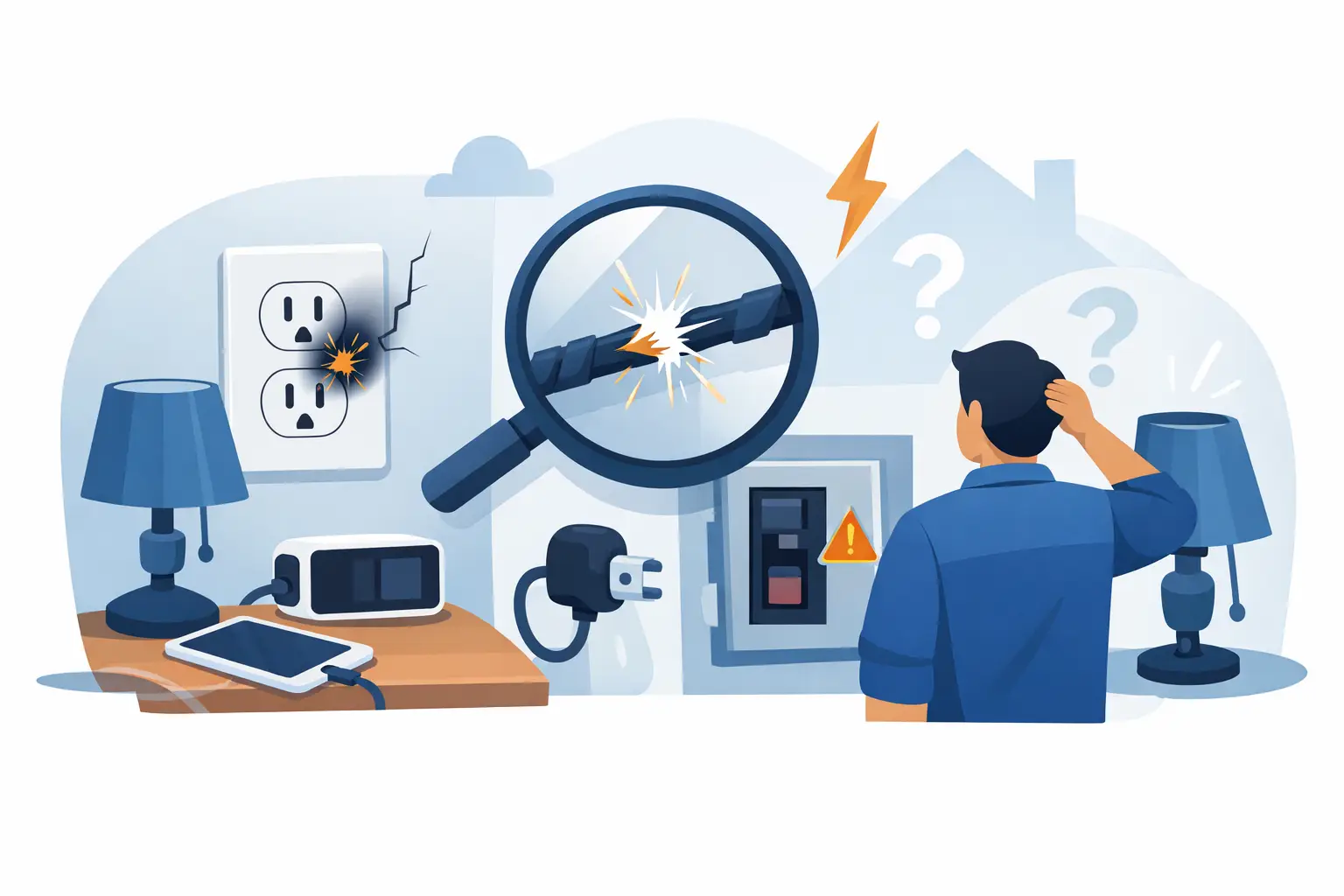
One day the lamp works, the next day the outlet is dead. If you are searching for the top reasons outlets stop working, the good news is that the cause is often identifiable. The less good news is that some outlet problems are minor resets, while others point to wiring issues, overloads, or a failing electrical component that should be handled by a licensed electrician.
A dead outlet does not always mean the outlet itself has failed. In many homes, the real issue starts somewhere else in the circuit. That is why a careful approach matters. You want the problem solved, but you also want your home protected.
Top reasons outlets stop working in a home
Some outlet failures are straightforward. Others can be misleading because power may be interrupted by a safety device, a loose connection, or a problem at the panel. The most common causes tend to fall into a few categories.
A tripped GFCI outlet
This is one of the most common reasons an outlet stops working, especially in kitchens, bathrooms, garages, laundry rooms, and exterior areas. A GFCI outlet is designed to shut off power quickly when it senses a fault. That is a safety feature, not a malfunction.
The tricky part is that one tripped GFCI can affect other standard outlets downstream. Homeowners sometimes assume a bedroom or hallway outlet has failed, only to find that the actual reset point is in a nearby bathroom or garage. If an outlet suddenly stops working after using an appliance near water, this is one of the first things to check.
A tripped breaker
If too many devices are running on one circuit, the breaker may trip to prevent overheating. Hair dryers, space heaters, microwaves, window AC units, and garage tools are frequent culprits. Sometimes the breaker does not look fully off. It may sit in a middle position, which makes it easy to miss.
Resetting the breaker may restore power, but that does not always mean the issue is solved. If the same breaker trips again, there may be an overloaded circuit, a short, or a developing wiring problem. Repeated trips are a warning sign, not just an inconvenience.
A loose wire connection
Outlets can fail because the wiring connection behind them has loosened over time. This can happen from age, normal use, poor original installation, or heat buildup. In some cases, the outlet may work intermittently before failing completely. You might notice plugs feeling loose, lights flickering on the same circuit, or a faint buzzing sound.
Loose wiring matters because it can create arcing and heat. That raises the risk of damage inside the box and can become a safety issue if ignored. This is one of the reasons a dead outlet should not always be treated as a minor annoyance.
A worn-out outlet
Outlets do not last forever. Over the years, the internal contacts can wear down, especially in high-use locations like kitchens, living rooms, and home offices. If plugs slip out easily or only work when positioned a certain way, the receptacle may simply be at the end of its service life.
This is more common in older homes, but it can happen anywhere. The trade-off is that replacing a single worn outlet may be simple when the wiring is otherwise sound. If multiple outlets show the same wear, it may be time to look at the broader condition of the home’s electrical system.
A half-hot or switched outlet issue
Some outlets are controlled by a wall switch. This is common in bedrooms and living rooms where a switched outlet is used for a lamp. If part of the outlet works and part does not, or if the outlet seems dead until a switch is flipped, the outlet may be operating exactly as designed.
This situation confuses homeowners more often than you might expect. It is harmless if the setup is intentional, but if the switch behavior has changed suddenly, there could be a loose connection at the switch, the outlet, or somewhere else on the circuit.
Damage from overloading or heat
When an outlet has been asked to carry too much for too long, the damage may not be obvious right away. Space heaters and power strips are common examples. You may eventually see discoloration, smell something burnt, or feel warmth around the cover plate.
At that point, stop using the outlet. Heat damage can affect both the receptacle and the wiring behind it. Replacing the face device alone may not address the full problem.
A hidden wiring problem in the circuit
Sometimes the outlet that stopped working is just the point where you noticed the problem. The actual fault may be at another outlet, a junction box, a switch, or a damaged section of wiring. This is more likely if several outlets are out at once or if lights and outlets on the same area of the home are acting strangely together.
Older homes can be more vulnerable, especially if past repairs were inconsistent or the system has been expanded over the years. In those cases, diagnosis matters more than guesswork.
What you can safely check first
Before assuming the worst, there are a few basic things a homeowner can check. Start with the simplest possibility. Test whether a wall switch controls the outlet. Then look for any tripped GFCI outlets nearby and press the reset button. After that, check the electrical panel for a tripped breaker.
It also helps to test the outlet with more than one device. Sometimes the issue is a failed charger, lamp, or appliance rather than the outlet itself. If only one item will not power on, the outlet may be fine.
If the outlet still does not work after these checks, avoid taking it apart unless you are qualified to do so. An outlet can appear dead and still involve energized wiring in the box or elsewhere on the circuit.
Signs the problem needs expert electrical repairs
Some outlet issues clearly move beyond a simple reset. If the outlet is warm, smells burnt, shows scorch marks, sparks when used, or keeps losing power, it is time to bring in a professional. The same is true if breakers continue tripping or if multiple outlets have gone out together.
There is also an important difference between inconvenience and hazard. A switched outlet that confuses a guest is inconvenient. An outlet that has loose wiring or heat damage is a safety concern. Knowing which is which protects your home and helps avoid larger repairs later.
For homeowners in older neighborhoods across the Antelope Valley, outlet failure can also be a clue that the panel, circuit design, or overall wiring condition deserves attention. A trusted electrical repair is not only about restoring power. It is about making sure the fix is safe and lasting.
Why outlet problems should not be ignored
It is easy to put off one dead outlet, especially if there are others nearby. But outlet failure often tells you something useful about the condition of the circuit. In the best-case scenario, you reset a GFCI and move on. In more serious cases, the outlet is warning you about overload, deterioration, or a loose connection that could worsen over time.
That is why experienced electricians look beyond the surface symptom. If an outlet failed because it was old and worn, replacement may be all you need. If it failed because the circuit is overloaded or the wiring has been compromised, the right repair may involve more than the receptacle itself.
A careful diagnosis also helps prevent repeat problems. Homeowners should not have to wonder whether the outlet will fail again next week or whether a hidden issue remains behind the wall.
When prevention makes sense
Some outlet failures can be avoided with regular electrical maintenance and timely upgrades. If your home relies heavily on extension cords, power strips, or adapter blocks, that usually means your electrical layout is no longer matching the way you use the space. Adding properly placed outlets or dedicated circuits can reduce strain and improve safety.
It also helps to replace worn receptacles before they become a problem. If plugs are slipping out, covers are cracked, or a room has older outlets that have seen years of use, a proactive update is often worth it. Quality and safety tend to go together in electrical work.
When an outlet stops working, the best next step is not always the fastest one. It is the one that restores power safely, identifies the real cause, and gives you confidence that your home is protected.