
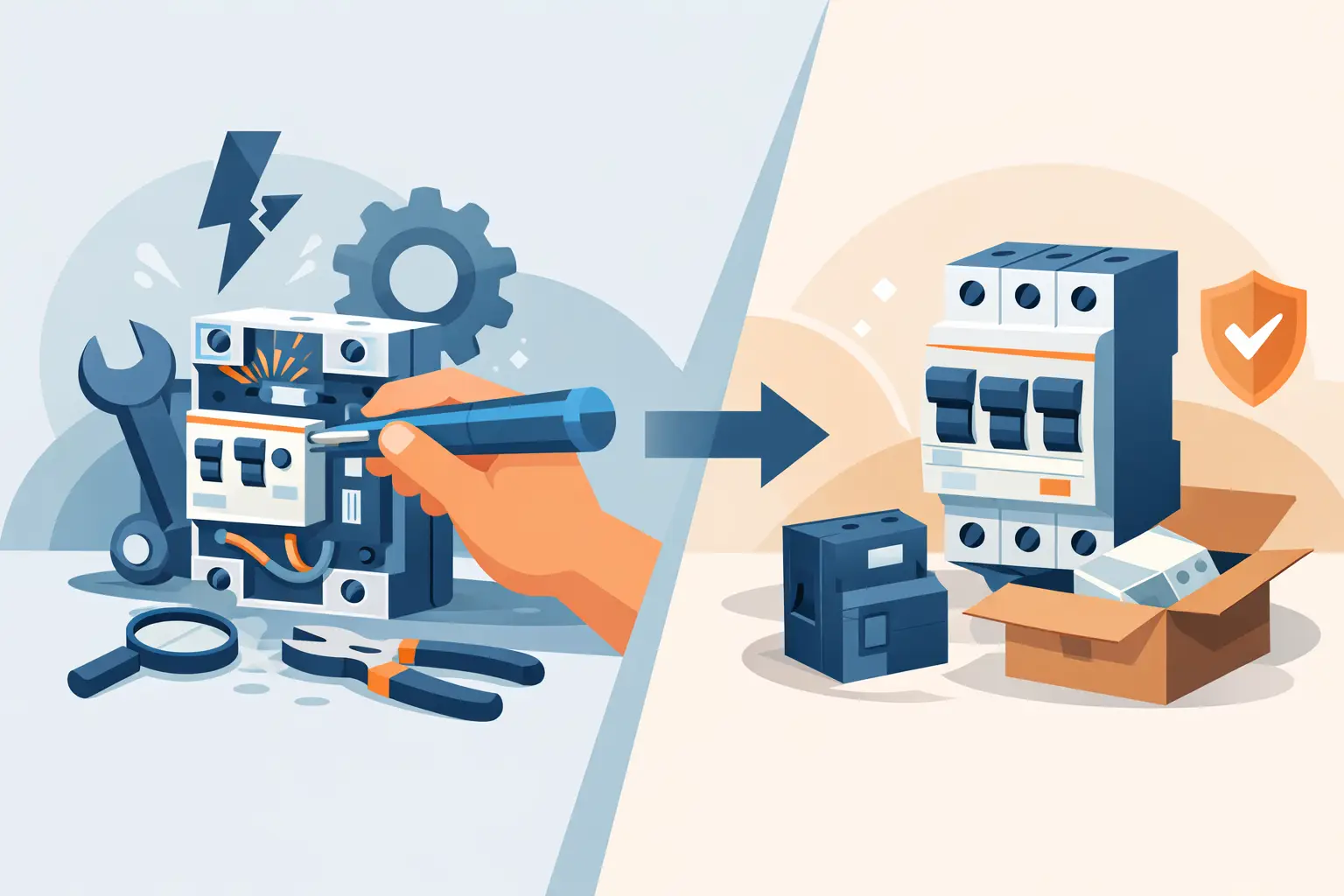
A breaker that keeps tripping during a hot afternoon, a panel that feels warm, or lights that flicker when the microwave starts – these are the moments when circuit breaker repair versus replacement becomes more than a maintenance question. For homeowners, the real concern is simple: is this a safe fix, or is it time to stop patching the problem and make a lasting change?
That answer depends on what is actually failing. In some cases, the breaker itself is worn out and replacing that single part solves the issue. In others, the breaker is doing its job by reacting to a deeper problem such as an overloaded circuit, a loose connection, damaged wiring, or an aging panel. The right decision is not about choosing the cheaper option on the spot. It is about protecting your home, avoiding repeat service calls, and making sure the electrical system can handle how your household actually uses power.
How to think about circuit breaker repair versus replacement
Homeowners often use the word repair to mean any electrical fix around the panel. In practice, a circuit breaker is usually not repaired internally. If the breaker mechanism is defective, the standard solution is replacement. What can sometimes be repaired are the related issues around it, such as a loose wire termination, corrosion at a connection point, minor panel component issues, or a circuit problem that is causing nuisance trips.
That distinction matters because it changes the diagnosis. If a breaker trips once after running too many appliances on the same line, the breaker may be fine. If it trips repeatedly under normal use, refuses to reset, smells burnt, or shows heat damage, the breaker may need to be replaced. If multiple breakers are acting up, the conversation may shift from one device to the condition of the panel as a whole.
For most homes, the decision comes down to three questions. Is the problem isolated or system-wide? Is the equipment still in good condition? And will a targeted repair restore safe, dependable performance, or only delay a larger upgrade?
When repair may be the right call
There are situations where a focused repair is reasonable and cost-effective. If the breaker is responding to an identifiable issue on the circuit, correcting that issue may solve the problem without major work. A dedicated diagnosis can reveal whether the root cause is appliance load, a failing outlet, a loose connection, or a section of wiring that needs attention.
One common example is overloading. Many older homes were not designed for the number of electronics, kitchen appliances, garage tools, and chargers that families use now. A breaker that trips under heavy demand may be protecting the circuit exactly as intended. In that case, the repair may involve redistributing loads, correcting a connection, or evaluating whether that circuit should be upgraded rather than assuming the breaker is bad.
Another example is a minor panel issue caught early. A licensed electrician may find a connection that has loosened over time or signs of localized wear that can be corrected before they lead to more serious damage. Addressing those issues promptly can extend the life of the panel and reduce the risk of heat buildup.
Repair tends to make the most sense when the panel is in otherwise solid condition, the issue is limited to one area, and there is no evidence of widespread age, damage, or code concerns. Homeowners who act early usually have more options than those who wait until the signs are impossible to ignore.
Signs the problem may be repairable
A repair-focused solution may be appropriate if the breaker only trips under unusual load, the panel shows no visible heat damage, and the issue appears limited to one circuit. The key word is may. Tripping is a symptom, not a diagnosis, and a trusted electrical repair starts with testing and inspection rather than guesswork.
When replacement is the safer decision
Replacement becomes the stronger option when the breaker itself is no longer dependable or when the surrounding equipment has aged past the point where small fixes offer real peace of mind. A breaker that will not reset, feels loose, shows scorching, gives off a burnt odor, or trips with no clear load reason should be taken seriously.
In some homes, the bigger issue is not one breaker but an electrical panel that is struggling to keep up. If you are adding large appliances, planning an EV charger, renovating, or relying on extension cords because existing circuits are maxed out, replacing one breaker may not address the actual capacity problem. The same is true if several breakers show inconsistent performance or if the panel has a history of recurring trouble.
Older electrical equipment can also change the recommendation. Age alone does not automatically mean replacement, but aging panels often show wear at connection points, reduced reliability, and compatibility issues with newer electrical demands. At a certain point, replacing one breaker at a time becomes a short-term approach to a long-term problem.
For families, the practical issue is not just whether power works today. It is whether the system can keep working safely through summer cooling demand, holiday lighting, home office use, kitchen loads, and future upgrades.
Red flags that point toward replacement
If there is visible burning, melting, corrosion, repeated tripping under normal use, buzzing sounds, or a breaker that does not stay reset, replacement should be evaluated quickly. If those symptoms involve multiple circuits, panel replacement may be part of the conversation.
The trade-off: lower upfront cost versus longer-term value
This is where homeowners often feel stuck. Repair is usually less expensive upfront, and in the right situation that is the smart move. But lower cost only helps if it resolves the issue safely and reliably. If the same breaker keeps causing service calls, if the panel cannot support household demand, or if aging equipment creates ongoing concern, replacement can provide better value over time.
There is also the inconvenience factor. Intermittent electrical problems rarely stay convenient. They tend to show up when the AC is working hardest, dinner is in the oven, or everyone is home using devices at once. A targeted replacement can reduce disruption and restore confidence that the system will perform as expected.
That said, replacement is not always the bigger and better answer. Replacing a breaker without addressing overloaded circuits or damaged wiring just shifts the problem around. Good recommendations come from diagnosis, not assumptions.
Why professional diagnosis matters
Circuit breaker issues can look similar from the homeowner side. Tripping, flickering lights, and power loss all point to trouble, but not always the same kind. The difference between an overloaded circuit, a defective breaker, and a panel problem is not something to guess at from symptoms alone.
A licensed residential electrician will look at breaker condition, load behavior, wire connections, panel age, heat signs, and overall system demand. That matters because the safest recommendation is often a combination of fixes. You might need one breaker replaced, one circuit repaired, and a plan for future panel upgrades if your home is adding heavier electrical use.
For homeowners in places like Palmdale and Lancaster, where HVAC demand can put real pressure on electrical systems during warm months, reliability matters just as much as code compliance. A panel that is barely keeping up in mild conditions is not likely to feel more dependable during peak usage.
What homeowners should do next
If a breaker trips once after obvious overload, reduce the load and monitor it. If it happens again, or if there are warning signs like heat, odor, buzzing, or discoloration, stop treating it as a nuisance and schedule an inspection. Do not keep forcing a breaker to reset, and do not ignore repeated tripping because power eventually comes back.
The goal is not to jump straight to the biggest possible repair. It is to understand whether a focused fix will restore safe performance or whether replacement is the more responsible choice. A home electrical system should support daily life quietly, without constant workarounds or uncertainty.
That is why circuit breaker repair versus replacement is really a question about trust in your electrical system. If your panel gives you reasons to doubt it, getting expert electrical repairs now is usually easier than dealing with a larger failure later. A clear diagnosis today can protect your home, your comfort, and your peace of mind for years to come.