
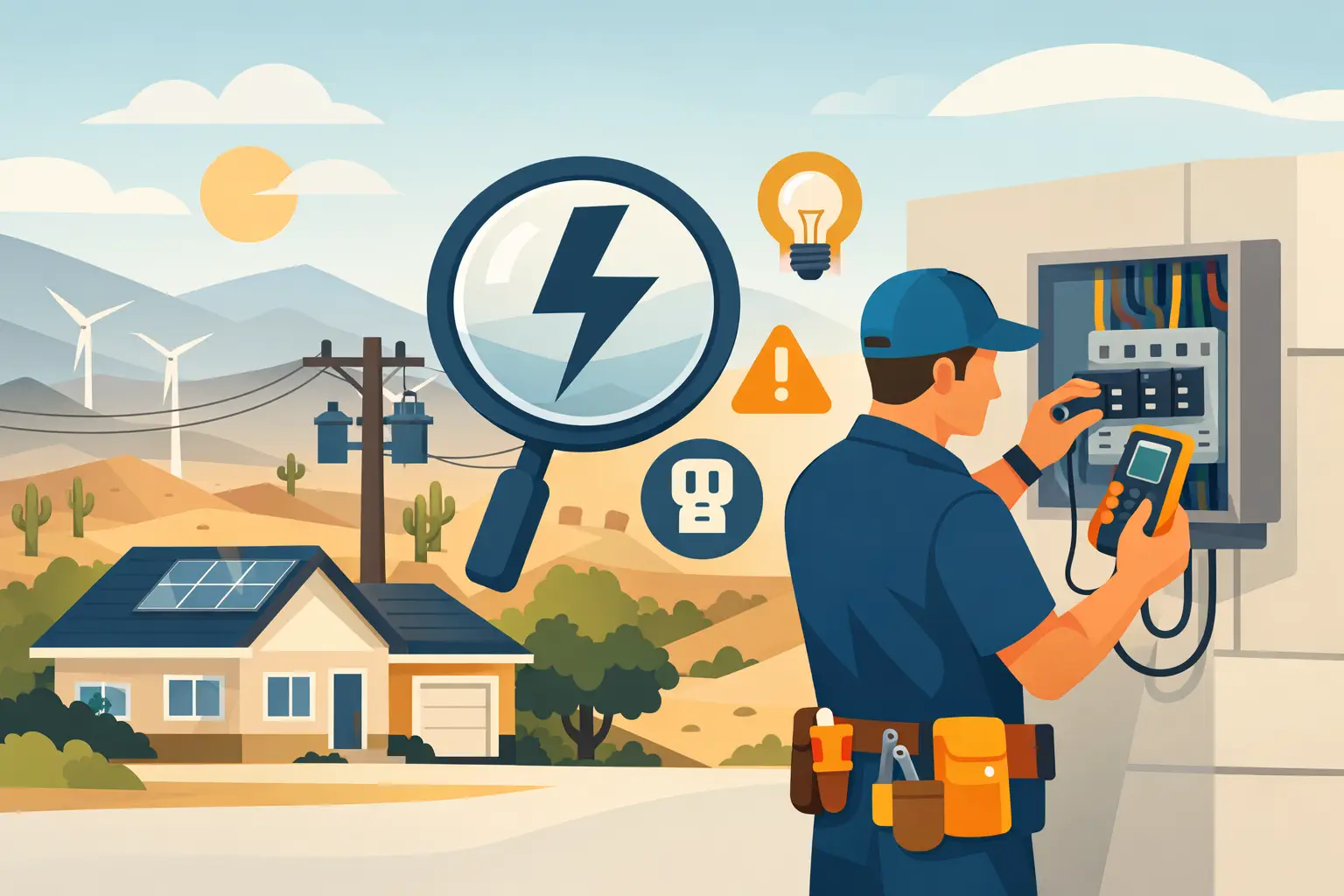
A breaker that trips once may be a minor inconvenience. A breaker that trips repeatedly, an outlet that feels warm, or lights that flicker when the air conditioner starts can be a warning that deserves attention. Antelope Valley electrical inspections give homeowners a clear picture of what is happening behind walls, at the electrical panel, and throughout the circuits that keep a home comfortable and safe.
For many homes in Palmdale, Lancaster, Quartz Hill, and nearby communities, an inspection is not about finding problems for the sake of a repair list. It is about identifying real safety concerns, confirming that recent work was completed properly, and making sensible plans for an aging electrical system. A licensed electrician can explain what needs prompt attention, what can be monitored, and what upgrades may make sense for the way the household uses power.
When an Electrical Inspection Makes Sense
Some homeowners schedule an inspection because they have noticed a clear electrical issue. Others schedule one because nothing appears wrong, but the home is older, a major project is planned, or they want confidence that the electrical system can handle current demands. Both reasons are valid.
An inspection is especially useful before buying an older home, after completing a remodel, or when adding a high-demand appliance such as an EV charger, hot tub, electric range, or new HVAC equipment. These additions can place more demand on circuits and panels that were designed for a different era of household power use.
It is also wise to arrange an inspection after storm damage, a roof leak near wiring, rodent activity in an attic, or a power surge. Damage is not always visible at an outlet or switch. Moisture, chewed insulation, loose connections, and heat at electrical components can create risks that need an experienced set of eyes.
What Antelope Valley Electrical Inspections Usually Cover
A residential electrical inspection should focus on the components that affect daily safety and reliability. The exact scope depends on the home, its age, and the reason for the visit, but a careful evaluation often begins at the service panel.
The electrical panel and breakers
The panel is the control center for the home’s electrical system. An electrician may check for labeling issues, signs of overheating, corrosion, loose connections, improper breaker sizing, open spaces, or equipment that is outdated or damaged. A panel does not automatically need replacement because it is old. However, age, condition, capacity, and the type of equipment all matter.
Homeowners sometimes assume a larger panel will solve every electrical concern. It may be the right long-term solution, particularly when a home needs more circuits or is preparing for an EV charger. But it depends on the service capacity, existing wiring, and the actual loads in the home. A proper inspection helps avoid spending money on an upgrade that does not address the source of the problem.
Outlets, switches, and protective devices
Outlets and switches can reveal signs of wear that are easy to overlook. Loose receptacles, cracked covers, discolored devices, buzzing sounds, or outlets that no longer hold plugs securely should be evaluated. In kitchens, bathrooms, garages, laundry areas, outdoor locations, and other places where water may be present, ground-fault circuit interrupter protection is an especially important safety feature.
An inspection can also identify where arc-fault protection may be needed or where tamper-resistant receptacles are appropriate. These devices are designed to reduce specific household risks, but they need to be installed and functioning correctly to provide the protection homeowners expect.
Wiring condition and visible connections
Wiring inspection is often limited to accessible areas such as attics, crawl spaces, garages, panels, and visible junction boxes. Even so, these areas can tell an electrician a great deal. Exposed splices, unsupported cables, damaged insulation, overloaded extension-cord setups, and improperly covered boxes are common concerns that can often be corrected before they become more serious.
Older homes may contain wiring methods or materials that deserve closer evaluation. That does not mean every older electrical system is unsafe. It means the system should be assessed based on its present condition, how it has been modified, and how the household uses it today.
Grounding, bonding, and exterior equipment
Grounding and bonding help direct fault current safely and support the operation of protective equipment. These details are not visible in everyday use, but they are essential to the safety of the electrical system. An electrician may review grounding connections, panel bonding, exterior disconnects, meter-related equipment, and visible service conductors as part of the inspection.
Outdoor outlets, landscape lighting, pool-related equipment, and garage circuits also deserve attention. Antelope Valley weather brings heat, wind, and dust, all of which can affect exterior covers, connections, and equipment over time.
Signs That Should Not Wait
A scheduled inspection is useful, but certain symptoms call for a prompt electrical evaluation. Do not ignore a burning smell, smoke, sparks, a hot panel, a warm outlet, frequent breaker trips, buzzing from a panel or switch, or shocks when touching an appliance or fixture. Turn off power to the affected area if it can be done safely, and have a qualified electrician inspect the issue.
Repeated tripping is particularly worth taking seriously. A breaker is designed to interrupt power when it detects a problem. Resetting it again and again without finding the cause can leave the underlying overload, short circuit, or equipment fault unresolved.
Flickering lights can be more complicated. A single loose bulb may be harmless, while widespread flickering or dimming when large appliances start may point to a circuit, panel, or service issue. The pattern matters, which is why describing exactly when the issue occurs helps an electrician diagnose it efficiently.
Inspection Findings Should Lead to Clear Choices
A useful inspection should leave a homeowner with understandable next steps, not a confusing collection of technical terms. The best recommendations distinguish between immediate hazards, repairs that should be scheduled soon, and improvements that can be planned around future projects or budget.
For example, correcting an exposed splice or overheating connection is a safety priority. Replacing several worn outlets may be a sensible near-term repair. Adding dedicated circuits for a future workshop, kitchen appliance, or electric vehicle can often be planned in advance. This approach keeps the focus on quality and safety while respecting the realities of homeownership.
If an inspection identifies code-related concerns, the right response depends on the situation. Existing homes are not always required to be brought fully up to current standards simply because they are older. New installations, remodels, and significant alterations can trigger different requirements. A licensed local electrician can explain what applies to the work being considered and what will provide the safest practical result.
Preparing for an Electrical Inspection
Homeowners do not need to know electrical terminology before an inspection. It helps, however, to make a short note of anything unusual: which breakers trip, where lights flicker, whether outlets stop working, and what appliances are running when the problem occurs. If possible, clear access to the electrical panel, garage, attic entry, and areas with known concerns.
It is also helpful to mention recent changes. A new appliance, solar-related work, a remodel, a garage conversion, or a charger installation can all affect electrical demand and may change what the electrician needs to evaluate. Honest details lead to a more accurate assessment.
A1 Home Electric has served local homeowners since 2006 with practical inspections, trusted electrical repair, panel work, and installation services. The goal is not to make electrical work feel complicated. It is to help homeowners understand the condition of their systems and make decisions that protect the home for the years ahead.
When something in your home’s electrical system does not feel right, it is worth listening to that concern. A timely inspection can replace uncertainty with a clear, safety-focused plan and help keep the power your family relies on working as it should.