
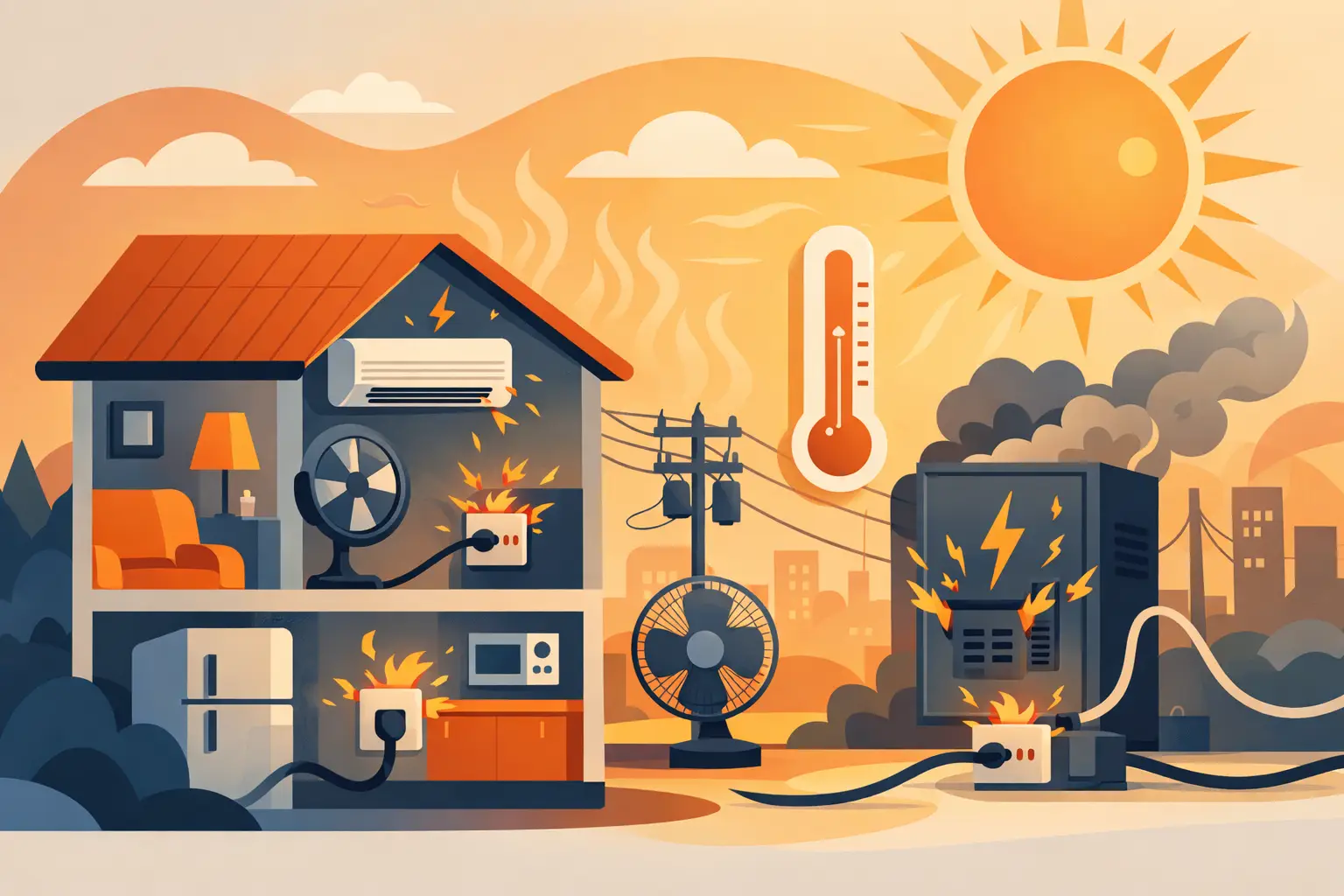
When triple-digit temperatures settle over the Antelope Valley, electrical problems during heat waves can turn from an inconvenience into a home safety concern quickly. Air conditioners run longer, refrigerators work harder, and every outlet, circuit, and electrical connection is asked to carry more of the load. A system that seemed fine in mild weather may start showing its limits during the hottest week of the year.
For homeowners, the goal is not simply to keep the power on. It is to recognize early warning signs, reduce avoidable strain, and know when trusted electrical repair is the safest next step.
Why Heat Waves Put More Stress on Home Electrical Systems
High outdoor temperatures do not usually cause a healthy electrical system to fail on their own. The real issue is sustained demand. During a heat wave, central air conditioning, window units, pool equipment, ceiling fans, refrigerators, freezers, and electronics may all run for extended periods.
That demand can expose weak connections, overloaded circuits, aging breakers, undersized panels, or outlets that were never meant to support several high-use appliances at once. Heat can also make electrical equipment less efficient at shedding the heat it produces. A breaker panel in a hot garage, for example, may be working in much harsher conditions than one located inside a conditioned part of the home.
Older homes can be especially vulnerable. A panel that was adequate when a home had a few basic appliances may now be serving modern cooling equipment, large televisions, home office devices, kitchen appliances, and EV charging. That does not mean every older home needs a new panel. It does mean a professional inspection can identify whether the system still matches the way the household uses power.
Warning Signs You Should Not Ignore
A tripped breaker is not always an emergency. Sometimes it is doing exactly what it was designed to do by stopping a circuit before wires overheat. Repeated trips, however, are a message that should not be reset and forgotten.
Watch for breakers that trip when the air conditioner starts, lights that dim or flicker when larger appliances cycle on, outlets or switch plates that feel warm, and buzzing sounds from an outlet, panel, or fixture. A burning smell, discoloration around an outlet, or a sparking connection requires immediate attention. Stop using the affected circuit if it is safe to do so, and call a licensed electrician.
It is also wise to pay attention to patterns. If the same bedroom circuit trips each afternoon when portable cooling units are running, the issue may be an overloaded circuit. If lights flicker throughout the home or multiple circuits act strangely, the cause could be more significant, including a panel, service, or connection problem. Those situations need professional diagnosis rather than trial-and-error resets.
When a Breaker Trips During Extreme Heat
Start by turning off or unplugging devices on that circuit before resetting the breaker once. Avoid repeatedly forcing it back on. If it trips again, leave it off and arrange an electrical repair visit.
Do not replace a breaker with a larger one to stop it from tripping. Breaker sizing must match the wiring and circuit design. Installing an oversized breaker can allow conductors to overheat before the breaker disconnects power, creating a serious fire risk.
The Most Common Electrical Problems During Heat Waves
Overloaded circuits are among the most common summer calls. This often happens when portable air conditioners, window units, fans, or other cooling devices are added to circuits already serving bedroom outlets, living room electronics, or kitchen appliances. Extension cords and power strips can make the situation worse, particularly when they are used with high-wattage equipment.
Air conditioning equipment can also reveal electrical issues. A failing disconnect, worn wiring connection, weak breaker, or improperly sized circuit may cause the system to stop, trip a breaker, or struggle when it starts. Because cooling equipment involves both electrical and HVAC components, the right service professional depends on the symptoms. An electrician can evaluate the circuit, breaker, disconnect, and electrical supply. An HVAC technician can assess the air conditioner itself. In some cases, both are needed.
Electrical panels can become a concern when a home has little remaining capacity. Signs may include a crowded panel, frequent breaker trips, older breaker equipment, or the need to add a new dedicated circuit for an appliance or EV charger. A panel upgrade is a larger investment than a simple repair, but it can provide safer capacity for the way a household actually lives now.
Power quality issues can also occur during periods of intense regional demand. Brief outages, voltage fluctuations, and utility-related interruptions may affect some homes. A whole-home surge protection solution can help protect sensitive electronics from certain electrical surges, though it will not keep a home powered during an outage. Backup power is a separate planning decision that depends on the household’s needs, budget, and critical equipment.
Simple Steps to Reduce Electrical Strain
Homeowners cannot control the outside temperature, but they can avoid adding unnecessary load to already busy circuits. Run portable air conditioners directly from properly grounded wall outlets, not extension cords or overloaded power strips. If a device has a dedicated circuit requirement in its instructions, follow it.
Spread high-demand appliances across different circuits when possible. Avoid running a portable AC unit, space heater, microwave, hair dryer, and vacuum from outlets served by the same area of the home. In summer, it also helps to delay heat-producing appliance use. Running the dryer, oven, or dishwasher later in the evening can reduce both cooling demand and the total electrical load during the hottest part of the day.
Keep outdoor electrical equipment protected and maintained. Pool pumps, exterior outlets, landscape lighting, and air conditioner disconnects are exposed to sun, dust, wind, and seasonal temperature changes. Damaged covers, loose connections, or moisture intrusion should be repaired promptly.
Most importantly, do not treat warm outlets, flickering lights, or recurring breaker trips as normal summer behavior. These are not problems to cover up with a different power strip or a larger extension cord.
When an Electrical Inspection Makes Sense
A professional electrical inspection is especially valuable before peak summer demand if your home has an older panel, frequent tripped breakers, recently added major appliances, or plans for an EV charger. It is also a practical step after buying a home, completing a remodel, or noticing changes in how the electrical system performs.
An electrician can inspect the panel, breakers, grounding, visible wiring conditions, outlets, and circuit capacity. The result should be a clear explanation of what is safe to monitor, what needs repair now, and what upgrades may be worth planning for. Not every recommendation has the same urgency. A loose or overheated connection needs prompt attention, while a capacity upgrade may be something to schedule before adding new equipment.
For Palmdale, Lancaster, Quartz Hill, Littlerock, and Lake Los Angeles homeowners, local experience matters because summer electrical demand is not theoretical. It is part of life in the high desert. A1 Home Electric provides expert electrical repairs, inspections, panel-related work, and dedicated circuit installations with a focus on quality and safety.
Plan Before the Next Heat Wave
The best time to address a strained circuit or aging panel is before the next stretch of extreme heat. If your home has already shown warning signs, schedule an evaluation while the problem can be addressed thoughtfully rather than during a comfort-disrupting emergency.
A safe, dependable electrical system supports more than appliances. It helps protect your home, keeps cooling equipment operating as intended, and gives your family greater peace of mind when summer temperatures climb.