
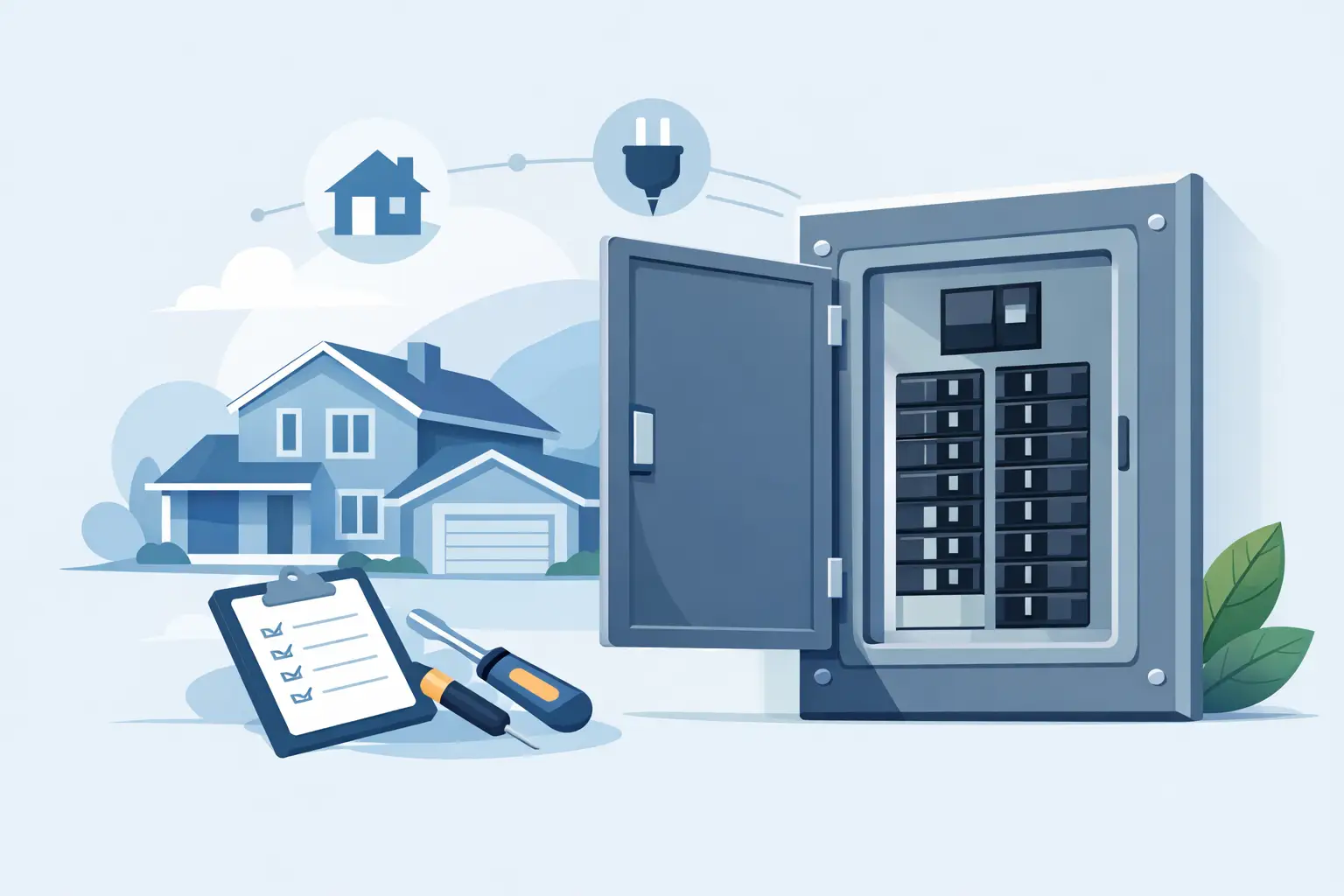
A breaker panel is easy to ignore until a circuit trips during dinner, the air conditioner shuts down on a hot afternoon, or a new appliance needs more power than the home can safely provide. This residential breaker panel guide helps homeowners understand what the panel does, what warning signs deserve attention, and when it is time to call a licensed electrician.
Your electrical panel is not simply a metal box with switches. It is the central point that distributes electricity throughout your home and provides critical protection when something goes wrong. A well-maintained, properly sized panel supports everyday comfort, from kitchen appliances and lighting to cooling equipment, home offices, and EV charging.
What a Residential Breaker Panel Does
Electricity enters the home through the service equipment and is distributed through individual circuits in the breaker panel. Each breaker is designed to protect the wiring on its assigned circuit. When a circuit draws more current than it should, or when a fault occurs, the breaker trips to stop the flow of power before wiring can overheat.
A typical panel may serve separate circuits for outlets, lighting, laundry equipment, kitchen appliances, the HVAC system, garage, and outdoor areas. Larger equipment often requires dedicated circuits because it uses more electricity. This separation helps protect the system and makes it easier for an electrician to diagnose a problem.
The main breaker controls power to the entire home, while branch breakers protect individual circuits. Opening the panel cover or working inside it is not a homeowner project. Even when a main breaker is turned off, parts of the equipment can remain energized. Safe diagnosis and repair require the right training, tools, and testing procedures.
Why Breakers Trip
A breaker trip is a safety response, not just an inconvenience. One trip after plugging several devices into an older outlet circuit may point to an overload. A breaker that trips repeatedly, however, needs professional attention.
Overloads happen when a circuit is asked to carry more than it was designed to handle. This is common in rooms with limited outlets, where power strips, portable heaters, entertainment equipment, and chargers all share one circuit. In kitchens, appliances such as microwaves, coffee makers, air fryers, and toaster ovens can create a similar issue when used at the same time.
A short circuit or ground fault is more serious. These can be caused by damaged wiring, a failing appliance, moisture, loose connections, or an issue inside an outlet or fixture. Resetting the breaker without identifying the cause can allow a dangerous condition to continue.
If a breaker trips, turn off or unplug items connected to that circuit before resetting it once. If it trips again, leave it off and arrange for expert electrical repairs. Do not hold a breaker in the on position, replace it with a larger breaker, or keep resetting it in hopes that the problem will disappear.
Warning Signs Your Panel Needs Attention
Some panel concerns are obvious, while others develop quietly over time. Homes in Palmdale, Lancaster, and throughout the Antelope Valley often place heavy seasonal demands on electrical systems because cooling equipment, garage tools, and modern household electronics can add up quickly.
Contact a licensed electrician if you notice any of these signs:
- Breakers that trip often or will not reset
- Flickering or dimming lights when appliances start
- A warm panel cover, buzzing sounds, burning odor, or discoloration
- Corroded equipment, moisture near the panel, or rust around the enclosure
- A panel that is crowded, poorly labeled, damaged, or uses obsolete equipment
- Frequent reliance on extension cords or power strips because the home lacks usable circuits
A warm breaker or panel, burning smell, smoke, sparking, or crackling should be treated as urgent. Turn off power if it is safe to do so, keep clear of the equipment, and seek immediate professional help. Electrical warning signs should never be ignored simply because they come and go.
When a Panel Upgrade Makes Sense
A panel upgrade is not automatically required just because a home is older. The right decision depends on the condition of the existing equipment, the home’s electrical demand, available panel space, and planned improvements. An inspection provides a clearer answer than guessing based on the panel’s age alone.
An upgrade is often worth considering when homeowners are adding an EV charger, replacing HVAC equipment, remodeling a kitchen, building an addition, installing a hot tub, converting a garage, or adding high-demand appliances. These projects can require new dedicated circuits and may expose limitations in the existing panel or service capacity.
Lack of open breaker spaces is another common issue. In some cases, a qualified electrician can safely reorganize circuits or install approved equipment to create space. In other cases, a larger panel, subpanel, or service upgrade is the more reliable long-term solution. The best option depends on the home’s layout and electrical load, not on a one-size-fits-all recommendation.
Upgrading can also improve day-to-day convenience. Properly placed circuits reduce overloads, support modern appliances, and make future projects easier to plan. More importantly, quality panel work helps ensure that wiring and overcurrent protection are matched correctly.
Understanding Panel Capacity Without the Guesswork
Homeowners often hear panel sizes described in amps, but a larger number does not automatically mean a home has more usable power for every project. Electrical capacity must be evaluated through a load calculation that considers the home’s major equipment and expected usage.
For example, an EV charger may be an excellent addition to a home, but it is a continuous electrical load that must be planned carefully. The same is true for central air conditioning, electric water heating, electric ranges, pool equipment, workshop tools, and other high-demand systems. A licensed electrician can determine whether the current panel and service can support the addition safely or whether upgrades are needed first.
This evaluation protects against two costly mistakes: paying for more work than the home needs, or installing equipment that pushes an already stressed electrical system too far. Good planning keeps the project focused on safety, performance, and the way your household actually uses power.
A Practical Residential Breaker Panel Guide for Maintenance
Homeowners should not perform internal panel maintenance, but a few simple habits can help identify concerns early. Keep the area around the panel accessible and dry. Avoid storing boxes, cleaning supplies, or household items directly in front of it. In an emergency, clear access matters.
Check that circuits are labeled clearly enough for everyone in the household to understand. Labels such as “back bedroom outlets” or “kitchen counter outlets” are more useful than vague notes or unlabeled breakers. Accurate labels also help an electrician work more efficiently during future repairs or upgrades.
Pay attention to patterns. If lights dim when the HVAC starts, a garage breaker trips when tools are used, or one part of the home loses power intermittently, write down what was happening at the time. This information gives an electrician useful clues and can shorten the diagnostic process.
It is also wise to schedule an electrical inspection when purchasing an older home, planning a major renovation, or noticing changes in how the system performs. A professional inspection can identify aging components, improper modifications, overloaded circuits, and safety concerns before they create a larger repair.
Why Professional Panel Work Matters
Breaker panels involve live electrical components, service conductors, grounding, bonding, circuit sizing, and code requirements. A repair that appears small can involve a larger issue behind the cover. Improper breaker replacement, loose connections, mismatched components, or overloaded wiring can create fire and shock hazards.
A licensed residential electrician can inspect the panel, test circuits, identify the source of repeated trips, and recommend repairs based on the home’s actual condition. The goal should not be to sell the biggest upgrade. It should be to provide a safe, dependable solution that supports your household now and leaves room for sensible future needs.
A1 Home Electric has served local homeowners since 2006 with practical panel inspections, repairs, upgrades, and installation work focused on quality and safety. Whether the concern is a single unreliable breaker or a planned EV charger installation, an experienced evaluation helps protect the home from avoidable electrical problems.
Your panel works quietly every day, but it deserves attention when it starts sending signals. Addressing those signals early can keep a minor inconvenience from becoming a disruption to your home’s safety, comfort, and reliability.