
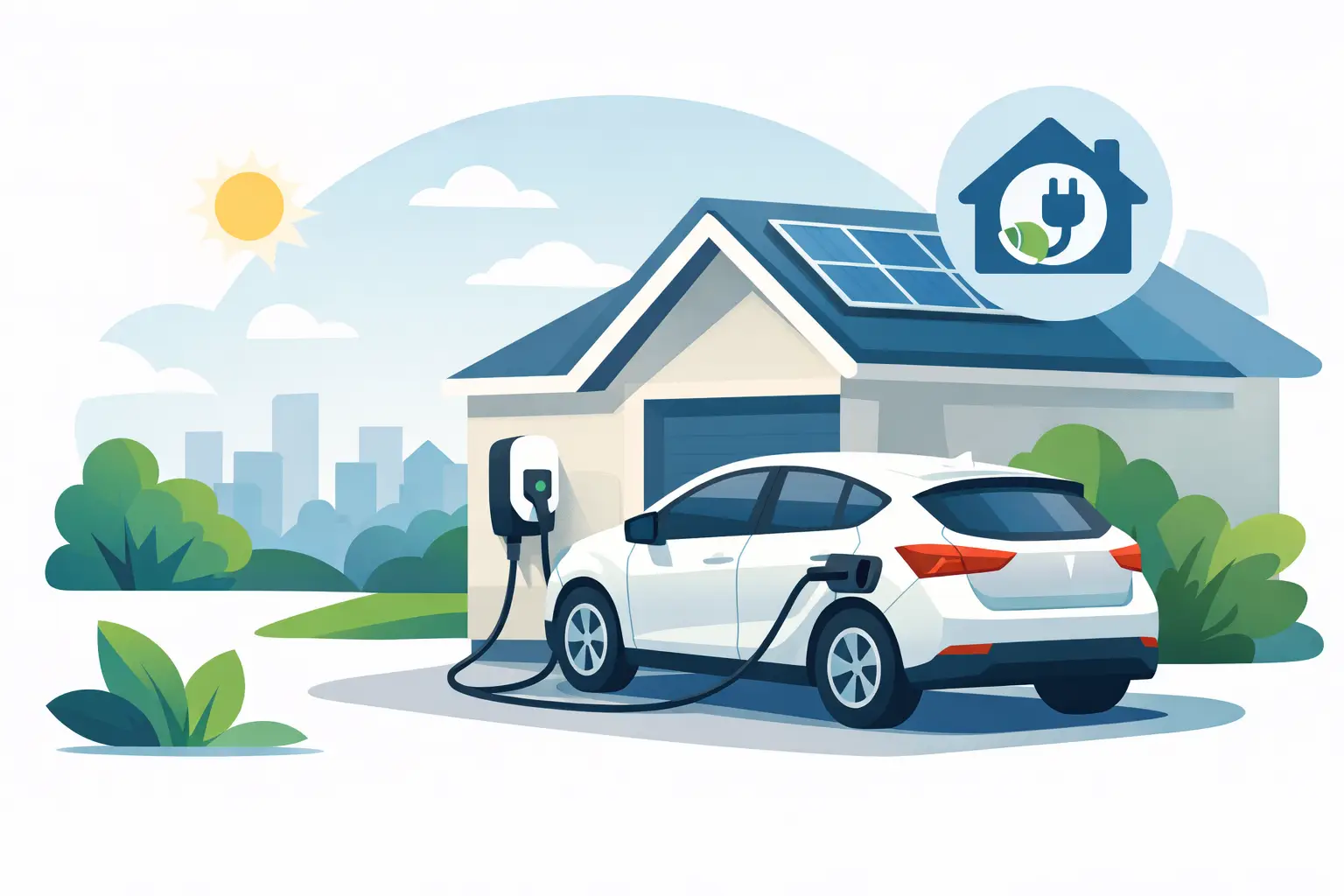
A public charger can be useful when you are away from home, but it is rarely the most convenient way to live with an electric vehicle. This home EV charger review focuses on what matters once the charger is in your garage or driveway: dependable overnight charging, safe electrical capacity, and an installation that supports your home for years.
For most Antelope Valley homeowners, a Level 2 charger is the practical choice. It can restore substantially more driving range per hour than a standard household outlet, making daily charging easier and reducing the need to plan around public stations. Still, the right charger is not simply the one with the highest advertised output. Your electrical panel, vehicle, parking location, and household energy use all affect the best decision.
Home EV Charger Review: Start With Charging Level
A Level 1 charger typically plugs into a standard 120-volt outlet. It is often included with an EV and can work well for drivers with short daily commutes, a plug-in hybrid, or plenty of time between trips. The trade-off is speed. Charging may take many hours, and an older garage outlet or circuit may not be suitable for continuous use without evaluation.
A Level 2 charger runs on a 240-volt circuit, similar to the equipment used for an electric dryer or range. It is the preferred option for many households because it provides more useful charging overnight. Depending on the vehicle and charger settings, a Level 2 unit commonly adds enough range to cover a typical day of driving while the vehicle is parked at home.
For homeowners who drive frequently, have a larger battery vehicle, or expect to add a second EV in the future, Level 2 charging offers better day-to-day flexibility. A qualified electrician can help determine whether your existing panel and service can support it without overloading the home.
Charging Speed Is Only Part of the Decision
It is easy to compare chargers by amperage alone, but a higher-rated charger does not automatically mean faster charging at your home. The vehicle has its own maximum charging rate, and the circuit must be sized correctly for continuous charging use. A 48-amp charger, for example, may require a larger dedicated circuit and adequate panel capacity than a 32- or 40-amp model.
For many homes, a mid-range Level 2 charger is the sensible balance. It can provide reliable overnight charging without requiring more electrical work than necessary. If your vehicle is usually parked for 10 to 12 hours, there may be little practical benefit in paying for the highest output option.
This is where a site assessment matters. An electrician should look beyond the garage wall and consider your panel rating, available breaker space, existing load from appliances and HVAC equipment, cable routing, and the distance between the panel and charger location. A charger that looks straightforward on paper can require additional planning in an older home.
Hardwired vs. Plug-In Chargers
Both installation styles can be appropriate when completed correctly. A plug-in charger uses a properly installed 240-volt receptacle, which can make replacing the charging unit easier later. It may be a good fit for a homeowner who wants flexibility or expects to change equipment over time.
A hardwired charger is connected directly to its dedicated circuit. This approach is often a strong choice for higher-output charging, outdoor installations, and households that want a permanent setup with fewer connection points. It can also avoid wear associated with repeatedly handling a heavy-duty plug and receptacle.
The better option depends on the charger specifications, the location, and your future plans. What should not be compromised is the dedicated circuit, correct wire sizing, proper breaker selection, and code-conscious installation.
Features Worth Paying For
The best home charger is usually simple to use every day. A long feature list is less valuable than reliable performance, clear status indicators, and a charging cable that reaches your vehicle without being stretched across a walkway.
Smart controls can be helpful, especially if your utility offers time-of-use electricity rates. A Wi-Fi-connected charger may let you schedule charging during lower-cost periods, monitor energy use, or receive alerts if charging stops unexpectedly. These features are convenient, but they rely on a stable connection and a manufacturer app that you are comfortable using. If you prefer fewer technology dependencies, a well-built basic charger can still be an excellent choice.
Cable length deserves more attention than many homeowners expect. Measure the route from the mounting location to your vehicle’s charge port, remembering that ports are not in the same location on every EV. Choose a setup that allows the cable to hang neatly on its holder rather than creating a tripping hazard or forcing the cable around a vehicle.
For an outdoor charger, look for an enclosure rated for the location and weather exposure. In Palmdale, Lancaster, Quartz Hill, and nearby communities, heat, dust, wind, and direct sunlight can be hard on exterior equipment. Proper placement, secure mounting, and equipment designed for outdoor conditions support long-term reliability.
Electrical Capacity Is the Safety Question
An EV charger is not a standard appliance that runs only occasionally. It can draw a significant amount of power for several hours at a time. That makes the condition and capacity of your electrical system central to the installation.
Some homes have enough available capacity and open panel space for a dedicated EV circuit. Others may need a panel upgrade, a subpanel, load management equipment, or a different charging configuration. Older homes can present additional concerns, such as undersized service equipment, crowded breaker panels, outdated wiring, or previous electrical work that should be corrected before adding a major new load.
A professional evaluation is not about selling more work than you need. It is about making sure the charger operates without creating nuisance breaker trips, overheating connections, or placing unreasonable demand on the electrical system. The least expensive installation is not a good value if it leaves the home with a safety concern or limits future upgrades.
Why Permits and Professional Installation Matter
A properly installed EV charger should follow applicable electrical requirements and local permitting rules. Permits and inspections help verify that the circuit is protected correctly, wiring is sized for the load, equipment is mounted safely, and the installation is appropriate for the home.
Homeowners sometimes consider using an existing dryer outlet, an extension cord, or an adapter as a permanent solution. Those shortcuts can create problems, particularly when equipment was not designed for continuous EV charging or when a circuit is shared with another appliance. A dedicated circuit is the safer, more dependable approach.
A licensed residential electrician can also place the charger where it works with the way you park, not merely where installation is easiest. That includes protecting the cable, accounting for garage doors and vehicle clearance, and keeping equipment accessible for routine use.
A Practical Buying Approach
Before choosing a charger, begin with your vehicle’s charging capability and your typical daily mileage. Then consider where the vehicle parks, whether you need indoor or outdoor equipment, and how long it is normally parked at home. These answers often narrow the field quickly.
Next, arrange for an electrical assessment before ordering a high-output unit. Knowing what your home can safely support helps avoid buying equipment that requires more extensive upgrades than expected. It also gives you a clearer picture of installation cost and timing.
Finally, think one step ahead. If you expect another EV, an electric water heater, an induction range, or additional HVAC equipment in the future, mention it during the assessment. Planning around future electrical demand can be more cost-effective than revisiting the panel each time your household changes.
A1 Home Electric helps homeowners make EV charging decisions based on the condition of the home, not a one-size-fits-all recommendation. The right charger should feel ordinary after installation: you pull in, plug in, and trust that your vehicle will be ready when you need it.