
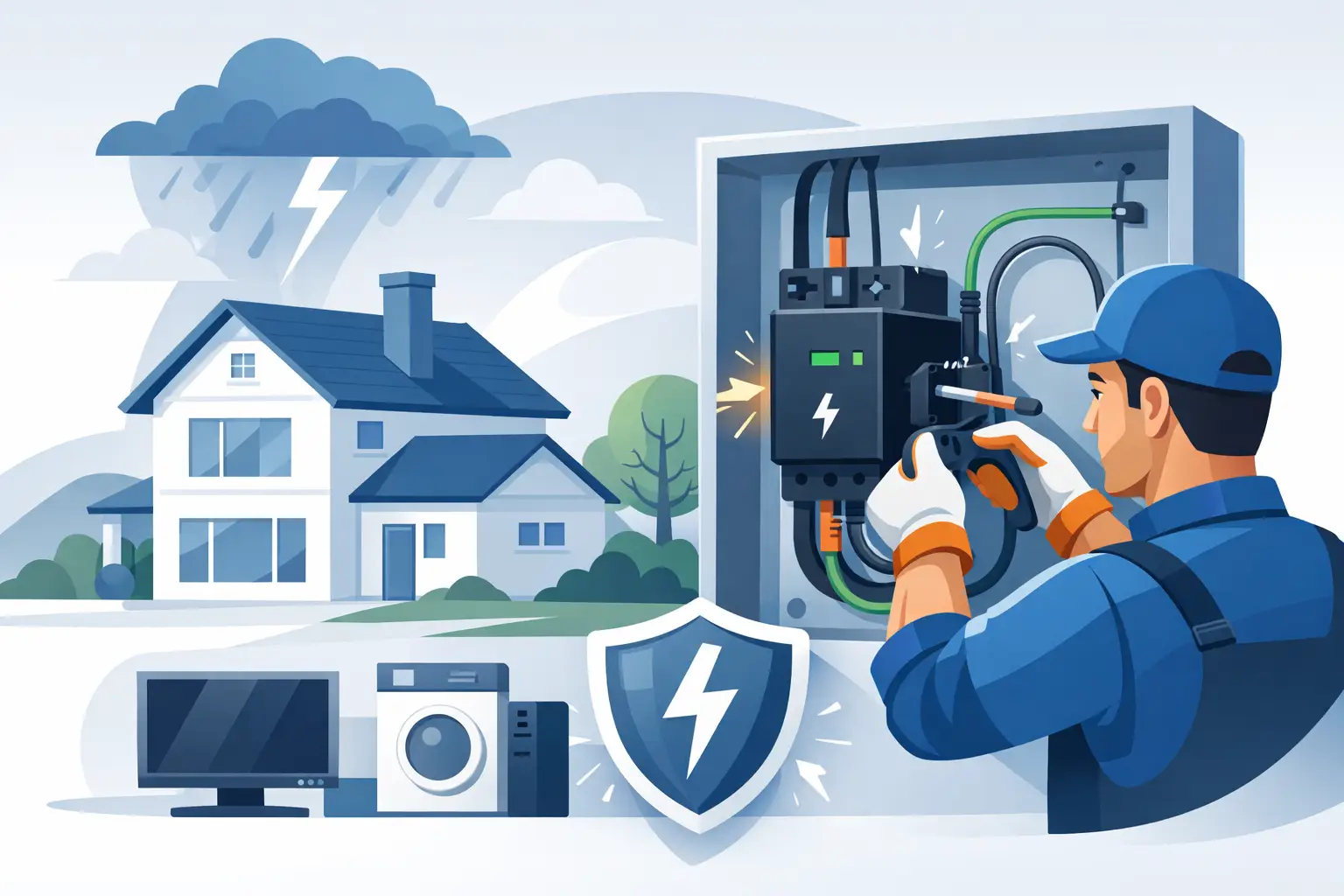
A power surge usually lasts a fraction of a second. The damage can stay with your home much longer. That is why whole house surge protector installation has become a smart upgrade for homeowners who want better protection for appliances, HVAC equipment, electronics, and the electrical panel itself.
Most people think of surges as something caused by lightning. That can happen, but it is not the only risk. Utility switching, grid issues, large appliances cycling on and off, and problems tied to aging electrical systems can all create voltage spikes. You may not notice every event, but your refrigerator control board, garage door opener, internet equipment, and smart home devices often do.
What whole house surge protector installation actually does
A whole-house surge protector is installed at or near your main electrical panel. Its job is to intercept excess voltage and redirect it safely before that surge travels deeper into your home circuits. Instead of relying only on point-of-use power strips, this approach adds a layer of protection at the source.
That matters because many of the most expensive items in a home are not plugged into a surge strip at all. Air conditioners, furnaces, dishwashers, ovens, washers, dryers, and hardwired lighting controls all depend on stable power. If one surge damages a key component, the repair cost can easily outweigh the cost of adding protection.
This does not mean a whole-house device makes your home surge-proof. No device can promise that in every scenario. A direct lightning strike or a severe electrical event can still cause damage. What proper installation does is greatly reduce routine surge exposure and improve your overall protection strategy.
Why homeowners are installing surge protection now
Homes use more sensitive electronics than they did even ten years ago. Today, it is common to have smart thermostats, EV charging equipment, kitchen appliances with digital boards, streaming devices, work-from-home equipment, and connected security systems all under one roof.
The more electronics your home depends on, the more costly a surge event can become. Sometimes the damage is immediate and obvious. Other times it shortens the life of equipment slowly, which makes the problem harder to spot. If you have ever replaced a control board, modem, television, or microwave sooner than expected, repeated minor surges may have played a role.
For many homeowners, whole house surge protector installation is less about reacting to one bad event and more about preventing wear on expensive systems over time. It is a practical upgrade, especially in homes with older panels, major appliances, or recent electrical additions.
Where surge protection fits into your home’s electrical system
The best way to think about surge protection is as one part of a larger safety picture. A surge protector works best when the electrical panel is in good condition, grounding and bonding are correct, and the installation is matched to the home.
That is one reason professional installation matters. If the panel has issues, if there is limited space, or if the grounding system needs attention, those conditions should be identified before the device is installed. Good protection is not just about adding a product. It is about making sure the electrical system can support it properly.
In some homes, especially older properties, surge protection may naturally lead to a wider conversation about panel condition, code updates, or whether the home is due for an inspection. That does not mean every house needs major work. It means the installation should be based on the actual setup, not guesswork.
Whole house surge protector installation is not a DIY job
It may look like a small device, but installing it involves direct work at the main panel. That is not a place for trial and error. The work requires proper shutoff procedures, correct breaker placement, manufacturer-specific wiring methods, and attention to panel compatibility.
There is also the question of product selection. Not every surge protector is right for every home. Ratings, panel type, service size, and the layout of the electrical system all affect what should be installed. Choosing based on price alone can leave you with limited protection or a device that is not the best fit for your home.
A licensed electrician can also confirm whether your current setup supports the installation cleanly or whether another improvement should happen first. For homeowners, that is valuable because it turns the project into a long-term protection decision rather than a quick add-on.
What to expect during the installation process
For most homes, the process starts with an evaluation of the electrical panel and service equipment. The electrician checks panel condition, available space, grounding, and the best mounting location for the surge device. If there are any safety concerns, those should be addressed before the installation moves forward.
Once the right device is selected, it is installed at or near the panel according to code and manufacturer requirements. The goal is a secure, properly integrated connection with the shortest practical lead length, since that helps performance. After installation, the electrician will verify operation and make sure the panel is properly closed up and labeled if needed.
From the homeowner’s perspective, this is usually a straightforward service call. The bigger value comes afterward, when the home has an added line of defense against power spikes that can affect multiple systems at once.
Is one surge protector enough?
Sometimes yes, sometimes no. A whole-house device is an excellent first layer of protection, but some homes benefit from a layered approach. Sensitive office equipment, entertainment systems, or specialty electronics may still deserve quality point-of-use surge protection at the receptacle level.
That is not a contradiction. It is how protection is often meant to work. The main device helps reduce larger surges entering through the panel, while local protection helps shield especially sensitive equipment from smaller residual voltage spikes.
If your home includes expensive computers, networking equipment, or home automation systems, asking about layered protection is reasonable. The right answer depends on what you are protecting and how critical that equipment is to your daily routine.
Signs your home should be evaluated for surge protection
Some homeowners install surge protection as part of a planned electrical upgrade. Others start asking questions after warning signs appear. If lights flicker when large appliances turn on, if you have had repeated appliance board failures, or if your home has experienced storm-related electrical issues, it is worth having the system looked at.
Frequent breaker issues do not automatically mean you need surge protection, but they do suggest the electrical system deserves professional attention. The same is true if your home has an older panel, recent additions like an EV charger, or a growing number of high-value electronics.
In areas like Palmdale and Lancaster, where homeowners often balance older homes with modern electrical demands, it makes sense to think proactively. Protection upgrades are often most effective when they happen before a failure, not after one.
The cost question homeowners always ask
Yes, cost matters. But the better question is what risk you are carrying without protection. Replacing one damaged appliance control board or one HVAC component can be expensive. Replacing several electronics after a significant surge can cost much more.
The final price for whole house surge protector installation depends on the device selected, your panel setup, and whether any related electrical corrections are needed. A simple installation is different from a job where the panel is outdated or grounding needs improvement. That is why estimates can vary from one house to another.
What most homeowners want is not the cheapest option. They want a dependable installation that protects the systems they rely on every day. That is the right way to look at it.
Choosing the right electrician for the job
This is a panel-based safety upgrade, so experience matters. You want a licensed residential electrician who understands panel work, surge protection compatibility, and the condition of local homes. A rushed installation or a poor product match can limit the protection you are paying for.
A good contractor should be able to explain the purpose of the device in plain language, identify any concerns with the panel, and recommend a solution that fits your home’s actual needs. That practical approach is what homeowners should expect from trusted electrical repair and installation service.
At A1 Home Electric, the focus is on exactly that kind of home-based decision making – quality and safety first, with recommendations built around how a family uses the home every day.
Surge protection is one of those upgrades that stays quiet when it is doing its job. You may never see the moment it protects your home, and that is the point. When your panel, appliances, and electronics matter to your daily comfort, a well-planned installation is a simple step that can save a great deal of trouble later.
Leave a Reply