
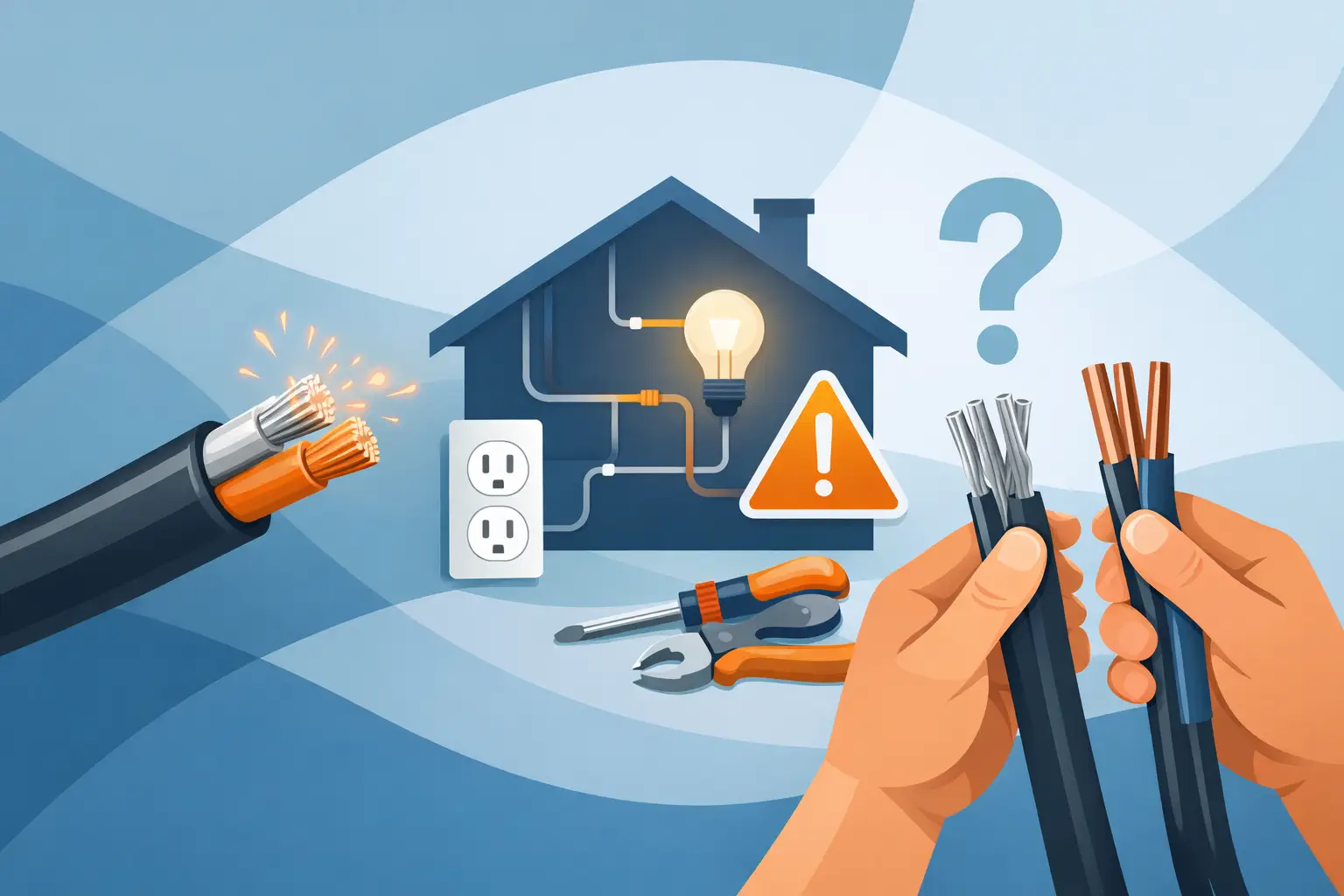
If your home was built or wired during the 1960s or 1970s, the question of when to replace aluminum wiring is more than a maintenance issue. It is a safety decision that affects how reliably your lights, outlets, appliances, and panel perform every day.
Aluminum branch-circuit wiring was used in many homes during that era, largely because it was less expensive than copper. The concern is not that aluminum is automatically unsafe in every house. The real issue is that older aluminum wiring can loosen at connections, oxidize, and create excess heat if it was not installed, maintained, or updated correctly. That is why homeowners should focus less on the material alone and more on the condition of the system as a whole.
When to replace aluminum wiring in a home
There is no single date on the calendar that tells you it is time. Replacement usually becomes the right move when the wiring shows signs of failure, the home needs major electrical upgrades, or inspections reveal a pattern of unsafe connections that makes ongoing repairs impractical.
If you notice flickering lights, warm outlets or switches, buzzing sounds, the smell of something burning near receptacles, or breakers that trip for no clear reason, those are not symptoms to ignore. They do not always mean the entire house must be rewired, but they do mean the wiring system needs prompt evaluation. In homes with aluminum branch wiring, small connection problems can become bigger safety concerns faster than many homeowners expect.
Replacement also makes sense when prior repairs have been piecemeal and inconsistent. A house with a mix of old aluminum wiring, questionable splices, outdated devices, and an overloaded panel often ends up costing more to patch repeatedly than to address properly. In that situation, a full or partial rewire can improve safety and reduce the chance of recurring electrical repairs.
Another common tipping point is remodeling. If you are opening walls for a kitchen renovation, room addition, or major panel upgrade, that is often the most practical time to replace older aluminum circuits. Access is easier, labor is more efficient, and you can bring key parts of the electrical system up to current needs while the work is already underway.
Why aluminum wiring becomes a concern
Older aluminum wiring earned its reputation because connection points can be vulnerable over time. Aluminum expands and contracts more than copper as it heats and cools. It also oxidizes, and that oxidation can interfere with solid electrical contact. Loose or deteriorated connections create resistance, and resistance creates heat.
That does not mean every aluminum-wired home is in immediate danger. Some homes have been maintained carefully, had approved connection repairs completed, and continue to perform well. Others have hidden issues behind devices, junction boxes, and panel terminations that only show up during a thorough inspection.
For homeowners, that distinction matters. The question is not whether aluminum wiring is good or bad in the abstract. The question is whether your wiring is still performing safely under real household demand.
Signs replacement may be the better option
A licensed electrician may recommend replacing aluminum wiring rather than repairing it when problems are widespread instead of isolated. One overheated outlet can sometimes be repaired at that location. Multiple failing outlets and switches across the home suggest a broader issue.
Age and electrical demand also matter. Homes built decades ago were not designed for the number of electronics, kitchen appliances, HVAC loads, home office equipment, and EV charging needs many families have now. If the wiring is older and the home is already struggling to keep up, replacement may be the more reliable long-term solution.
Insurance and real estate concerns can also influence the decision. Some insurers pay closer attention to homes with older aluminum branch wiring, especially if there is no documentation of approved repairs or inspections. If you are planning to sell, replace a panel, or make major upgrades, addressing the wiring proactively can prevent delays and reduce uncertainty.
It can also come down to accessibility and cost over time. If every service call uncovers another failing connection, another hot device, or another outdated section of wiring, there is a point where continued spot repair stops being the cost-effective choice.
Situations where repair may still be appropriate
Not every home with aluminum wiring needs a full rewire. In some cases, approved repair methods at connection points may provide a safe and practical alternative, especially when the wiring itself is in usable condition and the issue is limited to terminations.
That is why a proper evaluation matters. A trustworthy electrician should look at the age of the home, the condition of outlets and switches, panel connections, visible splice quality, evidence of overheating, and your current electrical load before recommending the next step.
A repair-first approach can be reasonable when the system has relatively few problem areas, the home is not undergoing major renovation, and the existing circuits still match the household’s needs. The key is that the work must be done correctly and with safety in mind, not as a temporary shortcut.
How electricians decide whether aluminum wiring should be replaced
The decision usually starts with inspection, not guesswork. An electrician will look for signs of overheating, loose terminations, damaged insulation, improper devices, and previous repair work that may not meet current best practices.
The panel is part of that picture, but not the only part. Trouble often appears at receptacles, switches, light fixture connections, and junction boxes. If the issues are localized and manageable, repair may be enough. If the same pattern shows up throughout the home, replacement becomes more likely.
Load expectations matter too. A home that needs a panel upgrade, additional circuits, or EV charger installation may already be at a stage where older aluminum branch wiring is holding the system back. In those cases, replacing older circuits can support safer, more dependable performance instead of forcing new upgrades onto aging infrastructure.
What homeowners should not do
If you suspect a problem with aluminum wiring, do not wait for a more obvious failure. Heat damage often starts inside a box or at a terminal where it is easy to miss until the problem gets serious.
It is also unwise to swap outlets or switches yourself unless you are trained for that specific work and understand aluminum-compatible methods. Standard devices and casual repairs are part of what created problems in many older homes to begin with. A connection that looks fine on the surface can still be loose or unsuitable.
The better move is to have the home evaluated by a licensed residential electrician who works with older wiring systems and understands code-conscious repair and upgrade options.
The practical answer for homeowners
So, when to replace aluminum wiring? Replace it when inspections show widespread deterioration, repeated overheating, unreliable performance, unsafe past repairs, or when major upgrades make replacement the smarter long-term investment.
If the wiring is stable and the issues are limited, approved repairs may be enough. If the problems are recurring, hidden throughout the house, or tied to a system that no longer fits the home, replacement usually brings better peace of mind.
For homeowners in older neighborhoods around Palmdale, Lancaster, and the Antelope Valley, this comes up often because many houses are reaching the age where electrical systems need more than basic maintenance. A careful inspection can tell you whether your home needs targeted repairs or a broader upgrade path.
The right decision is the one that protects your family, supports the way you actually use your home, and gives you confidence that your electrical system will keep working safely year after year. If your house has aluminum wiring and you have been wondering whether it is time, that question is worth answering before a warning sign turns into an emergency.
Leave a Reply