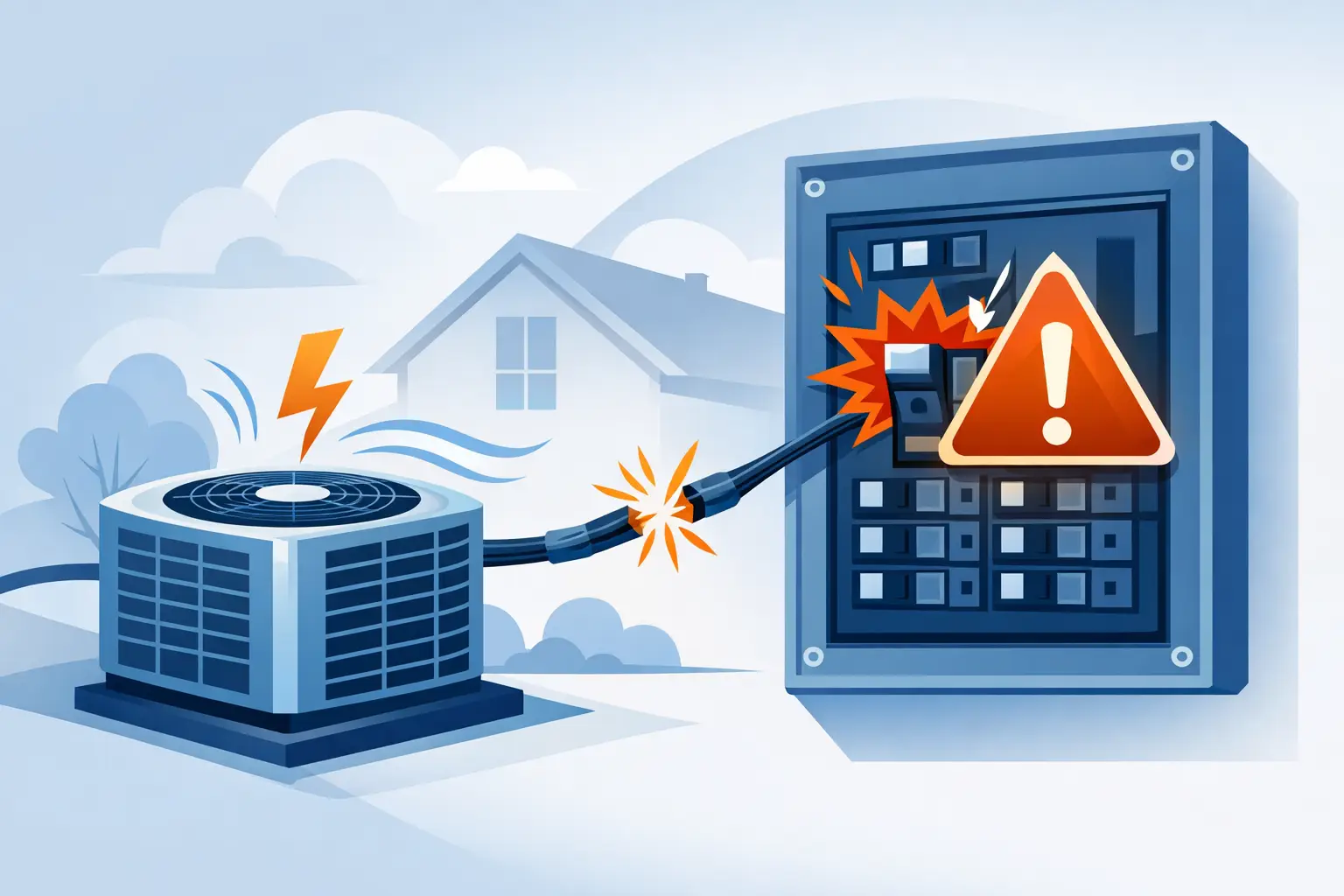
When an ac unit keeps tripping breaker, it usually shows up at the worst time – right when the house is trying to stay comfortable through a hot Antelope Valley afternoon. The breaker is not the problem by itself. It is doing its job by shutting power off when something in the system is pulling too much current, shorting out, or creating an unsafe condition.
That matters because repeated breaker trips are more than an annoyance. They can point to a failing AC component, a wiring issue, or an electrical panel problem that needs attention before it turns into a larger repair. For homeowners, the goal is not just getting the air back on. It is restoring safe, dependable operation.
Why an AC unit keeps tripping breaker
An air conditioner uses a heavy electrical load, especially at startup. A central AC system may run normally for months, then suddenly start tripping if one part begins to wear out or if the electrical system can no longer handle the demand the way it should.
Sometimes the cause is inside the AC equipment itself. Other times, the issue is with the circuit, disconnect, breaker, wiring, or main panel. That is why the same symptom can have very different fixes.
A dirty air filter or blocked airflow
This is one of the simpler possibilities, and it is often overlooked. When airflow is restricted, the system has to work harder to move air and cool the home. That extra strain can contribute to overheating and higher electrical draw, especially during long run cycles.
A clogged filter by itself does not always trip a breaker, but it can be part of the chain of problems. If the filter is overdue for replacement, changing it is a good first step. The same goes for blocked return vents or a condenser unit packed with dirt and debris.
A failing compressor
The compressor is one of the most demanding components in the system. If it is struggling to start, overheating, or beginning to fail internally, it can pull too much power and trip the breaker. This is a common reason the breaker trips immediately or shortly after the outdoor unit tries to kick on.
This is also where the repair can become more expensive, so it is worth having diagnosed early. A compressor issue is not something to guess at, especially when electrical safety is involved.
A bad capacitor
Capacitors help AC motors start and run correctly. When a capacitor weakens or fails, the motor may strain, hesitate, or draw abnormal current. That added load can trip the breaker.
Homeowners sometimes notice a humming sound, delayed startup, or an outdoor unit that tries to run but does not fully engage. Those signs do not confirm a capacitor problem on their own, but they do point to the need for service.
A short circuit or ground fault
If wiring insulation is damaged, connections are loose, or a component has failed electrically, the system may create a short circuit or ground fault. In that case, the breaker trips fast because it is responding to a dangerous electrical condition.
This is one of the clearest situations where resetting the breaker repeatedly is a bad idea. If it trips right away every time, stop there. The system needs professional diagnosis before it is energized again.
A weak breaker or panel issue
Sometimes the AC is not the only thing at fault. Breakers wear out over time, and electrical panels can develop issues that affect how circuits perform under load. In older homes, that becomes more likely when HVAC equipment has been replaced or upgraded but the electrical infrastructure was never updated with it.
A weak breaker can trip too easily. A panel problem can create inconsistent performance, heat, or poor connection at the breaker. This is why a full electrical evaluation can be just as important as HVAC service when the problem keeps repeating.
What you can check before calling for help
There are a few safe, practical things a homeowner can look at first. Start with the air filter and replace it if it is dirty. Make sure supply and return vents are open and not blocked by furniture or rugs. Check the outdoor condenser for heavy dust, leaves, or debris that may be restricting airflow.
It also helps to notice the timing. Does the breaker trip the moment the AC starts, after it runs for a few minutes, or only during the hottest part of the day? That pattern can tell a technician a lot. Immediate trips often suggest startup or electrical fault issues, while delayed trips can point more toward overheating or heavy load.
What you should not do is keep resetting the breaker over and over. One reset after checking the filter and airflow is reasonable. Multiple resets are not. If the breaker continues to trip, the safest move is to leave it off and schedule service.
When the problem is electrical, not just mechanical
Homeowners often assume the air conditioning company is the only call to make. Sometimes that is true, but not always. If the breaker itself is hot, if there are signs of panel age or corrosion, if lights flicker when the AC starts, or if the home has a history of overloaded circuits, the electrical side deserves attention.
This is especially relevant in homes with older service panels or added electrical demands. EV chargers, newer appliances, and upgraded comfort systems all place more demand on the home than it may have originally been built to handle. An AC issue can be the first sign that the panel or circuit needs repair or upgrading.
In those cases, expert electrical repairs matter because the goal is not just getting the breaker to stop tripping today. It is making sure the circuit is properly protected and the home stays safe through peak summer use.
Signs you should stop troubleshooting and call an electrician
Some symptoms call for a faster response. If you smell burning, hear buzzing at the panel, see scorch marks near the breaker, or notice the breaker will not stay reset even with the AC turned off, treat that as a safety issue.
The same goes for older panels that have not been inspected in years, especially if the home has had additions or equipment upgrades. A trusted electrical repair visit can identify whether the issue is isolated to the AC circuit or part of a larger panel problem.
For homeowners in Palmdale, Lancaster, and nearby communities, summer heat does not leave much room for electrical uncertainty. It helps to have a licensed residential electrician look at the circuit, breaker, wiring, and panel together instead of addressing only one piece of the problem.
How a professional diagnosis usually works
A proper diagnosis should be more than replacing a breaker and hoping for the best. The technician needs to determine whether the breaker is tripping from overload, short circuit, ground fault, or equipment failure. That may involve inspecting the panel, testing the breaker, checking wire condition and connection points, and verifying whether the AC circuit is correctly sized and performing as it should.
From there, the fix depends on the actual cause. Sometimes it is a straightforward repair. Sometimes the air conditioner needs HVAC service while the electrical system also needs attention. And sometimes the smartest long-term decision is a panel upgrade, especially if the home is outgrowing its electrical capacity.
That is the trade-off homeowners face. The quick fix may restore cooling for the moment, but the lasting fix protects comfort, equipment life, and household safety.
Preventing future breaker trips
Not every breaker trip can be prevented, but many can. Regular filter changes, routine HVAC maintenance, and keeping the outdoor unit clean all help reduce strain. On the electrical side, periodic inspections are valuable in aging homes or in homes where major equipment has been added over time.
If your AC has tripped the breaker more than once, it is worth taking seriously even if it starts back up again. Electrical problems often give warning signs before they become urgent. Catching them early usually means fewer disruptions and a clearer path to safe, reliable cooling.
A1 Home Electric has served local homeowners since 2006 with a practical focus on quality and safety, and that is exactly what this kind of problem requires. If the breaker is telling you something is wrong, the best next step is not to force the system through another hot day. It is to get the cause identified and corrected before a comfort issue becomes a safety issue.
Leave a Reply