
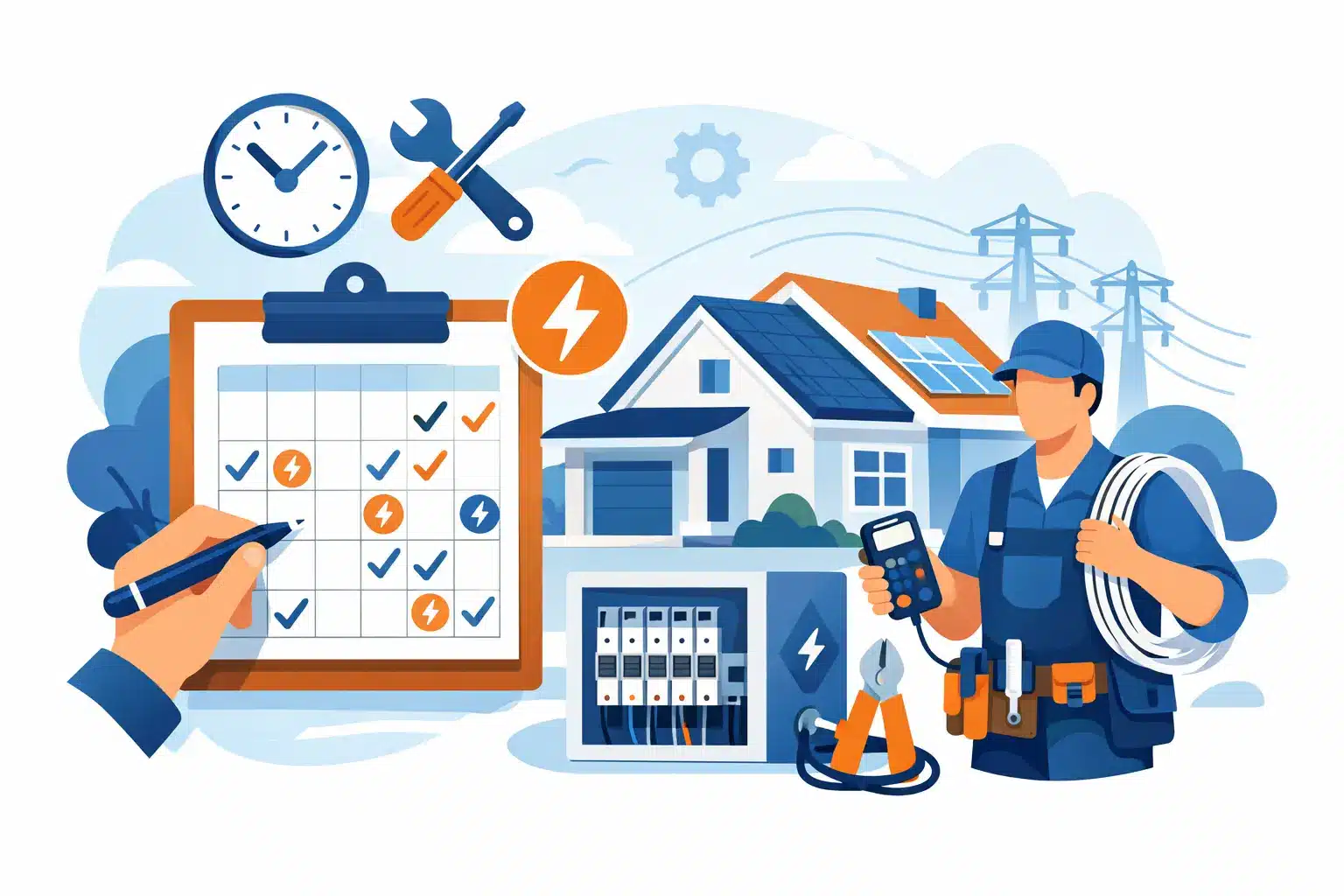
A flickering light, a breaker that trips once in a while, or an outlet that feels loose can be easy to put off. But small electrical concerns have a way of becoming inconvenient or unsafe at the worst possible time. Knowing how to schedule electrical maintenance helps you protect your home before a busy holiday weekend, a summer heat wave, or an unexpected repair forces the issue.
For homeowners, electrical maintenance is not about adding another task to an already long list. It is a practical way to keep the systems behind your walls working safely and reliably. The right schedule depends on your home’s age, electrical load, recent changes, and any warning signs you have noticed.
Start With Your Home’s Electrical History
Before booking service, take a quick look at what has changed in your home. A newer home with no electrical concerns may only need periodic professional attention and an inspection when a project is planned. An older home, a recently purchased property, or a home with an original electrical panel may benefit from a more proactive appointment.
Think about the last few years. Have you added a workshop, a hot tub, central air conditioning, major appliances, or an electric vehicle? Have you remodeled a kitchen, converted a garage, or started working from home more often? Each change can increase demand on circuits and the electrical panel.
It also helps to write down concerns before you call. Note which rooms are affected, when breakers trip, whether lights dim when appliances start, and whether any outlets are warm, discolored, damaged, or loose. These details help a licensed electrician understand whether you need routine maintenance, a focused repair, or an evaluation for an upgrade.
Choose a Maintenance Schedule That Fits
There is no single calendar rule for every house. Still, many homeowners benefit from scheduling a professional electrical check every few years, especially when the home is older or electrical use has increased. If your home has an aging panel, aluminum wiring, a history of overloaded circuits, frequent repairs, or equipment that has not been evaluated in years, annual maintenance may be the better choice.
A maintenance visit is also wise at certain moments:
- Before buying an older home or soon after moving in
- Before a major remodel or adding new high-demand equipment
- Before installing an EV charger, hot tub, solar-related equipment, or additional air conditioning
- After storm damage, water intrusion, rodent activity, or a power surge
- When a breaker trips repeatedly, lights flicker, or outlets stop working
In the Antelope Valley, summer is a particularly useful time to think ahead. Air conditioning, pool equipment, garage tools, and other high-demand appliances can reveal weaknesses that were less noticeable during mild weather. Scheduling before the hottest part of the season can give you time to address issues without rushing a decision.
Plan Around Projects and High-Use Seasons
The best time to book electrical maintenance is usually before you need emergency service. For many households, late winter or spring is a convenient window to check the electrical panel and circuits before heavier summer demand. Early fall can also work well, especially if you expect to use holiday lighting, space heaters, garage equipment, or entertainment systems more often later in the year.
That said, a calendar date should never override a warning sign. If a circuit trips repeatedly or you smell burning near an outlet, do not wait for your planned maintenance visit. Turn off power to the affected area if it is safe to do so and contact a qualified electrician promptly. Electrical problems are not a place for trial-and-error repairs.
If you are planning an installation project, schedule the electrical evaluation early. An EV charger, for example, may require a dedicated circuit and enough panel capacity to support it. Checking that capacity before purchasing equipment helps avoid delays and gives you a clear picture of the work involved.
What to Ask for When You Book
When you contact an electrical service company, describe the appointment as residential electrical maintenance and share any issues you have noticed. A professional can then recommend the right scope of service rather than treating every visit as a generic inspection.
For a typical home, maintenance may include an evaluation of the electrical panel, breakers, visible wiring, grounding and bonding, outlets, switches, smoke detector power connections, and GFCI protection in appropriate locations. The electrician may also check for signs of overload, corrosion, heat damage, loose connections, or outdated components.
Ask whether the visit includes a clear explanation of findings and recommendations. Homeowners should understand what is working properly, what needs attention now, and what can be planned for a future upgrade. A good maintenance appointment should leave you with useful information, not pressure to replace equipment that is still safe and serviceable.
It is reasonable to ask about licensing, experience, and whether permits may be needed if repairs or upgrades are recommended. For work involving panels, new circuits, major installations, or code-related corrections, proper permitting and code-conscious workmanship help protect your home and its long-term value.
Prepare Your Home for the Appointment
You do not need to prepare like you are hosting a large project, but simple access makes the visit more productive. Clear a path to the electrical panel, garage outlets, attic access, and any areas where you have noticed problems. If the panel is in a closet, move stored items away so the electrician can work safely.
Make sure an adult who can answer questions is available, if possible. This is especially helpful when concerns happen at specific times, such as when the microwave and air conditioner run together or when a certain bedroom light is switched on. If you have photos or notes about intermittent issues, keep them handy.
You should also mention recent work completed by other trades. A plumbing leak, roof repair, pest issue, or remodeling project can affect electrical components in ways that are not always obvious from the outside.
Know the Difference Between Maintenance and Urgent Repair
Preventive maintenance is planned. Urgent electrical repair is prompted by a condition that may put people or property at risk. The two can overlap, but it helps to recognize when a routine appointment should become a priority call.
Contact an electrician promptly if you notice a burning smell, buzzing at the panel, sparking, a hot outlet or switch, visible scorch marks, recurring breaker trips, or an electrical shock from an appliance or fixture. If you see smoke or fire, call emergency services first. Never continue resetting a breaker that keeps tripping. The breaker is doing its job by responding to a problem, and repeated resets can hide the cause.
Power loss in one part of the home may be as simple as a tripped breaker or GFCI outlet, but it can also point to a wiring or circuit issue. If you are unsure, it is safer to have it evaluated than to remove covers or attempt a repair yourself.
Turn Maintenance Into a Useful Home Record
After the appointment, save the electrician’s recommendations with your home records. Note the date of service, repairs completed, panel capacity, and any future work to consider. This makes it easier to plan upgrades over time rather than making a rushed decision when something fails.
A simple reminder on your phone or household calendar can keep maintenance from being forgotten. Review it each year, particularly after adding appliances or changing how you use the home. You may not need service annually, but the reminder gives you a chance to decide based on current conditions instead of guessing.
For Palmdale, Lancaster, and surrounding Antelope Valley homeowners, A1 Home Electric provides practical electrical maintenance and trusted electrical repair focused on quality and safety. A scheduled visit can help identify concerns early, support reliable power, and give your family greater confidence in the home you depend on every day.
The best maintenance schedule is the one that reflects your home’s real needs. Book before major projects, respond quickly to warning signs, and let a qualified electrician help you make clear, sensible decisions about what comes next.