

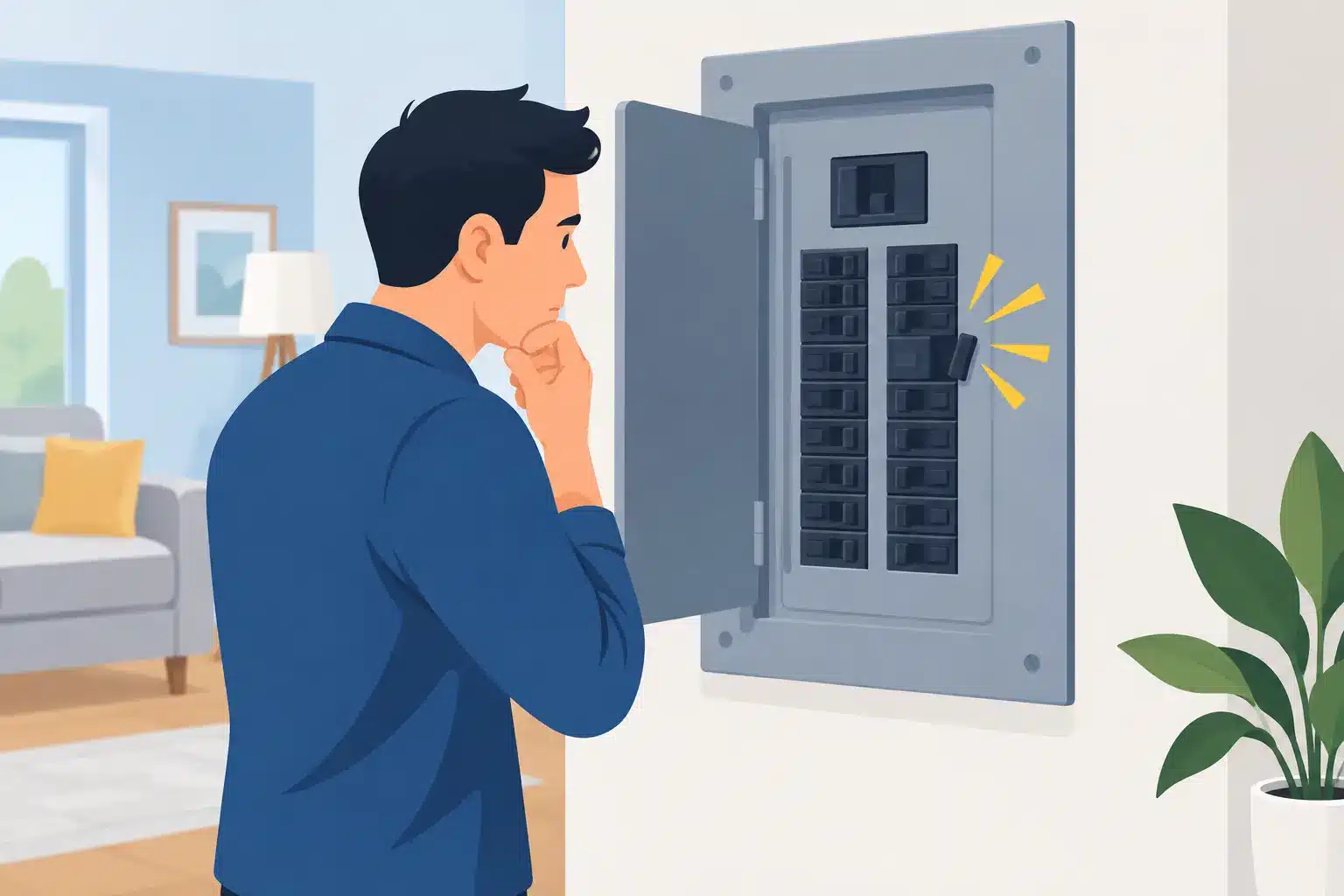
A breaker that trips once after a clear overload may not be a major concern. But when a breaker keeps tripping, it is doing the job it was designed to do: stopping electricity before overheating, damaged wiring, or a faulty appliance creates a larger safety problem. Resetting it over and over is not a repair. The better question is what caused the breaker to trip in the first place.
For homeowners, the goal is simple: protect the home, restore dependable power, and avoid turning a manageable electrical repair into an emergency. Here is what may be happening and when it is time to call a licensed electrician.
Why a Breaker Keeps Tripping
A circuit breaker monitors the amount and path of electricity flowing through a circuit. When it detects an unsafe condition, it opens the circuit and cuts power. The exact cause matters because the right solution for an overloaded circuit is different from the right solution for damaged wiring.
The circuit is overloaded
An overload occurs when too many appliances, devices, or fixtures draw power from one circuit at the same time. This is common in kitchens, garages, bathrooms, laundry areas, and bedrooms where extension cords or power strips have become a long-term solution.
For example, a microwave, toaster oven, and coffee maker may overload a single kitchen circuit. In a garage, a refrigerator, air compressor, freezer, and power tools can do the same. During hot Antelope Valley weather, portable air conditioners and older window units can place an especially heavy demand on circuits not intended to support them.
An overloaded breaker often trips after equipment has been running for a short time. Unplugging or turning off several items may allow it to reset, but that does not always mean the circuit is properly sized for the household’s normal use. A dedicated circuit or electrical upgrade may be the safer long-term answer.
A faulty appliance or cord is causing trouble
If the breaker trips when one particular appliance is plugged in or switched on, the appliance, cord, or plug may be damaged. Frayed cords, loose plugs, worn-out motors, and internal defects can create a short circuit or ground fault.
Do not keep testing a suspected appliance by repeatedly resetting the breaker. Leave it unplugged until it can be repaired or replaced. If the breaker trips even with that item disconnected, the issue may be in the outlet, wiring, or breaker itself.
There is a short circuit or ground fault
A short circuit happens when a hot wire touches a neutral wire or another unintended conductive path. A ground fault occurs when electricity flows where it should not, often toward a grounded surface. Both conditions can cause a breaker to trip immediately.
These issues may be caused by damaged insulation, loose wiring connections, moisture in an outdoor or bathroom outlet, a nail or screw contacting wiring, or a failing fixture. Because shorts and ground faults can produce heat or arcing, they require professional diagnosis rather than trial-and-error resets.
A GFCI or AFCI device is reacting to a hazard
Many homes have ground-fault circuit interrupters, or GFCIs, in bathrooms, kitchens, garages, laundry rooms, exterior outlets, and other areas near moisture. Arc-fault circuit interrupters, or AFCIs, are commonly used in living areas and bedrooms to detect dangerous arcing conditions.
These safety devices can trip for reasons that are not obvious. A GFCI outlet may control other outlets farther down the line, so a tripped outlet in a garage or bathroom can affect power elsewhere. AFCI breakers can respond to damaged cords, loose connections, aging outlets, or certain appliance problems. They should not be bypassed or replaced with standard breakers simply because they are inconvenient.
The electrical panel or breaker needs attention
Circuit breakers do wear over time, although a breaker is not usually the first thing to blame. A loose connection in the panel, corrosion, overheating, an outdated panel, or a breaker that no longer performs properly can all contribute to repeated tripping.
Older homes may also have panels that were adequate when installed but no longer match modern electrical use. Added appliances, remodeled rooms, home offices, pool equipment, workshop tools, and EV chargers all increase demand. A panel inspection can identify whether the issue is isolated to one circuit or part of a broader capacity concern.
What to Do When a Breaker Trips
Start by turning off lights and unplugging devices on the affected circuit. Find the electrical panel and look for a breaker positioned between ON and OFF, or fully in the OFF position. To reset it, move the breaker firmly all the way to OFF first, then back to ON.
If it stays on, reconnect devices one at a time. This can help identify whether a specific appliance is the trigger. Keep in mind that this is only a basic homeowner check. It does not confirm that the wiring, outlet, or breaker is safe.
If the breaker trips immediately, will not reset, feels hot, makes buzzing sounds, or has a burning odor nearby, leave it off. Do not remove the panel cover or attempt to replace the breaker yourself. Electrical panels contain energized components even when an individual breaker is off.
When Repeated Tripping Needs an Electrician
A breaker that trips repeatedly deserves attention, especially when the cause is not clear. A licensed electrician can test the circuit, inspect connections, evaluate the panel, and determine whether the repair involves an outlet, appliance circuit, damaged wiring, or panel equipment.
Call for expert electrical repairs promptly if you notice any of these warning signs:
- The breaker trips immediately after being reset, even when devices are unplugged.
- An outlet, switch, panel, or plug feels warm or looks discolored.
- You smell burning plastic, hear crackling or buzzing, or see sparks.
- Lights flicker or dim when appliances start.
- A GFCI or AFCI will not reset, or trips frequently without an obvious cause.
- The same circuit has begun tripping more often than it did before.
These symptoms can point to loose connections, damaged conductors, arcing, moisture intrusion, or overloaded equipment. Waiting can increase the chance of damage to appliances and, more seriously, create a fire risk.
The Right Repair Depends on the Cause
There is no one-size-fits-all fix for a tripping breaker. If a circuit is overloaded, the answer may be to redistribute household loads, add a dedicated circuit, or upgrade wiring for a high-demand appliance. If a bathroom outlet is exposed to moisture, the repair may involve replacing a damaged GFCI device and correcting the source of moisture.
If the problem comes from a loose connection or damaged wire, the affected section must be located and repaired correctly. When the electrical panel is outdated or overloaded, a panel upgrade may provide the capacity and safety features a home needs for current and future electrical use.
This is particularly worth considering before adding major loads such as an EV charger, central air conditioning equipment, a hot tub, or a workshop circuit. Planning the electrical work before installation helps avoid nuisance tripping and protects the rest of the home’s electrical system.
Preventing Future Breaker Problems
A few daily habits can reduce the chance of overloads. Avoid relying on extension cords and power strips as permanent wiring. Use major heat-producing appliances on appropriate outlets, and avoid running several high-demand kitchen or garage tools at once when they share a circuit.
It also helps to schedule an electrical inspection when purchasing an older home, completing a remodel, or noticing changes in how the system performs. Electrical issues often begin quietly. A breaker that trips occasionally, an outlet that feels loose, or lights that flicker under load can be an early warning that should not be ignored.
For homeowners in Palmdale, Lancaster, and nearby Antelope Valley communities, A1 Home Electric provides trusted electrical repair, panel evaluations, and code-conscious upgrades focused on long-term home safety. A proper diagnosis can replace guesswork with a repair that keeps power dependable where your family needs it most.
Your breaker is not an inconvenience to defeat. It is a safety device asking for attention. Treat repeated tripping as a useful warning, and have the cause identified before the next reset becomes a bigger problem.