

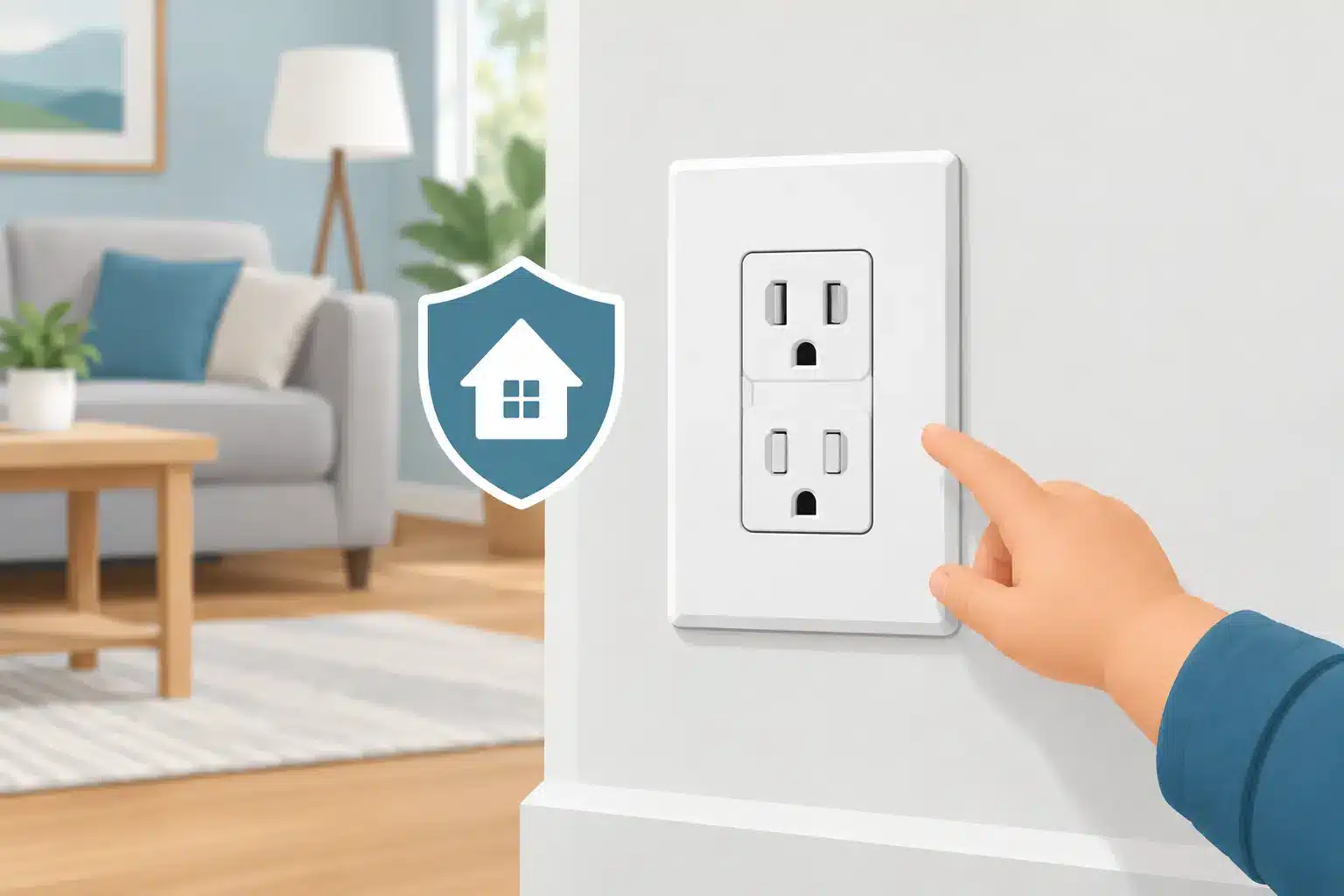
A child does not need to understand electricity for an outlet to become dangerous. A paper clip, key, or small toy can be enough to create a serious risk with an older unprotected receptacle. The best tamper resistant outlets help prevent that situation by blocking access to the energized contacts unless a proper plug is inserted. For families, landlords, and homeowners updating older rooms, this small electrical upgrade can provide meaningful day-to-day protection.
Tamper resistant receptacles are now standard in most new residential construction, but many homes in Palmdale, Lancaster, and the Antelope Valley still have older outlets that predate current safety requirements. Choosing the right replacement is not only about appearance. The outlet must match the circuit, location, and condition of the wiring behind the wall.
What Makes a Tamper Resistant Outlet Different?
A tamper resistant receptacle, often marked with “TR” on its face, has internal shutters over the plug openings. Both shutters must be pressed at the same time by the blades of a standard plug before the outlet will accept it. This makes it much harder for a child to insert a single object into one side of the receptacle.
The shutters are mechanical, not electronic. They do not make the outlet childproof in every possible situation, and they do not replace supervision or outlet covers where those are appropriate. Still, they are a durable layer of protection that works every day without requiring anyone to remember to put a cap back on an outlet.
A quality tamper resistant outlet should accept a normal plug with steady, even pressure. If a plug is unusually difficult to insert, the outlet may be low quality, improperly installed, worn, or simply not compatible with the plug shape being used. Excessive force is never a good solution.
Best Tamper Resistant Outlets: What to Look For
The best tamper resistant outlets are selected by application, not just by price. A basic indoor outlet may be right for a bedroom, while a kitchen counter or garage requires additional protection. Before choosing a device, look at the outlet’s rating, listed safety certifications, and whether the location needs ground-fault or weather protection.
Choose the Correct Amperage
Most residential outlets are rated for 15 amps, and many are installed on 15-amp circuits. A 15-amp tamper resistant receptacle is appropriate for standard lighting and general-use outlet circuits when installed correctly.
Some circuits are 20 amps, particularly in kitchens, garages, laundry areas, and newer homes. A 20-amp receptacle has a T-shaped slot on one side and is designed to accept 20-amp plugs. It should only be used where the circuit wiring and breaker support it. Installing a higher-rated receptacle does not increase the capacity of the circuit. The breaker, wire size, connections, and load all matter.
When the circuit is unknown, or an outlet has been warm, loose, discolored, or unreliable, it is better to have it evaluated than to guess based on the outlet face alone.
Look for a Recognized Safety Listing
Choose outlets that are listed by a recognized testing laboratory, such as UL or ETL. This indicates that the device has been evaluated to applicable safety standards. Well-made receptacles also have firm terminal connections, durable shutters, and a face that remains secure when plugs are inserted and removed regularly.
For frequently used areas, such as family rooms, home offices, kitchens, and garages, a commercial-grade tamper resistant receptacle can be a practical upgrade. These devices are typically built for more frequent use and may hold plugs more securely over time. They cost more than entry-level outlets, but the added durability can make sense in high-traffic areas.
Match Protection to the Room
Tamper resistance and ground-fault protection are different features. A TR outlet helps limit access to energized contacts. A GFCI receptacle monitors electrical flow and can shut off power quickly when it detects a ground fault, helping reduce shock risk.
Many locations require GFCI protection, including bathrooms, kitchen countertop areas, garages, laundry areas, outdoor outlets, and other spaces near water or moisture. A tamper resistant GFCI receptacle combines both protections in one device. This is often the right choice for a replacement outlet in a required GFCI location, though the circuit setup must be checked first.
Outdoor outlets need even more consideration. They generally require GFCI protection, an appropriate weather-resistant receptacle, and a cover designed for the location. A standard indoor TR outlet should not be used outside just because it fits the box.
Where Tamper Resistant Outlets Matter Most
Tamper resistant receptacles are valuable throughout the home, but replacement priorities can vary. Bedrooms, living rooms, playrooms, hallways, and home offices are common starting points because these are the areas where children may have easy access to outlets.
Kitchens, bathrooms, garages, laundry rooms, patios, and pool-adjacent areas deserve special attention because safety depends on more than tamper resistance. These spaces may need GFCI protection, weather-resistant components, correct covers, and proper grounding.
Older homes can present additional concerns. A two-slot outlet with no grounding opening may indicate an ungrounded circuit. Replacing it with a modern three-slot TR outlet without addressing the grounding situation can create a false sense of security. There are code-conscious ways to improve protection on older circuits, but the right solution depends on the wiring and electrical panel.
Avoid These Common Replacement Mistakes
The outlet itself is only one part of a safe installation. Even the best device cannot compensate for damaged wiring, loose connections, overloaded circuits, or an improperly sized breaker.
One common mistake is replacing a two-slot outlet with a three-slot outlet without verifying that an equipment grounding conductor is present. Another is assuming a GFCI outlet can solve every grounding issue. GFCI protection can improve shock protection in certain situations, but it does not create a ground path for equipment that needs one.
Homeowners should also avoid backstabbing connections when replacing receptacles. These push-in wire connections may be allowed on certain devices, but side-screw or clamp-style terminals often provide a more dependable connection when installed correctly. Loose electrical connections can create heat, intermittent power, and potential fire hazards.
If an outlet is cracked, loose in the wall, sparking, buzzing, hot to the touch, or showing dark marks around the slots, stop using it and arrange for electrical repair. Those symptoms call for more than a simple faceplate change.
When to Call a Licensed Electrician
Replacing a straightforward outlet may appear simple, but older homes and heavily used circuits can hold surprises behind the wall. A licensed electrician can identify whether the outlet is properly grounded, determine if GFCI protection is required, inspect the box and wiring, and verify that the device is suitable for the circuit.
Professional help is especially worthwhile when multiple outlets are failing, breakers are tripping, lights flicker when appliances run, or the home has aluminum wiring, aging panels, or ungrounded receptacles. These are signs that the issue may involve the circuit rather than one outlet.
A1 Home Electric helps homeowners make practical safety upgrades without treating every outlet replacement as a major project. For homes with aging receptacles, an inspection can clarify which outlets need immediate attention and which upgrades can be planned over time.
A Safer Outlet Upgrade Starts With the Whole Circuit
Tamper resistant outlets are a smart standard for modern homes, especially where children live or visit. The best choice is usually a listed TR receptacle with the correct amperage and the right added protection for its location. In wet or outdoor areas, that often means choosing a device that also meets GFCI and weather-resistance needs.
If your outlets feel loose, look outdated, or do not match how your family uses the space, treat that as an opportunity to improve safety and reliability. A properly selected and professionally installed receptacle is a small upgrade that helps your home work more safely every time someone plugs in.