
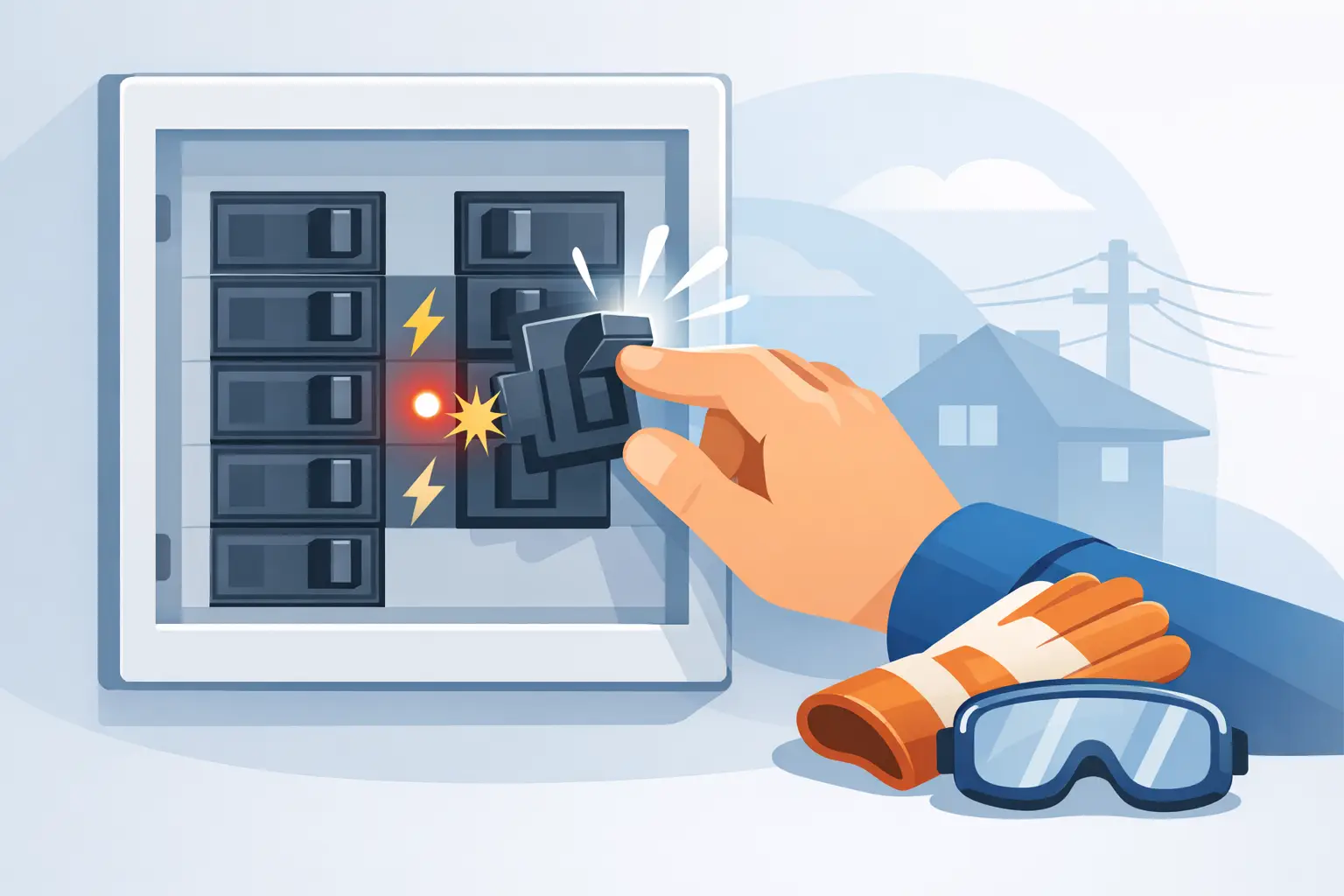
A breaker usually trips at the worst time – right when the microwave is running, the AC is on, or half the house suddenly goes dark. If you are wondering how to reset tripped breaker safely, the first thing to know is that a tripped breaker is often doing its job. It is shutting power off to prevent overheating, equipment damage, or a more serious electrical hazard.
That is why resetting it should never be a rushed move. In many homes, a simple overload causes the problem and the breaker can be reset without issue. In other cases, the trip is a warning sign of a short circuit, a failing appliance, or a panel problem that needs expert electrical repairs.
Why breakers trip in the first place
A circuit breaker is designed to stop the flow of electricity when something is not right on the circuit. The most common reason is overload. That happens when too many devices are running on one circuit at the same time, such as a space heater, hair dryer, and bathroom outlet all sharing the same line.
Another possibility is a short circuit or ground fault. Those problems are more serious because electricity is moving in a way it should not. You might notice a breaker that trips immediately after reset, a burning smell, buzzing, or even discoloration around an outlet. In that situation, the breaker is not the problem – it is the protection.
Breakers can also trip because of aging electrical panels, loose connections, damaged wiring, or a failing appliance. In older homes, this becomes more common over time, especially as power demands increase with newer electronics, garage equipment, and EV charging needs.
How to reset a tripped breaker safely
Before touching the panel, pause for a moment and look for signs that the situation is more than a routine trip. If you smell something burning, see smoke, hear crackling, or notice heat around the panel, do not attempt a reset. Turn off what you can safely leave alone and call a licensed electrician.
If there are no warning signs, start by unplugging or switching off anything on the affected circuit. This matters because if the overload came from too many devices running at once, leaving everything on may cause the breaker to trip again as soon as you restore power.
Next, go to the electrical panel and open the door. A tripped breaker does not always look fully off. It is often sitting in a middle position between on and off. To reset it correctly, push it firmly all the way to the off position first. Then move it back to on.
Use one hand if possible and stand to the side of the panel rather than directly in front of it. That is a good safety habit any time you are operating breakers. If the breaker clicks back on and stays on, return to the affected area and plug items back in one at a time. That step helps you identify whether a specific appliance caused the trip.
If the breaker trips again right away, stop there. Repeated resets are not a fix. They can increase risk if the underlying issue is damaged wiring or a defective breaker.
What not to do when a breaker trips
Homeowners often make the situation worse by treating a tripped breaker like a minor annoyance instead of a safety device. The biggest mistake is resetting the same breaker over and over without figuring out why it tripped.
Another common mistake is assuming the panel is safe just because the lights are out. Electrical panels can still carry serious risk even when one breaker is off. You should never remove the panel cover, reach inside, or try to tighten anything unless you are a qualified professional.
It is also wise not to plug high-demand appliances back in all at once. If the breaker tripped because the circuit was overloaded, restoring the same load immediately puts you right back where you started.
When resetting a breaker is probably enough
Sometimes the issue is simple. If the breaker tripped during a one-time heavy load and resets normally, the circuit may just need better load management. A good example is running a portable heater and a vacuum on the same bedroom circuit. Once one device is removed, the breaker may hold just fine.
This is also common during holidays, home projects, or extreme weather, when more appliances are running than usual. In those cases, the immediate fix is to spread usage across different circuits and avoid extension-cord workarounds.
Still, even a one-time trip is worth paying attention to. If your home has an older panel or you have noticed flickering lights, warm outlets, or inconsistent power, a professional inspection can help you catch a bigger issue before it becomes an emergency.
Warning signs that mean call an electrician
Knowing how to reset tripped breaker safely also means knowing when not to reset it again. Some situations need a licensed electrician right away.
If the breaker will not stay on, there may be a fault in the wiring or on the circuit. If it feels loose in the panel, that can point to panel wear or breaker failure. If one room or one appliance causes frequent trips, the circuit may be undersized, damaged, or improperly loaded for how the space is being used.
You should also call for help if the panel is warm, if you hear buzzing, or if there is any sign of scorching. Those are not watch-and-wait symptoms. They can point to a developing hazard behind the panel or at a connection point in the system.
For homeowners in older Antelope Valley homes, recurring breaker trips sometimes trace back to aging service equipment that was not designed for current household demand. Central air, modern kitchen loads, workshops, and EV chargers can expose weak points in an outdated panel quickly.
Why a breaker may keep tripping
A breaker that trips more than once is giving you useful information. The challenge is that several different problems can look the same from the outside.
An overloaded circuit is the simplest possibility. This happens when normal household use exceeds what that circuit can handle. The fix may be as straightforward as moving appliances to different outlets, but in some homes the better long-term answer is adding a dedicated circuit.
A short circuit is more serious. That can happen inside an outlet, switch, light fixture, appliance cord, or hidden wiring. It usually needs professional troubleshooting because the source is not always visible.
Ground faults are similar and are especially common in kitchens, bathrooms, garages, and outdoor areas where moisture is involved. If a breaker trips in one of those areas, the issue may be tied to a device or receptacle that needs repair or replacement.
Finally, the breaker itself can fail. Like any electrical component, breakers wear out over time. If the panel is older or the breaker has tripped many times over the years, replacement may be part of the solution. The key is proper diagnosis instead of guessing.
Preventing future breaker trips
The best prevention starts with knowing which appliances draw the most power. Space heaters, microwaves, toaster ovens, hair dryers, irons, and portable AC units are common overload culprits. Using them on dedicated circuits when possible makes a big difference.
It also helps to label the panel clearly. Many homeowners find out a breaker is tied to more rooms or outlets than they realized. Good labeling saves time and makes troubleshooting safer.
If your home is showing signs of strain, such as frequent trips, dimming lights when appliances start, or limited outlet capacity where you need it most, it may be time for more than a reset. A panel evaluation, circuit upgrade, or targeted electrical repair can improve both safety and day-to-day comfort.
At A1 Home Electric, this is often where homeowners gain the most peace of mind. Instead of waiting for the next outage or nuisance trip, they get a clear answer about whether the problem is a simple overload, a worn breaker, or a larger panel issue.
A safe reset is only the first step
Resetting a tripped breaker is sometimes a quick fix, but it should never be treated like the whole answer. If the breaker tripped for a clear reason and stays on after a careful reset, that is encouraging. If it trips again, smells hot, or makes you uneasy for any reason, trust that instinct and have it checked.
Your electrical system should support your home safely and reliably, not keep you guessing every time the power cuts out. A little caution now can prevent a much bigger problem later.
Leave a Reply