
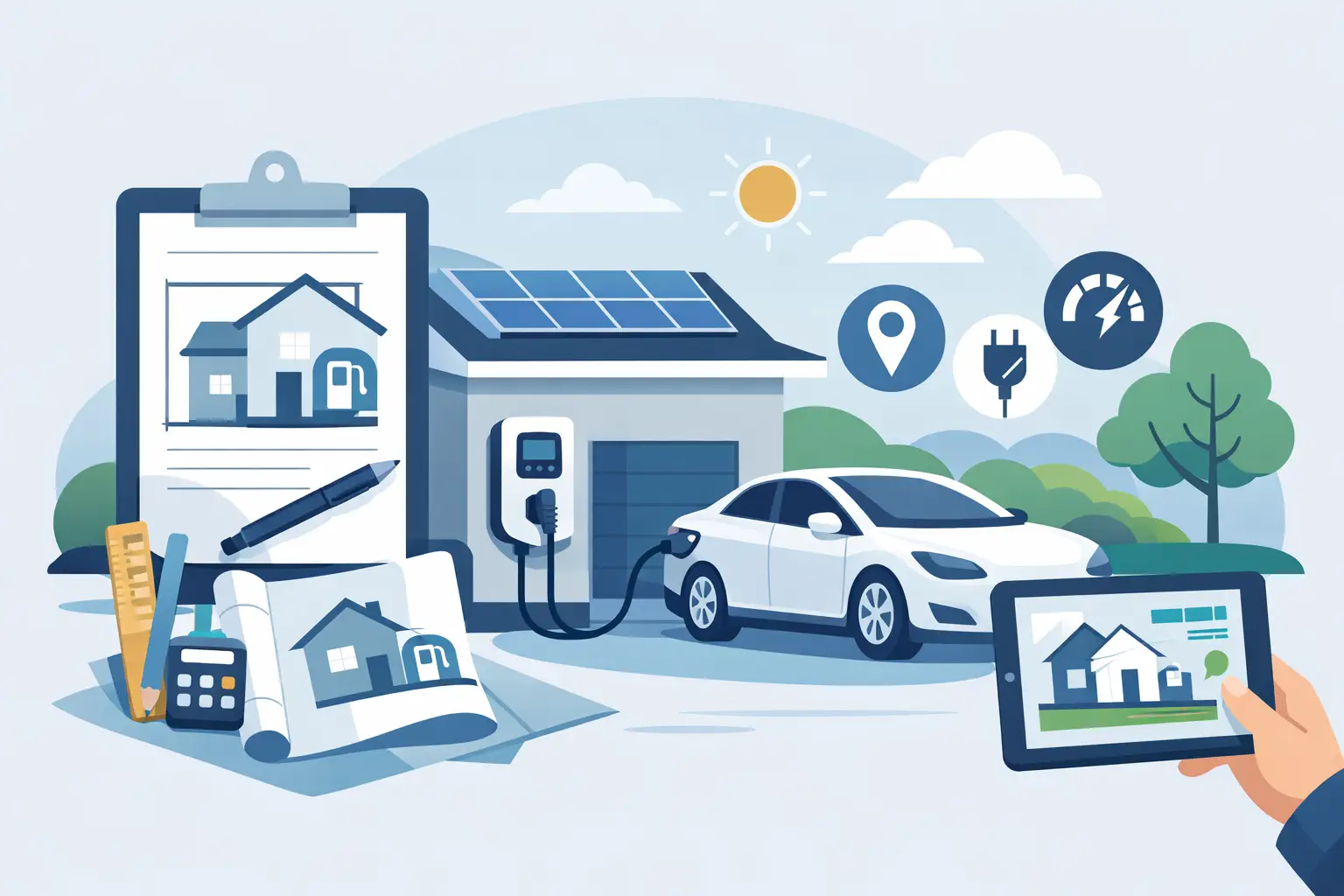
Buying an electric vehicle is the easy part. The bigger question for many homeowners is how to plan EV charger installation in a way that works with the house you already have, your daily routine, and the electrical system behind the walls.
A good plan saves frustration later. It helps you avoid slow charging, overloaded circuits, inconvenient placement, and upgrade costs you did not see coming. For homeowners, the goal is not just to get a charger on the wall. It is to make sure the setup is safe, reliable, and practical for everyday use.
How to plan EV charger around your driving habits
The best charger setup starts with a simple question: how much charging do you really need at home?
Some drivers travel short distances, park every evening, and can easily recharge overnight. Others have long commutes, multiple EVs, or irregular schedules that call for faster charging. If you only drive modest daily miles, a lower-amperage Level 2 charger may be enough. If your household depends on fast turnaround between trips, you may want a higher-capacity setup if your electrical service can support it.
This is where many homeowners overspend or undershoot. A larger charger sounds better, but faster is not always necessary. On the other hand, choosing the smallest option without looking ahead can leave you disappointed if your driving needs change.
Think about the next few years, not just next month. If you are planning for a second EV, a new teen driver, or a longer commute, that matters.
Choose the right charger level for the home
Most homeowners planning an EV charger are deciding between basic Level 1 charging and faster Level 2 charging.
Level 1 uses a standard household outlet. It can work for very light driving, but it is usually too slow for households that rely on the vehicle every day. It may take many hours to add a meaningful amount of range, which can become frustrating quickly.
Level 2 charging is the better fit for most homes. It uses a 240-volt circuit, much like a dryer or range, and charges significantly faster. That makes it more practical for overnight charging and more dependable for busy households.
The trade-off is that Level 2 usually requires professional installation and, in some homes, electrical upgrades. That added work is often worth it because it supports better daily use and gives the system room to perform safely.
Check your panel before you choose the charger
One of the most important parts of how to plan EV charger installation is understanding whether your electrical panel can handle the new load.
Not every home has enough spare capacity for a dedicated EV circuit. Older homes, especially those with aging panels or a history of electrical additions, may already be close to their limits. If that is the case, adding a charger without proper evaluation can create safety concerns and performance problems.
A licensed electrician will typically look at your panel size, existing load, available breaker space, and the condition of the equipment itself. Sometimes the answer is simple: there is room for the circuit, and the installation can move forward. In other cases, a load calculation may show that a lower-amperage charger is the better fit. And sometimes a panel upgrade is the right long-term move.
That may sound like a bigger project than expected, but it is often better to learn that early. A charger should fit the home safely, not push the system past what it was designed to do.
Decide where the charger should go
Placement matters more than many homeowners expect. The ideal location is not just the nearest wall. It should be convenient for how you park, protected from damage, and practical for the electrical run.
For some homes, the garage is the obvious choice. It offers weather protection, easier cable management, and a cleaner installation. For others, the charger may need to be mounted on an exterior wall or near a driveway. That can work well, but it requires attention to weather-rated equipment, physical protection, and code requirements.
Try to picture the full routine. Where does the charging port sit on your vehicle? Will the cable comfortably reach it without stretching across a walkway? Will you always park in the same direction? If two cars share the area, is there enough room to use the charger without creating a daily hassle?
A charger that looks fine on install day can become annoying very quickly if the location is awkward. Good planning avoids that.
Think about permits and code compliance
Homeowners sometimes assume EV charger installation is a simple add-on. In reality, it is electrical work that should be handled with permits and code-conscious installation.
Permits help confirm the work meets current safety standards. They also matter for future home sales, insurance questions, and overall peace of mind. If a charger is installed improperly, the issue is not just convenience. It can affect the safety of the home and the reliability of the electrical system.
This is especially important when panel upgrades, new 240-volt circuits, or exterior installations are involved. Professional installation helps make sure the wiring, breaker sizing, grounding, and equipment selection all match the actual needs of the home.
For homeowners in older neighborhoods around the Antelope Valley, this step can be even more valuable. Homes built in earlier decades may have service limitations or prior modifications that are not obvious until a licensed electrician takes a closer look.
Hardwired or plug-in charger?
This decision depends on the charger model, the home setup, and how permanent you want the installation to be.
A hardwired charger connects directly to the electrical circuit. It often provides a clean appearance, fewer connection points, and strong long-term reliability. Many homeowners prefer this option for a permanent home charging setup.
A plug-in charger uses a 240-volt receptacle. That can offer some flexibility if you may replace or move the charger later. But it also requires the right outlet type, proper circuit design, and attention to how the equipment is rated for continuous use.
Neither option is automatically best for every house. The right choice depends on the charger, the circuit, and the goals for the property. A professional recommendation can help you avoid choosing based on convenience alone.
Plan for the future, not just the first vehicle
A charger installation should make sense now, but it should also hold up as your household changes.
If you expect to stay in the home for years, future planning is worth it. Even if you install one charger today, your next car may charge differently, or your family may end up with two EVs. In some homes, it makes sense to install equipment or conduit that supports easier expansion later. That can reduce labor and disruption down the road.
Energy use throughout the house matters too. If you are also considering an electric water heater, heat pump, solar integration, or battery backup in the future, your EV charger is part of a larger electrical picture. Looking at those plans together can lead to smarter decisions than treating each project separately.
Budget for the full job, not just the charger itself
When homeowners price an EV charger, they often focus on the equipment and forget the installation conditions around it.
The charger unit is only part of the cost. You may also need a new circuit, permit fees, longer wire runs, panel work, or an upgrade to the electrical service. If the charger location is far from the panel, labor and materials can rise. If the panel is outdated, the project may need a broader solution.
That does not mean the installation is not worth doing. It means the quote should reflect the real condition of the home. A lower initial number is not always the better value if it ignores safety needs or leaves you with a charger that does not perform well.
Trusted local electricians such as A1 Home Electric typically look at the home as a whole before recommending a solution. That kind of planning helps homeowners make decisions they will still feel good about years later.
Work with a licensed residential electrician
EV charging is not just about adding power. It is about adding the right power, in the right place, with the right protection.
A licensed residential electrician can evaluate the panel, confirm load capacity, recommend a charger size that matches your driving habits, and install the system to current code. That matters because a home charging setup should support everyday convenience without compromising quality and safety.
It also helps to work with someone who understands homes, not just equipment. Residential electrical systems vary widely, and the right answer in one house may be the wrong answer in another. The best installation is the one that fits your home as it actually exists.
If you are figuring out how to plan EV charger installation, start with the house, not the product. When the electrical system, charger type, placement, and future needs are considered together, the result is a setup that feels simple every time you pull into the driveway.
Leave a Reply