
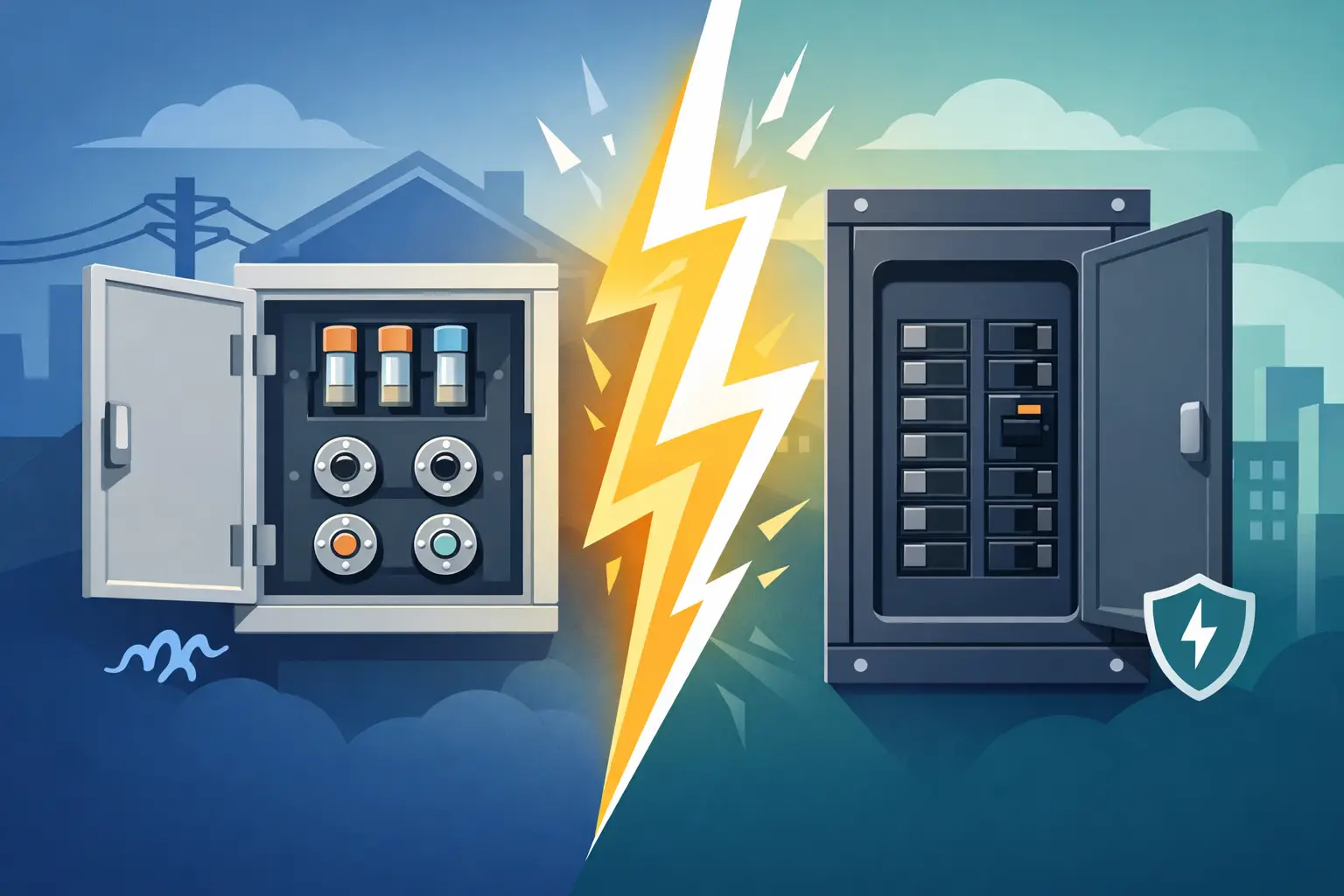
If your lights flicker when the AC kicks on, or you keep resetting part of the house after using a microwave and toaster at the same time, the real issue may be deeper than a nuisance. For many homeowners, the question becomes fuse box vs breaker panel – and the answer affects safety, convenience, and how well your home handles everyday power demands.
Older homes in the Antelope Valley and throughout Southern California often still have aging electrical equipment. Some have fuse boxes that were standard decades ago. Others have breaker panels that may still be outdated, undersized, or showing signs of wear. Knowing the difference helps you understand whether your electrical system is keeping up with modern life or quietly falling behind.
Fuse box vs breaker panel: the basic difference
A fuse box protects your home by using fuses that contain a thin metal strip. If too much current flows through a circuit, that strip melts and cuts power to prevent overheating. Once a fuse blows, it has to be replaced.
A breaker panel does the same job in a different way. Instead of a fuse melting, a circuit breaker trips and shuts off power when it senses an overload or fault. In most cases, the breaker can simply be reset after the problem is addressed.
That may sound like a small difference, but it changes how your electrical system performs day to day. A fuse box is older technology. A breaker panel is generally more practical for modern homes because it is easier to manage, easier to expand, and better suited for higher electrical demand.
Why fuse boxes are still a concern in older homes
A fuse box is not automatically unsafe just because it is old. A properly installed and well-maintained fuse system can still provide overcurrent protection. The problem is that many fuse boxes are now far past the stage where age alone becomes a concern.
Over time, homeowner modifications, added appliances, and years of wear can create risk. It is common to see fuse boxes serving homes that now use central air, larger kitchen loads, home office equipment, and electric vehicle charging needs that the original system was never designed to support.
Another concern is misuse. When a fuse keeps blowing, some homeowners are tempted to install the wrong size fuse to stop the interruptions. That can allow a circuit to carry more power than the wiring can safely handle. Instead of the fuse protecting the wire, the wire becomes the weak point. That is where overheating and fire risk can enter the picture.
Why breaker panels are more common today
Breaker panels became the standard for good reason. They are easier for homeowners to use, and they support the electrical needs of modern living much better than old fuse systems.
When a breaker trips, you can usually identify the affected circuit and reset it once the cause is fixed. That convenience matters, but safety and capacity matter even more. Newer breaker panels are designed to work with current code requirements and can accommodate protections that older systems typically do not offer.
A modern panel also makes it easier to add circuits for renovations, updated kitchens, garage equipment, HVAC improvements, or EV chargers. For homeowners planning long-term improvements, that flexibility is a major advantage.
Safety matters more than convenience
When people compare a fuse box vs breaker panel, they often focus on the hassle of replacing fuses. That is understandable, but the bigger issue is whether the system is still appropriate for the home.
A fuse box may be functioning, but that does not mean it is the best fit for a house with modern appliances and electronics. Electrical safety is about more than whether power turns on. It is about whether circuits are properly protected, whether the panel can handle the load, and whether warning signs are being ignored.
If you notice warm panel components, buzzing sounds, burning odors, frequent blown fuses, repeated tripped breakers, or lights dimming under load, those are signs to have the system inspected. Waiting too long can turn a manageable repair into a larger safety issue.
Capacity is often the deciding factor
In many homes, the panel type matters less than the available electrical capacity. Older fuse boxes were commonly installed when homes used far less electricity. Today, even an average household may be running HVAC equipment, kitchen appliances, laundry machines, entertainment systems, computers, security devices, and chargers all at once.
That increased demand puts pressure on an older system. Even if the fuse box has not failed, it may be operating near its limits. That can lead to nuisance outages, stressed wiring, and difficulty adding anything new.
A breaker panel upgrade often makes sense when the home needs more amperage, more circuit space, or both. This is especially true for homeowners planning remodels or electric vehicle charging. A panel that worked 40 years ago may not be the right panel for how the home is used now.
Repair or replace? It depends on the condition
There is no one-size-fits-all answer. Some electrical issues can be repaired safely. Others point to a stronger case for replacement.
If the problem is isolated, such as a damaged breaker, a loose connection, or a specific wiring fault, repair may be the sensible option. If the panel is outdated, undersized, corroded, or showing multiple signs of wear, replacement is often the safer long-term decision.
The age of the home, the service size, the condition of the wiring, and your future electrical plans all matter. A homeowner who just needs stable service for current usage may have different needs than someone preparing for a kitchen remodel or EV charger installation.
That is why a professional inspection is so valuable. The right recommendation should be based on the house itself, not a generic sales pitch.
Fuse box vs breaker panel for home value and insurance
There is also a practical side that goes beyond daily use. Some insurance carriers look more carefully at homes with fuse boxes or other aging electrical components. Buyers may do the same during a home sale.
A modern breaker panel can improve confidence in the home’s electrical system because it suggests the system is easier to maintain and better aligned with current residential needs. It does not guarantee every part of the electrical system is updated, but it often removes a common red flag.
For homeowners thinking ahead, a panel upgrade can support both safety and marketability. It is one of those improvements that may not be visible like new flooring or paint, but it affects the home in a very real way.
When a panel upgrade makes sense
There are several situations where moving from a fuse box to a breaker panel is worth serious consideration. One is frequent overloads. Another is when the home needs new circuits that the existing setup cannot support.
It also makes sense when the panel shows age-related deterioration, when replacement parts are difficult to source, or when a major home improvement project is already planned. If you are investing in comfort and performance elsewhere in the home, the electrical system should be able to support that investment safely.
For many homeowners in older neighborhoods around Palmdale and Lancaster, this becomes part of maintaining the home for the next decade, not just fixing today’s problem.
What homeowners should do next
If you are not sure what your home has, start by having the electrical service equipment identified and inspected. Many homeowners know they have an older panel, but not whether it is merely old, truly overloaded, or approaching a more urgent condition.
An experienced residential electrician can evaluate the panel, check for signs of heat or damage, review circuit demand, and explain whether repair, maintenance, or replacement makes the most sense. That kind of guidance matters because the goal is not just restoring power. The goal is protecting the home and making sure the system works reliably when you need it most.
At A1 Home Electric, that is how we look at panel-related work – as part of the home’s overall safety and long-term performance. Whether the issue is a fuse box that has outlived its usefulness or a breaker panel that needs attention, the right next step starts with clear information and quality, safety-focused electrical work.
If your home still relies on older electrical equipment, it is worth taking a closer look before the next outage, overload, or repair call makes the decision for you.
Leave a Reply