You usually do not notice an overloaded electrical panel all at once. It starts with small problems that are easy to brush off – a breaker that trips now and then, lights that dim when the AC starts, or outlets that seem to struggle with everyday use. If you are wondering how to know panel overload is becoming a real issue in your home, the answer is to pay attention to patterns, not just one isolated symptom.
For many homeowners, panel overload shows up after the house asks for more power than the system was built to handle. That can happen in older homes, but it also happens in newer households that add more devices, larger appliances, workshop equipment, or an EV charger without considering what the panel can safely support. The panel is the control center for your home’s electrical system. When it is stretched too far, safety and reliability both start to suffer.
How to Know Panel Overload From Everyday Signs
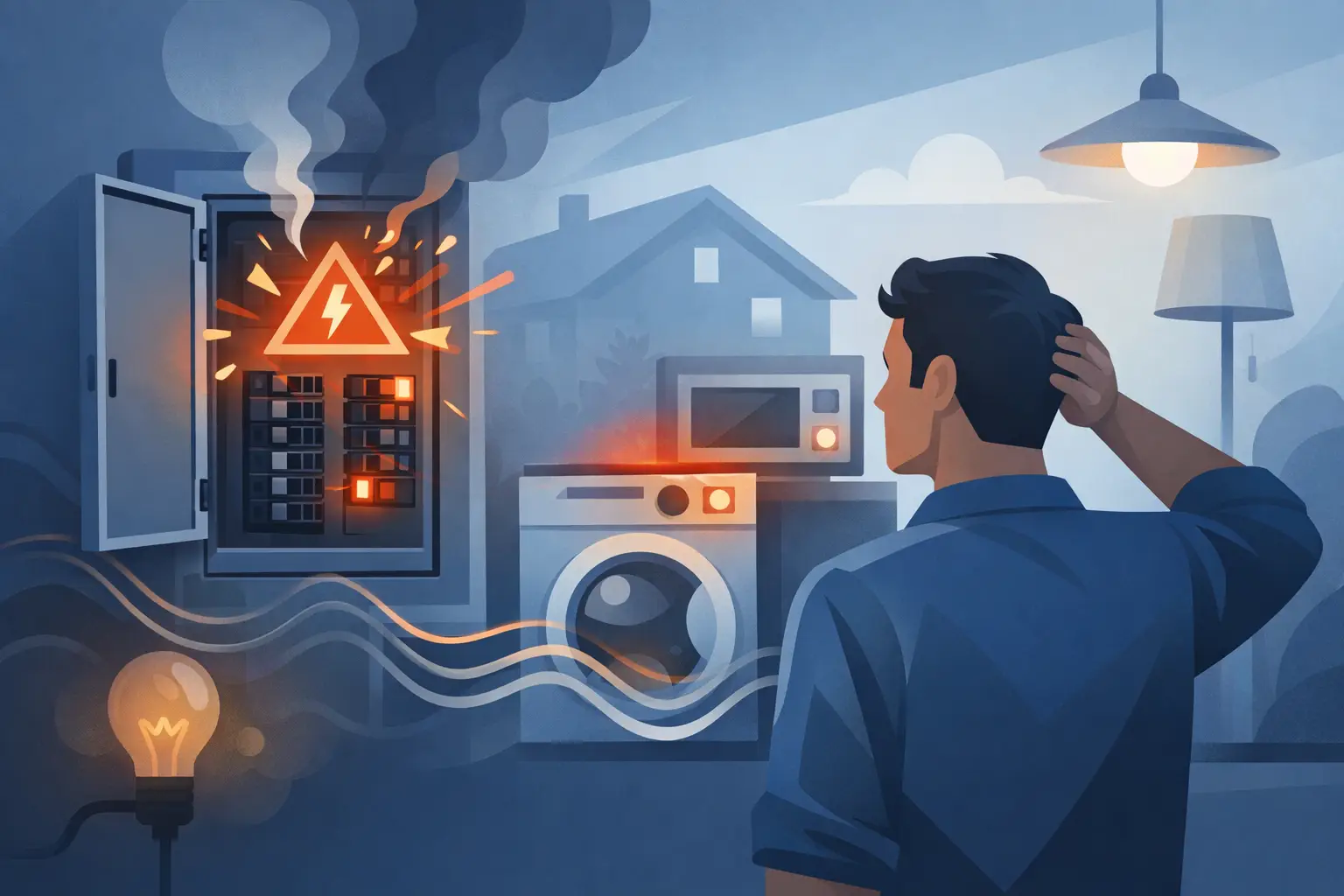
An overloaded panel does not always announce itself with one dramatic failure. More often, it shows up in repeated inconveniences. If breakers trip regularly, especially during normal household use, that is one of the clearest warnings. A breaker is designed to shut power off when a circuit is drawing more current than it should. One trip after plugging too many things into one area may be simple overload on that circuit. Repeated tripping across multiple circuits can point to a broader panel capacity issue.
Flickering or dimming lights are another common clue. If lights dip when the microwave, hair dryer, air conditioner, or laundry equipment turns on, your electrical system may be working too close to its limit. Some brief dimming can happen in certain situations, but frequent or worsening dips deserve attention.
You may also notice warm outlets, buzzing sounds near the panel, or a faint burning smell. Those are more urgent signs. Electrical equipment should not smell hot or sound strained. If a panel, breaker, or nearby wall feels warm, stop treating it like a minor annoyance. Heat is a warning that electricity is not being managed safely.
Another sign is simply running out of space for your electrical needs. If you have been relying on power strips, extension cords, or workarounds because the home does not seem to have enough usable circuits, the panel may no longer match the way you live. That does not always mean the panel itself is overloaded right this second, but it often means your system is undersized for your current demands.
Why Panel Overload Happens
Most overload problems come down to demand. Homes today use more electricity than many older systems were designed to carry. Central air, multiple refrigerators, home offices, entertainment systems, garage tools, electric ranges, and EV chargers all add up. A panel that once handled a household comfortably can become strained as a family’s needs grow.
Age matters too. Older panels may have lower amp capacity, worn components, or outdated designs that were common decades ago but are no longer a good fit for modern electrical loads. Even if the panel is not failing outright, it may be too limited for current use.
There is also a difference between a single overloaded circuit and an overloaded panel. If one bathroom breaker trips because a heater and hair dryer are running together, that may be a circuit issue. If the whole home seems to struggle when multiple systems run at once, the panel itself may be undersized or overdue for evaluation. That distinction matters because the fix is not always the same.
What Homeowners Can Check Safely
If you want to understand how to know panel overload without taking unnecessary risks, start with observation, not hands-on inspection. You do not need to remove a panel cover or test live components to spot warning signs.
Look at your breaker panel with the door closed or simply open the outer door where the breakers are labeled. Are breakers tripping often? Are labels missing, confusing, or inconsistent with what they control? Has the panel been packed with additions over time? A messy or poorly labeled panel does not prove overload by itself, but it often points to a system that has been modified without a clear long-term plan.
Think about when problems happen. Does the issue show up on hot afternoons when the air conditioner is running? Does it happen when someone charges a vehicle while the oven and dryer are on? These patterns help identify whether the home is reaching its electrical limit during peak use.
You can also take inventory of major loads in the house. If your home has added a hot tub, new HVAC equipment, garage refrigerator, workshop tools, or EV charging since the original panel was installed, your electrical demand may have changed more than you realize. That is especially common in growing households where the system was never updated to match added convenience and comfort.
When It Is More Than an Annoyance
A lot of homeowners wait because the lights still come on and the breakers can be reset. The problem is that repeated stress on the electrical system is not just inconvenient. It can shorten the life of breakers, damage connected equipment, and increase the risk of overheating.
If the main breaker trips, that raises the concern level. Individual branch breakers are supposed to isolate specific circuit problems. When the main breaker trips, it may mean the panel is seeing more total demand than it can safely handle. That is not something to ignore.
The same goes for any visible rust, discoloration, or signs of scorching around the panel. Those point to moisture, heat, or component damage. At that point, the issue may be overload, deterioration, or both. Either way, a licensed electrician should inspect it.
How an Electrician Confirms Panel Overload
A proper diagnosis goes beyond symptoms. A licensed electrician looks at panel size, circuit distribution, condition, grounding, breaker compatibility, and the total load your home is actually placing on the system. That matters because two homes can have similar symptoms for different reasons.
In some cases, the panel is adequate, but certain circuits need to be redistributed or dedicated lines need to be added for heavy-use appliances. In other cases, the home genuinely needs a panel upgrade because the existing service no longer supports safe daily use. There are also situations where the panel itself is outdated or worn, even if the amp rating seems acceptable on paper.
That is why guesswork is not the right approach. Replacing a breaker with a larger one, doubling up on wiring, or repeatedly resetting trips without understanding the cause can make the problem worse. Safe electrical work depends on the full picture, not a quick fix.
How to Know Panel Overload Before Adding New Equipment
One of the best times to address panel capacity is before you install something new. Air conditioning upgrades, kitchen remodels, electric water heaters, and EV chargers all place meaningful demand on the system. If your panel is already near its limit, the new equipment may push it over.
This is where a pre-installation evaluation helps protect both safety and budget. It is usually easier to plan for needed electrical improvements upfront than to discover panel limitations in the middle of a project. For homeowners in areas like Palmdale and Lancaster, where summer cooling demand can be significant, this matters even more. Seasonal peaks can expose problems that are less obvious during milder months.
What the Solution Might Look Like
Not every overload concern ends with a full panel replacement. Sometimes the best answer is a targeted repair, circuit correction, or added dedicated circuit for a high-demand appliance. If the panel is in good condition and sized appropriately, a focused improvement may solve the issue.
But if the panel is outdated, full, undersized, or showing signs of wear, an upgrade often makes more sense. A panel upgrade can improve safety, reduce nuisance tripping, support modern appliances, and give your home room for future needs. For many families, it is not just about fixing a current problem. It is about making the home more dependable day to day.
A good electrician will explain the trade-offs clearly. If a smaller repair is enough, you should hear that. If the system is at the point where repairs are only delaying a larger problem, you should hear that too. Honest guidance matters because electrical work affects the whole home.
If your home has been giving you repeated signs that power demand is outpacing the panel, trust what the system is telling you. Small warnings tend to become bigger ones, and early attention is usually the safest, most cost-effective path forward.
Leave a Reply