
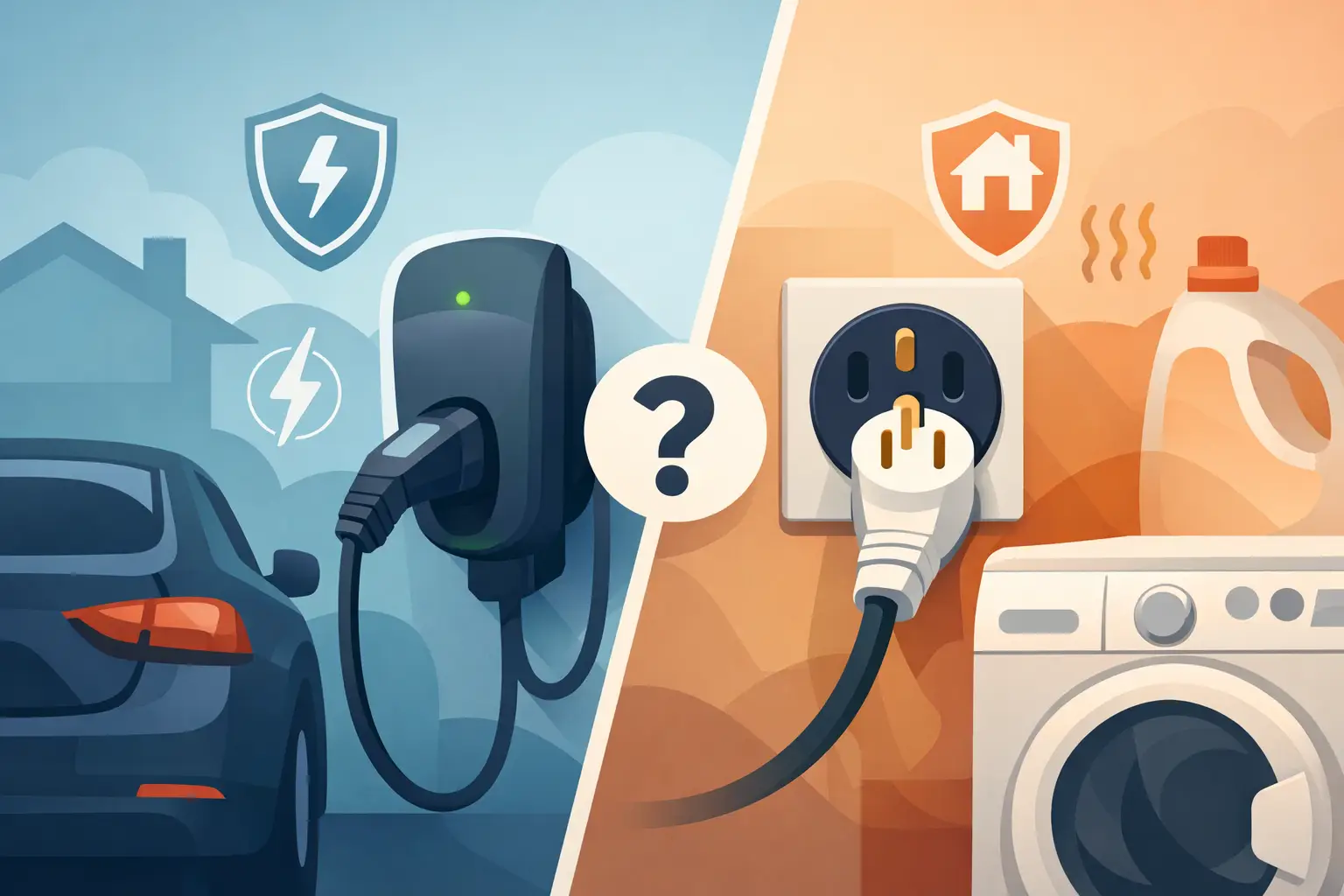
A lot of homeowners ask the same question after buying an EV: can I just use the dryer outlet in the garage and skip installing a charger? It sounds practical, especially if the outlet is already there. But when you compare an ev charger vs dryer outlet, the better choice depends on more than whether the plug fits.
What matters is how your home wiring was designed, how often you plan to charge, and whether you want a setup that works safely day after day. For some households, a dryer outlet can serve as a temporary option. For many others, a dedicated EV charger is the safer and more reliable long-term solution.
EV charger vs dryer outlet: what is the real difference?
A dryer outlet is typically installed for one appliance with a very specific use pattern. A clothes dryer runs in cycles, not usually overnight for hours at a steady high load several times a week. An EV charger is built for the opposite kind of demand. It is designed specifically to deliver power to a vehicle in a controlled, repeated, and sustained way.
That difference matters. Charging an electric vehicle places a continuous load on the electrical system. Continuous loads create different planning requirements than appliances that turn on and off in shorter bursts. A properly installed EV charger accounts for that from the beginning.
There is also a practical difference in convenience. With a dryer outlet setup, homeowners often end up unplugging and reconnecting equipment, using adapters, or depending on a portable charging cord. With a wall-mounted charger, the system is fixed, simple, and ready to use.
Why a dryer outlet is not always the easy shortcut it seems
On paper, using an existing dryer outlet can look like a money saver. If the outlet is already nearby, it may feel like the electrical work is done. In reality, that outlet may not be in the right location, may not be on a circuit sized for regular EV charging, or may be part of an older setup that should be evaluated before adding a major new load.
There is also wear and tear to think about. Dryer receptacles are not always intended for frequent plugging and unplugging. Over time, repeated use can loosen connections, increase heat, and create reliability issues. That does not mean every dryer outlet is unsafe, but it does mean the condition of the outlet, wiring, breaker, and circuit path all matter.
Many homeowners are also surprised to learn that not every dryer outlet is the same. Older homes may have outdated configurations. Some outlets may not provide the type of grounding or connection arrangement a modern EV charging setup expects. Others may be installed in a laundry room far from where the vehicle is parked, which creates another layer of inconvenience and planning.
When a dryer outlet might work
There are cases where a dryer outlet can be a workable short-term charging option. If the outlet is modern, properly wired, in good condition, and located where charging is actually practical, it may support Level 2 charging with the right equipment. For a homeowner who drives modest daily miles and wants a temporary solution, that can make sense.
But temporary should be the key word. If charging becomes part of your weekly routine, the setup should be treated like any other important home electrical use. The question shifts from can it work to is it the best and safest way to do it.
That is where many families decide a dedicated charger is worth it. They are not just paying for speed. They are paying for a setup designed for the job.
Why a dedicated EV charger is usually the better long-term choice
A dedicated EV charger gives your vehicle its own circuit and its own purpose-built equipment. That lowers the chances of overloading a shared circuit, reduces dependence on adapters or extension solutions, and supports more predictable charging performance.
It also makes daily life easier. You park, plug in, and charge. There is no moving cords around, no coordinating with laundry use, and no wondering whether the outlet is being pushed harder than it should be.
For homeowners planning to stay in their house, this kind of upgrade also supports long-term home function. Electric vehicles are becoming more common, not less. Installing a dedicated charger now can be part of preparing the home for the way your household uses power today and how it may use power a few years from now.
Safety matters more than speed
Most homeowners start this conversation by asking about charging speed. That makes sense, but safety should come first. The fastest setup is not the best one if the circuit is aging, the receptacle is worn, or the panel does not have the capacity to support the load properly.
A dedicated EV charger installation includes a closer look at the full electrical picture. That can include panel capacity, breaker sizing, wire condition, outlet location, and the overall health of the circuit. In some homes, the charger itself is straightforward but the panel needs attention first. In others, the home may already be in good shape for the upgrade.
That is why professional evaluation matters. Two homes on the same street can have very different electrical histories, especially in areas with a mix of older and newer construction.
EV charger vs dryer outlet in older homes
Older homes deserve extra caution in the ev charger vs dryer outlet conversation. If the outlet was installed years ago, it may not meet current expectations for grounding, wiring methods, or sustained charging use. Even if the outlet still powers the dryer, that does not automatically make it ideal for an EV.
This is especially relevant for homeowners managing aging electrical systems or planning other upgrades. If your panel has limited space, if breakers trip occasionally, or if you have already been thinking about electrical maintenance, EV charging is a good time to look at the bigger picture.
A charging setup should support the home, not strain it. Sometimes the smartest move is not using the existing outlet. It is upgrading part of the system so the house can handle modern demands safely.
Cost now vs value over time
A dryer outlet option may cost less upfront if everything lines up. That is the appeal. But lower initial cost does not always mean better value.
If you end up replacing a worn receptacle, relocating equipment, adding protective devices, or dealing with inconvenience every week, the savings can shrink quickly. If the setup is only acceptable as a stopgap, you may still pay for a dedicated charger later.
A dedicated charger usually costs more at the beginning, but it often delivers better daily convenience, cleaner installation, and more confidence in long-term use. For many homeowners, that is the better investment.
What homeowners should ask before choosing
Before deciding between a dryer outlet and a dedicated charger, it helps to ask a few practical questions. Where do you park every day? How many miles do you drive? Is your electrical panel in good condition? Will this be a temporary solution, or are you trying to set the home up the right way for years to come?
Those answers shape the decision. A household with light driving and a well-placed modern outlet may have more flexibility. A family with daily commuting, multiple vehicles, or an older panel usually benefits from a more permanent approach.
This is also where local experience helps. Homes in Palmdale, Lancaster, and across the Antelope Valley can vary widely in age, layout, and panel condition. A charging plan that works well in one home may not be the right fit in another.
The better question is what your home can support safely
The choice is not really about whether a dryer outlet can charge a car. In some cases, it can. The better question is whether your home can support that setup safely and reliably without compromise.
If the goal is dependable charging, less hassle, and stronger protection for your electrical system, a dedicated EV charger is often the better answer. If the goal is a temporary bridge while you plan a proper installation, a dryer outlet may be part of that conversation, but it should still be evaluated carefully.
Your home electrical system does a lot more than power one new device. It supports comfort, routines, and peace of mind every day. When you add EV charging, the best choice is the one that keeps all of that working the way it should.
Leave a Reply