
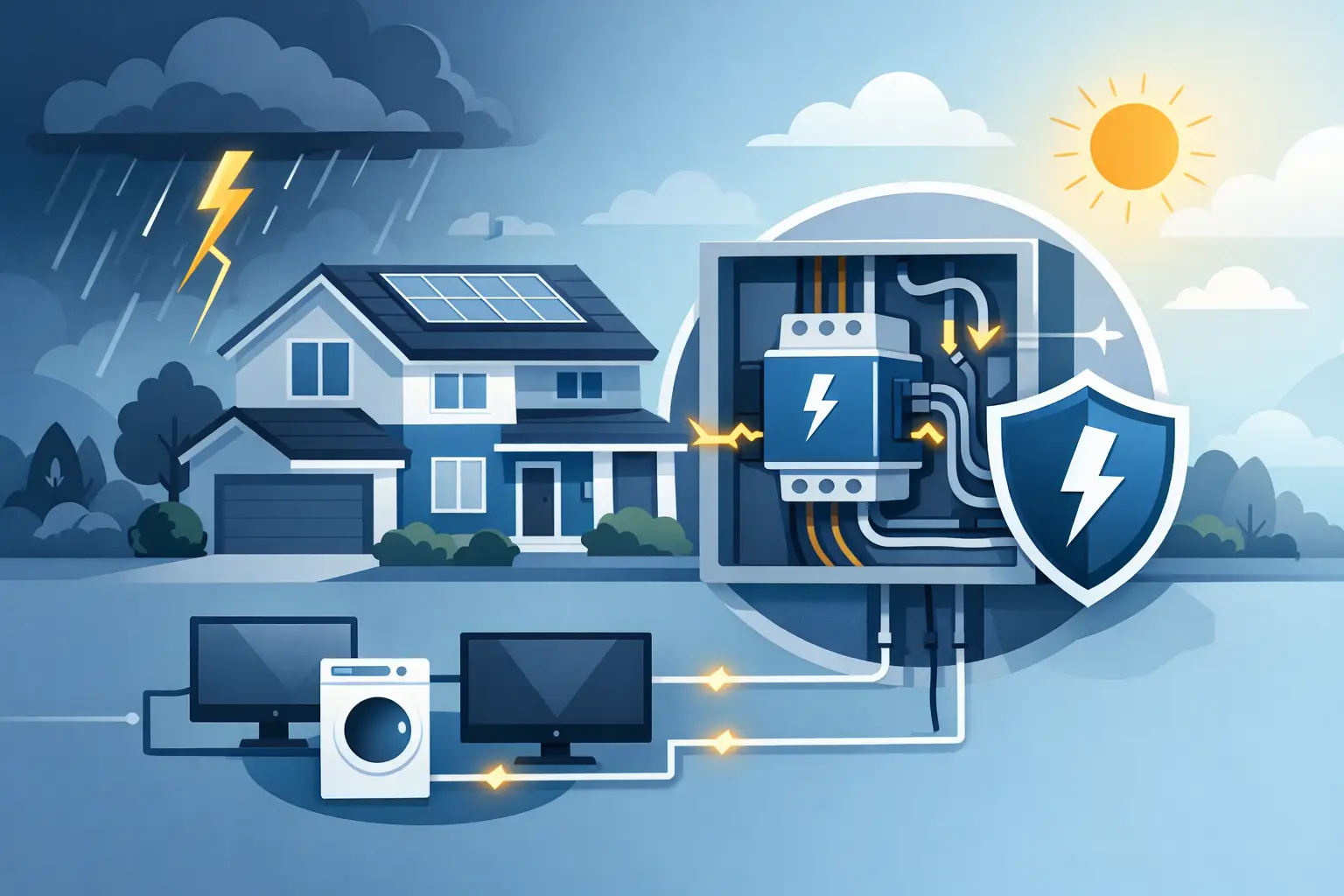
A power surge does not have to be dramatic to cause damage. Sometimes it is a quick spike that shortens the life of your refrigerator, HVAC system, garage door opener, or the electronics built into newer appliances. If you are looking for the best whole house surge protector, the real goal is not buying the fanciest device. It is choosing protection that matches your home, your electrical panel, and the way your family uses power every day.
For most homeowners, that means looking past marketing claims and focusing on what actually protects the house. A good surge protector at the panel can help reduce damage from utility switching, internal surges from large appliances cycling on and off, and some outside voltage events. It is one of those upgrades that usually matters most after something goes wrong, which is exactly why it makes sense to think about it before you need it.
What makes the best whole house surge protector?
The best whole house surge protector is the one that is properly matched to your electrical system and installed correctly at the service panel. Brand matters, but not as much as compatibility, surge capacity, voltage protection rating, and the overall condition of your panel.
This is where homeowners can get tripped up. One product may look stronger on paper because it advertises a high surge current rating, but that number alone does not tell the whole story. A unit also needs to respond appropriately, be listed for residential use, and work with the panel it is being installed on. If the protector is excellent but the panel is outdated, crowded, or showing signs of wear, the result may still fall short.
There is also a practical point that gets overlooked. Whole house surge protection is not a replacement for point-of-use surge strips. It is the first line of defense. Sensitive electronics like TVs, computers, gaming systems, and office equipment often benefit from layered protection. The panel device helps shield the home broadly, while outlet-level protection helps with smaller remaining spikes.
What to look for before choosing a whole house surge protector
A homeowner does not need to become an electrical engineer to make a smart decision here, but a few features are worth understanding.
Surge capacity matters, but bigger is not always better
You will often see ratings listed in kiloamps, or kA. In simple terms, this reflects how much surge current the device can handle. Higher capacity can be beneficial, especially in homes with expensive appliances, HVAC equipment, and smart home devices. Still, a larger number is not a guarantee of better protection if the unit is not installed in the right location or paired with the right equipment.
For many homes, the better question is whether the protector is appropriate for the panel and the home’s electrical demands. A balanced, code-conscious installation usually matters more than chasing the highest advertised rating.
Voltage protection rating is worth attention
Lower clamping or protection levels generally mean the device limits excess voltage sooner. That can be a useful sign of better protection. Homeowners do not need to compare every technical spec in detail, but it helps to know that not all protectors react at the same threshold.
If two devices look similar, this is one of the areas a licensed electrician may use to separate a decent option from a better long-term one.
Panel compatibility is not optional
Some surge protectors are made for specific panel brands or styles. Others are more universal. Either way, proper fit matters. The best whole house surge protector for one home may be the wrong choice for another simply because of panel design, available breaker space, or service configuration.
This is especially relevant in older homes. If your panel is aging, full, or showing signs of heat damage, corrosion, or nuisance tripping, it may be smarter to evaluate the panel first. Surge protection works best as part of a healthy electrical system.
Indicator lights and serviceability help
A surge protector should make it clear when it is functioning properly. Many units include visual status indicators. That sounds minor until you realize a homeowner may have no other easy way to know the unit has taken a hit and needs replacement.
The easier it is to confirm the device is still active, the easier it is to maintain real protection over time.
What a whole house surge protector can and cannot do
This is where expectations need to stay realistic. A whole house surge protector can help reduce damage from many common surges, including smaller spikes that happen far more often than people realize. It can help protect major appliances, modern electronics, and systems tied into the electrical panel.
What it cannot do is make your home invincible. No surge protector can promise complete protection from a direct lightning strike or overcome serious grounding problems, improper wiring, or a failing panel. It is part of a broader safety strategy, not a magic fix.
That is why professional evaluation matters. If a home has grounding issues, loose connections, outdated equipment, or panel concerns, surge protection should be installed alongside the right corrective work, not as a shortcut around it.
Why installation quality matters as much as the device
A surge protector has to respond fast, and its performance depends in part on how it is installed. Lead length, panel placement, grounding, and breaker connections all affect how well the device can do its job.
This is not a great area for guesswork. Improper installation can limit effectiveness and may create safety issues. For homeowners in places like Palmdale and Lancaster, where HVAC systems work hard and homes rely heavily on electrical equipment through hot seasons, protecting the panel properly is about preserving comfort as much as protecting electronics.
An experienced residential electrician will look at more than the product box. They will evaluate the panel condition, confirm compatibility, verify grounding and bonding, and install the unit in a way that supports performance and code compliance.
When surge protection is especially worth it
Some homes have more to gain from surge protection than others, although most modern households can benefit from it.
It makes particular sense if you have newer appliances with circuit boards, a variable-speed HVAC system, a home office, smart home devices, a garage full of powered equipment, or an EV charger. These systems can be expensive to repair and surprisingly sensitive to voltage fluctuations.
It is also a smart move if your home has experienced unexplained appliance failures, frequent breaker concerns, flickering lights, or if your neighborhood sees occasional utility disturbances. Sometimes the issue is not just bad luck. It may be a sign the home would benefit from both inspection and surge protection.
Should you replace surge protectors over time?
Yes, sometimes. Whole house surge protectors do not last forever. They absorb or divert surge energy, and repeated events can wear them down. Some fail visibly through indicator lights, while others may require inspection to confirm their condition.
If your home has had a major electrical event, storm-related issue, or utility disturbance, it may be worth having the protector checked. The same goes if the device is older and you are already planning panel work, service upgrades, or other electrical improvements.
A surge protector should be treated like safety equipment. You want to know it is ready before the next problem, not after.
A practical way to choose the right option
If you are trying to narrow down the best whole house surge protector, start with the house instead of the product. Think about the age of the panel, the value of the equipment you want to protect, and whether your electrical system has been inspected recently.
From there, the best path is usually straightforward. Have a licensed electrician evaluate the panel, recommend a compatible protector with appropriate ratings, and install it as part of an overall safety-minded approach. That may mean a simple add-on installation. In other homes, it may reveal that panel upgrades or repairs should come first.
That answer is not always the cheapest one, but it is often the one that protects your home better over the long run. A1 Home Electric approaches these decisions the same way homeowners do – by focusing on safety, reliability, and whether the work will hold up in real life, not just look good on paper.
The best surge protector is the one you never have to think about because your home keeps working the way it should.
Leave a Reply