
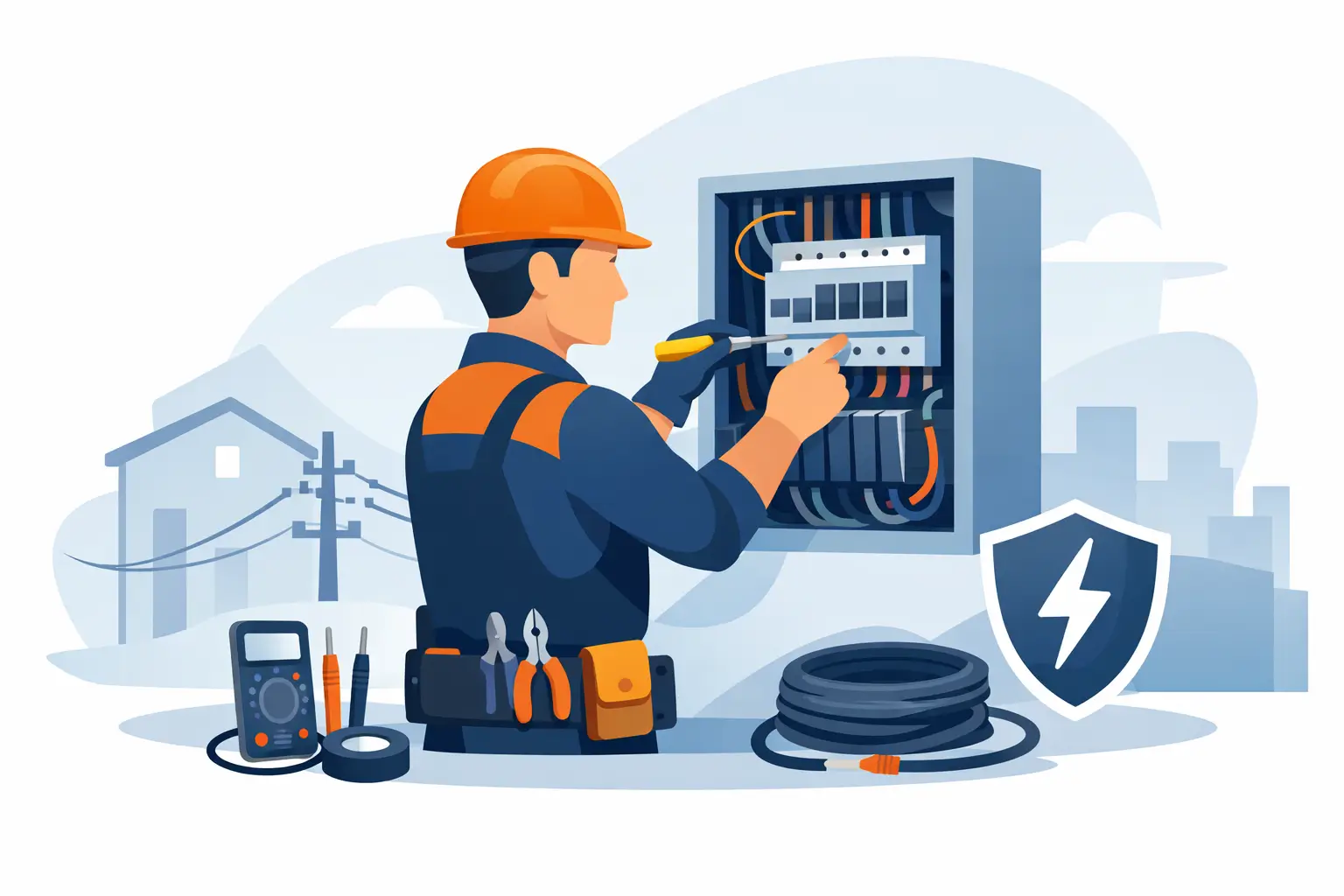
If your breakers trip when the AC kicks on, or you are planning an EV charger, it may be time to talk to a Lancaster panel upgrade electrician. For many homeowners, the electrical panel stays out of sight and out of mind until the house starts asking for more power than the system can comfortably handle. When that happens, the issue is not just convenience. It is safety, reliability, and how well your home can support everyday life.
What a panel upgrade really solves
Your electrical panel is the distribution point for the entire home. It takes incoming power and routes it to the circuits that serve lighting, appliances, outlets, HVAC equipment, and newer additions like car chargers or backyard features. When the panel is undersized, aging, damaged, or simply full, the rest of the home feels it.
A panel upgrade can solve several problems at once. It may give you the capacity to add new circuits, improve breaker performance, reduce nuisance tripping, and bring older equipment closer to current safety standards. In some homes, it is also a practical step before a remodel, solar-related work, or major appliance replacement.
That said, not every electrical issue means you need a full replacement. Sometimes the better answer is a targeted repair, a subpanel, or correcting a problem circuit. That is why a careful inspection matters before anyone recommends major work.
Signs you may need a Lancaster panel upgrade electrician
Some warning signs are obvious. Others build slowly over time and get dismissed as part of living in an older home. If you notice flickering lights, breakers that trip regularly, burning odors near the panel, buzzing sounds, rust, heat, or a panel that is already packed with tandem breakers and workarounds, it is worth having it checked.
Age also matters. Many older homes were designed around a very different electrical load. Years ago, families did not rely on multiple televisions, gaming systems, office equipment, larger HVAC demands, kitchen appliances, and EV charging. A panel that was acceptable decades ago may now be strained by normal household use.
Another common trigger is planning a home improvement project. If you are adding central air, replacing an electric range, installing a hot tub, or setting up an EV charger, panel capacity becomes part of the conversation. You do not want to invest in a new upgrade to the home only to find the electrical system cannot support it safely.
Why panel size is only part of the story
Homeowners often hear about moving from 100 amps to 200 amps, and that can be the right solution. But amp rating alone does not tell the full story. The panel brand, condition of the bus bars, age of breakers, available circuit space, grounding, and quality of previous electrical work all matter too.
A larger panel is not automatically better if the home does not need it, and keeping an older panel is not always cheaper if it creates repeat problems. The right decision depends on the condition of the existing system and your plans for the home over the next several years.
This is where local residential experience helps. A practical electrician looks at the panel in context, not as a one-size-fits-all sale. The goal is a safer, dependable electrical system that matches how your household actually uses power.
What happens during a panel upgrade
A panel upgrade usually starts with an inspection and load evaluation. That helps determine whether the existing service is sufficient, whether the panel itself is the issue, and whether related components should be addressed at the same time. In some cases, the meter socket, grounding system, service entrance equipment, or circuit organization may also need attention.
Once the scope is clear, the old panel is removed and the new one is installed with properly labeled breakers and connections. Circuits are transferred, grounding and bonding are reviewed, and the work is completed according to current code requirements. Utility coordination and permitting may also be part of the job, depending on the property and the level of upgrade.
For homeowners, the biggest concern is usually downtime. A well-planned panel replacement is typically straightforward, but timelines can vary based on the home’s condition and any issues discovered during the process. Older homes sometimes reveal worn conductors, overcrowded wiring, or previous modifications that need correction before the new panel can be safely finalized.
When a full upgrade makes more sense than another repair
There are times when repairing an older panel becomes a short-term fix that does not really serve the homeowner. If replacement parts are difficult to source, if the panel has a known history of reliability concerns, or if corrosion and heat damage are present, continued repairs may not be the smartest investment.
The same is true when your home has simply outgrown the panel. If every improvement requires a workaround, if you have no room for added circuits, or if your power needs are increasing year by year, a panel upgrade often gives better long-term value than piecemeal changes.
That does not mean every older panel is automatically unsafe. Some perform adequately for years. But if you are seeing repeat symptoms or planning meaningful upgrades to the home, it makes sense to solve the issue at the center rather than keep addressing the edges.
Safety, insurance, and resale considerations
A panel upgrade is not just about convenience. It can affect how safely the home handles electrical demand, how future work is completed, and how the property is viewed during inspections or resale. Buyers tend to notice aging panels, especially when they are tied to visible electrical concerns elsewhere in the house.
Insurance can also become part of the equation. Some carriers pay closer attention to older electrical systems or specific panel types. If a panel has known issues or visible deterioration, that may create questions during underwriting or renewal. Even when insurance is not forcing a change, many homeowners prefer the peace of mind that comes with updated service equipment.
For families thinking long term, the value is simple. A dependable panel supports everyday comfort without constant second-guessing about what can run at the same time.
Choosing the right Lancaster panel upgrade electrician
Not all electricians handle residential panel work with the same level of focus. This is one of those jobs where experience, licensing, and a code-conscious approach matter. The right Lancaster panel upgrade electrician should be comfortable evaluating the whole home system, explaining what is necessary versus optional, and completing the work in a way that supports long-term performance.
Clear communication matters too. Homeowners should understand what is being replaced, whether additional corrections are needed, what permits are involved, and how the upgrade supports current and future electrical use. If the explanation feels rushed or overly technical, that is usually not a good sign.
A local company that works regularly in Lancaster and the Antelope Valley will also understand common housing stock, climate-related electrical demands, and the kinds of load increases homeowners are dealing with now. That practical familiarity can make the process smoother and the recommendations more realistic.
Planning ahead for future electrical needs
One of the smartest reasons to upgrade a panel is not because something has already failed, but because the home is changing. More households are adding EV chargers, upgraded HVAC systems, workshops, outdoor lighting, security devices, and home office equipment. A panel that barely keeps up today may feel undersized very quickly.
Planning ahead does not mean overspending on capacity you will never use. It means choosing an electrical setup that gives your home room to function safely as needs evolve. If you know you are likely to add new equipment in the next few years, it is often more efficient to address panel capacity now instead of revisiting the issue later.
For homeowners who want dependable power without recurring electrical headaches, a panel upgrade is often one of the most practical improvements they can make. Companies like A1 Home Electric understand that this work is not about selling complexity. It is about protecting the home, supporting modern electrical demand, and giving families confidence that the system behind the walls is ready for real life.
If your home is showing signs of strain, or you are preparing for a major electrical addition, it helps to address the panel before small warning signs turn into bigger disruptions.
Leave a Reply