
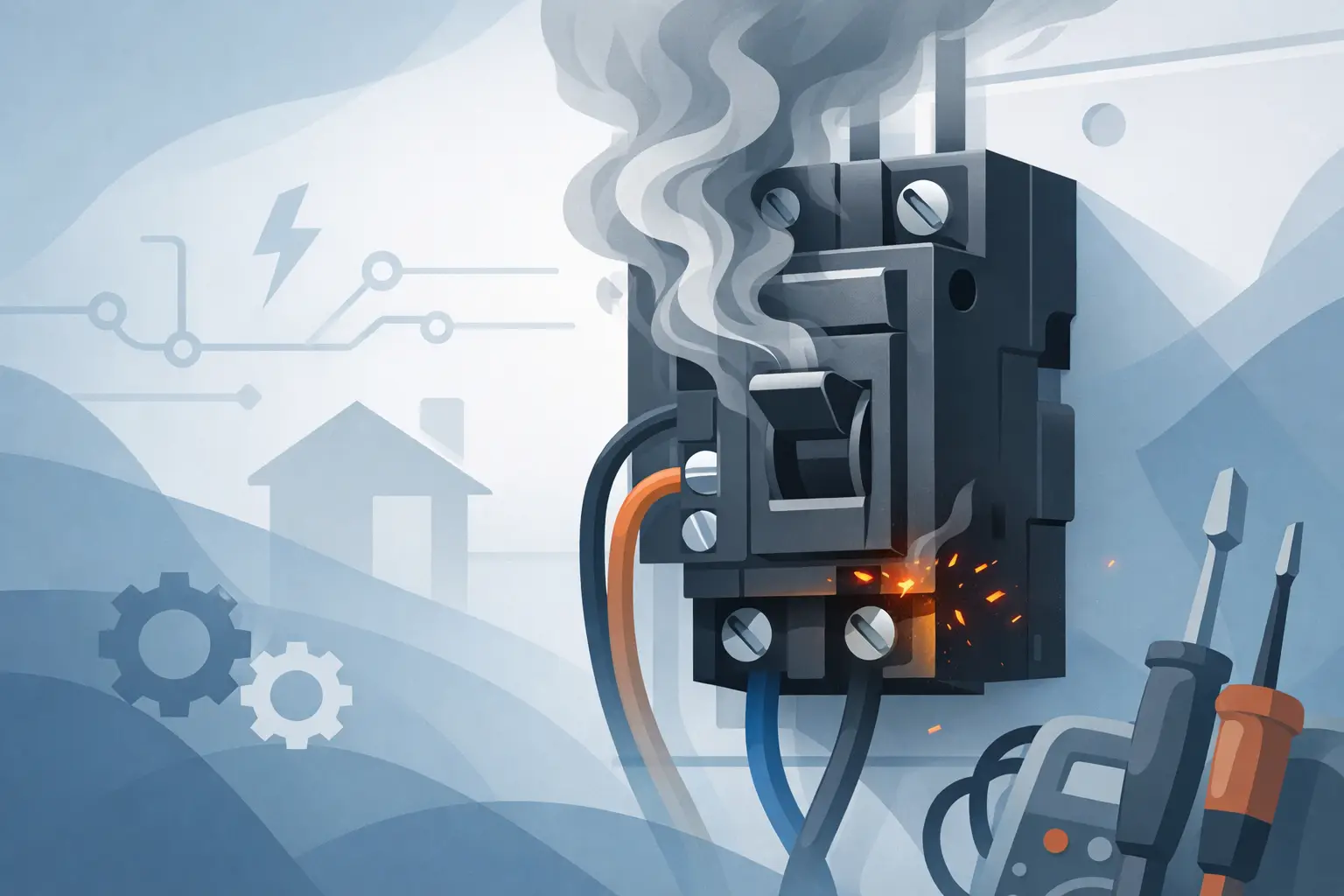
A burnt smell coming from your electrical panel is not the kind of problem to watch for a few days. If you’re asking why does a breaker smell burnt, the short answer is that something may be overheating inside the panel, at the breaker itself, or on the circuit it protects. That smell can point to loose connections, overloads, damaged wiring, or a breaker that is failing under normal use.
Some electrical issues give subtle warnings. This one usually does not. A hot, sharp, plastic-like odor near the panel means the system needs prompt attention because overheating electrical components can damage the panel and increase fire risk.
Why does a breaker smell burnt in the first place?
A breaker smells burnt when heat builds up where it should not. Breakers are designed to trip when a circuit draws too much current, but they can still develop problems of their own. If a connection is loose, electricity can arc across a gap instead of flowing cleanly through the connection. That arcing creates intense heat and can scorch insulation, plastic housings, or metal contact points.
In other cases, the breaker may be overloaded repeatedly. A single overload might trip the breaker and stop the issue. But if the same circuit is pushed hard over and over, wear can build up. Over time, the breaker may weaken, the terminal may discolor, and the smell of burnt plastic or burnt wiring may start to appear.
Age also matters. Older panels and older breakers can degrade from normal use, temperature swings, and years of electrical demand. Homes with added appliances, garage equipment, space heaters, or EV charging needs may be asking much more from the panel than it was originally designed to handle.
Common causes of a burnt breaker smell
One of the most common causes is a loose wire connected to the breaker. Even a slightly loose terminal can create resistance, and resistance creates heat. This is a frequent source of localized burning smells inside panels.
Another common cause is circuit overload. If too many devices are running on one circuit, the breaker may heat up as it works to protect the wiring. Kitchens, bathrooms, garages, and rooms with portable heaters often see this kind of strain.
A failing breaker is also possible. Breakers do not last forever. Internal parts can wear out, and when they do, the breaker may not trip properly or may overheat before it does. That can produce a burnt odor even if the wiring on the circuit is otherwise in decent shape.
There is also the possibility of damage somewhere beyond the panel. A bad outlet, damaged wire in the wall, or failing appliance can send trouble back to the breaker. The smell may seem like it is coming from the panel when the actual problem started farther down the circuit.
Moisture and corrosion can play a role too, especially in areas where equipment is exposed to garage dust, outdoor temperature swings, or older service conditions. Corroded connections do not carry current cleanly, which increases heat and can lead to that burnt smell.
What the smell may be telling you
A breaker that smells burnt is often warning you about heat before you see visible damage. Sometimes homeowners notice a faint odor first, then later see discoloration around the breaker, a warm panel cover, or a breaker that starts tripping more often.
If the smell is strong, the danger is higher. A sharp plastic smell can mean the breaker body or insulation is already overheating. If you notice buzzing, crackling, flickering lights, or a panel that feels warm to the touch, that suggests the problem may be active right now, not just the result of past damage.
There is some variation here. A one-time odor after a heavy load does not always mean severe panel damage, but it still needs to be checked. On the other hand, a recurring smell, especially with tripping or visible marks, is a more urgent sign that repair should not wait.
What you should do right away
If you smell burning near the electrical panel, do not ignore it and do not start removing breakers or opening the panel yourself. Homeowners can take a few safe first steps, but diagnosis inside a live panel should be left to a licensed electrician.
If it is safe to do so, turn off and unplug devices on the affected circuit. If you know which breaker is involved and the smell is active, shutting that breaker off may reduce further heating. If the odor is coming from the main panel and you are unsure which circuit is involved, avoid guessing inside the panel.
If you see smoke, sparking, or signs of active burning, cut power at the main only if you can do so safely, leave the area, and call emergency services if needed. Safety comes first.
What you should not do is just reset the breaker and hope for the best. Resetting a breaker without finding the cause can allow the overheating to continue.
Signs the problem is more serious
Some breaker smells come from a localized issue that can be repaired quickly. Others point to panel damage or system-wide strain. A few warning signs deserve extra caution.
If the breaker will not stay reset, the circuit may have a fault that is still present. If the breaker feels loose on the bus bar, or if there are brown or black marks around it, there may already be heat damage in the panel. If multiple breakers feel warm or the panel is older and already near capacity, the problem may be bigger than a single breaker replacement.
This is especially relevant in homes that have added major loads over time. Air conditioning, workshop equipment, electric dryers, and EV chargers all change the load profile of a home. Sometimes the burnt smell is not just about one bad breaker. It is the first sign that the panel is being pushed beyond what it can comfortably support.
How an electrician diagnoses a burnt breaker smell
A proper diagnosis starts with the panel, but it does not end there. An electrician will usually inspect the breaker, terminal connections, wire condition, bus bar contact, and signs of overheating in the panel itself. They may also check the load on the circuit and inspect outlets, switches, or appliances connected to it.
That matters because replacing the breaker alone is not always enough. If the real issue is a damaged conductor, a failing receptacle, or an overloaded branch circuit, the smell can return. Good electrical repair is about solving the source of the heat, not just swapping out the part that noticed it first.
In some homes, the fix is a straightforward breaker replacement and connection repair. In others, the safer long-term solution may involve rewiring part of the circuit, redistributing loads, or recommending a panel upgrade.
Why fast repair matters for your home
Electrical problems tend to get more expensive the longer heat is allowed to build. A loose connection can damage the breaker, then the bus bar, then nearby wiring. What might begin as a targeted repair can grow into broader panel work if it is left alone.
For homeowners, the bigger issue is peace of mind. Your panel is supposed to protect the home. When the protective device itself smells burnt, that protection may already be compromised. Prompt service helps restore safety and keeps a small problem from turning into a disruptive one.
For families in older Antelope Valley homes, especially those balancing modern appliance use with aging electrical systems, this kind of warning deserves real attention. A trusted electrical repair visit can often identify whether you are dealing with a one-breaker issue or a larger load and panel concern.
When to call for expert electrical repairs
Call a licensed electrician as soon as you notice a breaker smells burnt, especially if the odor is repeated, the breaker trips often, or the panel feels warm. This is not a cosmetic issue and not a good DIY project.
At A1 Home Electric, this is the kind of problem that gets treated for what it is: a home safety issue that needs a clear diagnosis and reliable repair. Whether the cause is a failing breaker, loose wiring, or a panel that needs attention, quality and safety should guide the next step.
If your breaker smells burnt, trust the warning your home is giving you and get it checked before the next reset becomes a bigger risk.
Leave a Reply