
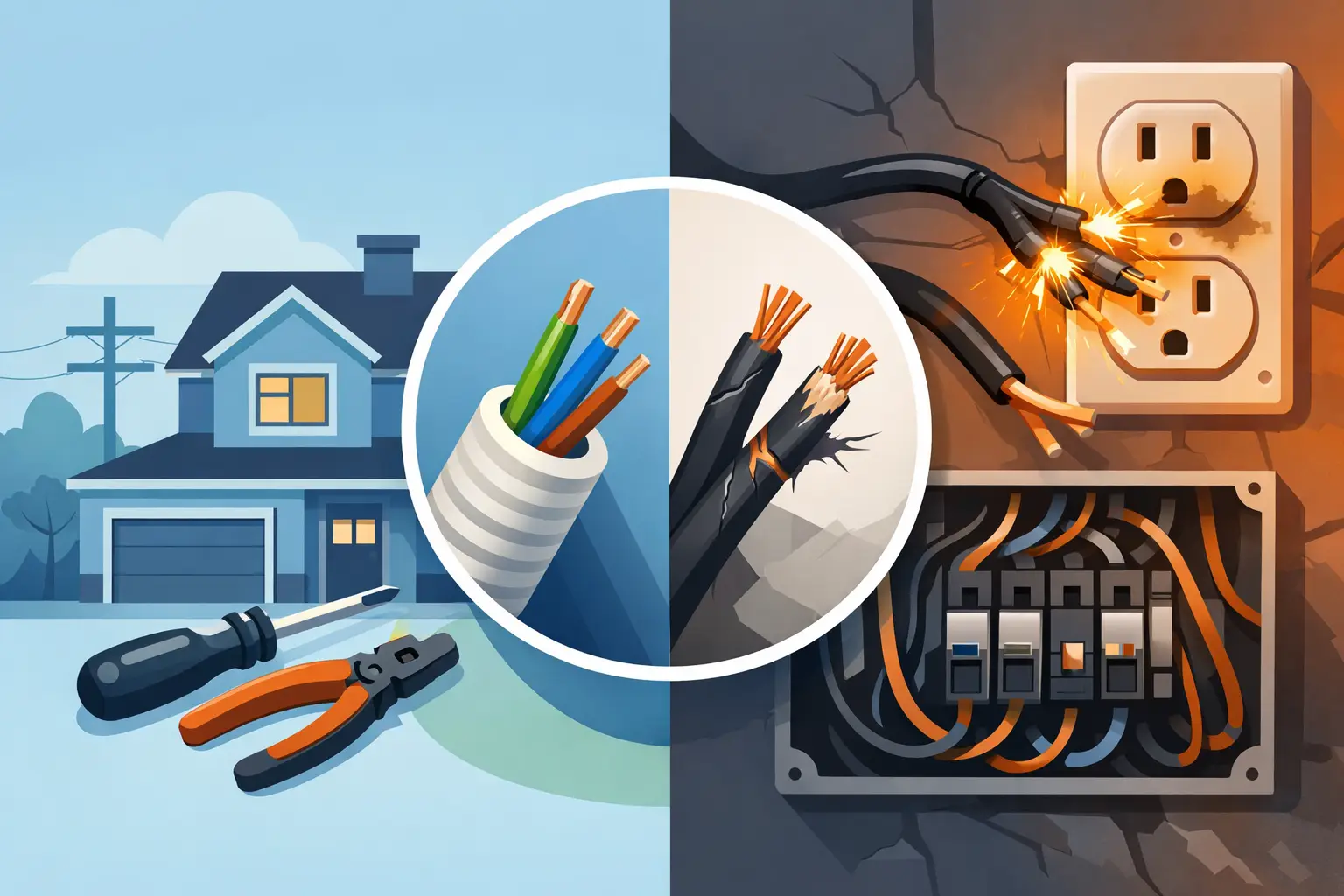
If lights flicker when the microwave starts, outlets feel warm, or breakers trip more often than they used to, it is fair to ask: when should house wiring replaced? For most homeowners, the answer is not based on age alone. It comes down to the condition of the wiring, the demands on the system, and whether the home is still operating safely for modern daily use.
House wiring is one of those systems people rarely see but rely on every day. When it starts to fail, the warning signs can be easy to dismiss at first. A breaker trip here, a dead outlet there, maybe a light switch that suddenly stops working right. But wiring problems are not cosmetic. They can affect safety, comfort, and the long-term reliability of your home.
When should house wiring be replaced in a home?
In many homes, wiring does not need to be fully replaced on a fixed schedule. A well-installed system can last for decades. That said, there are clear situations where replacement becomes the safer and more practical choice.
If a home has very old wiring materials, repeated electrical issues, signs of overheating, or a system that no longer supports modern appliances and electronics, replacement should be considered seriously. A house built many decades ago may still have wiring that was acceptable at the time but falls short of current safety expectations and household demand.
The key point is that age raises concern, but condition makes the decision. A licensed electrician can determine whether the issue is isolated and repairable or whether the wiring has reached the point where larger replacement is the better investment.
The biggest signs your wiring may be outdated
Some electrical problems are minor. Others point to a system that is under stress or deteriorating behind the walls. If you notice recurring symptoms, it is worth taking them seriously rather than waiting for a larger failure.
Frequent breaker trips are one of the most common warning signs. Breakers are supposed to shut power off when a circuit is overloaded or unsafe. An occasional trip may not mean much, but repeated tripping often means the wiring or panel setup is no longer matching the way the home is being used.
Flickering or dimming lights can also be a clue, especially when they happen during normal appliance use. If lights change brightness when the air conditioner turns on or when someone uses the vacuum, the system may be strained. In some cases, the issue is limited to one circuit. In others, it points to a broader wiring or panel problem.
Warm outlets, hot switch plates, buzzing sounds, or a burning smell should never be ignored. Those are stronger indicators of loose connections, damaged conductors, or overheating. If any of those signs show up, the system should be inspected promptly.
You may also notice outlets that no longer hold plugs securely, switches that stop responding consistently, or sections of the home that seem underpowered. On their own, these issues may sound manageable. Together, they can signal aging wiring that is no longer dependable.
Age matters, but not in a simple way
Homeowners often want a firm rule, like replacing all wiring after a certain number of years. Electrical systems do not work quite that neatly. Some homes from the 1970s or 1980s still have serviceable wiring in good condition. Others need substantial work sooner because of poor past repairs, overloading, heat exposure, or neglect.
Older homes deserve closer attention for one reason: they were built for a different lifestyle. Decades ago, families used fewer electronics, fewer kitchen appliances, and far less charging equipment. Today, even a modest household may be running computers, large TVs, gaming systems, portable AC units, and EV charging equipment in the same week.
That extra demand can expose weaknesses in old circuits. A home may have wiring that technically still works, but if it struggles to support normal daily use safely, replacement or rewiring may be the right move.
Certain wiring types raise bigger concerns
Some older wiring methods deserve more caution than others. Knob-and-tube wiring, found in some very old homes, was installed for a different era and typically lacks the grounding expected in modern systems. It may still function in parts of a house, but it is often not ideal for current electrical loads or future upgrades.
Aluminum branch wiring, used in some homes during a certain period, can also require careful evaluation. It is not automatically dangerous in every case, but connections and termination points can become a concern over time if they are not properly maintained or updated.
This is where homeowners should avoid guessing. The presence of an older wiring type does not always mean the entire house must be gutted immediately, but it does justify a professional inspection and a realistic conversation about safety, repairs, and long-term plans.
Full rewiring is not always the only answer
A lot of homeowners hear the phrase rewiring and picture a massive project from day one. Sometimes that is necessary. Sometimes it is not.
If the issue is isolated to one damaged circuit, a localized repair may be enough. If a kitchen remodel or panel upgrade is already planned, an electrician may recommend replacing wiring in stages. That can be a practical path when the rest of the system is still in good condition.
On the other hand, patching small areas over and over can become more expensive and less reliable than addressing the root problem. If the home has repeated trouble in multiple rooms, visible signs of unsafe wiring, or a system that no longer meets the household’s needs, a larger replacement often makes more sense.
The best approach balances cost, safety, and how long you plan to stay in the home. A short-term repair may keep things running, but a long-term fix offers more peace of mind when the wiring is clearly at the end of its useful life.
When renovations reveal the right time to replace wiring
Remodeling is often when wiring issues come to light. Walls are open, outlets are being moved, lighting is being updated, and new appliances are being added. That creates an opportunity to address outdated wiring before the walls are closed again.
If you are renovating a kitchen, adding central air equipment, updating a laundry area, or preparing for an EV charger, the existing wiring may need to be evaluated as part of the project. Even if the old wiring still works, it may not be sized or configured for the upgraded use.
This is especially relevant in homes across Palmdale, Lancaster, and the Antelope Valley where temperature swings put extra demand on HVAC systems and household comfort equipment. A home that once handled basic lighting and a few small appliances may now be expected to support much more.
Safety and insurance concerns can change the timeline
Sometimes replacement becomes urgent because of more than convenience. If an inspection identifies unsafe conditions, damaged insulation, improper splices, or signs of arcing, waiting is not a good plan. Electrical hazards can stay hidden until they become much more serious.
Insurance can also play a role. Some carriers take a closer look at older electrical systems, especially in aging homes. If a home sale, policy review, or inspection report raises concerns about obsolete or unsafe wiring, replacement may move from optional to necessary more quickly.
That does not mean every old home is a problem. It means documented condition matters. A professional inspection gives you something much more useful than a guess. It tells you what is actually happening inside the system.
What a homeowner should do first
If you suspect wiring problems, the first step is not to start opening walls or swapping devices yourself. The safer move is to have the system inspected by a licensed residential electrician who can evaluate the wiring, panel, circuits, and visible warning signs together.
A good inspection should answer practical questions. Is the problem isolated or widespread? Is the existing wiring safe enough to keep, repair, or extend? Will upcoming upgrades place too much demand on the current system? Those answers help homeowners make a decision based on facts rather than fear.
At A1 Home Electric, that kind of practical guidance matters because most homeowners are not looking for theory. They want to know whether their home is safe, whether repairs will hold up, and whether it is smarter to fix a problem now before it becomes more disruptive later.
If your home has recurring electrical trouble, unusual warning signs, or an older system that has never been evaluated, this is a good time to ask the question directly. Wiring does not have to fail completely before it deserves attention, and getting ahead of the problem is often the most reliable way to protect your home.
Leave a Reply