
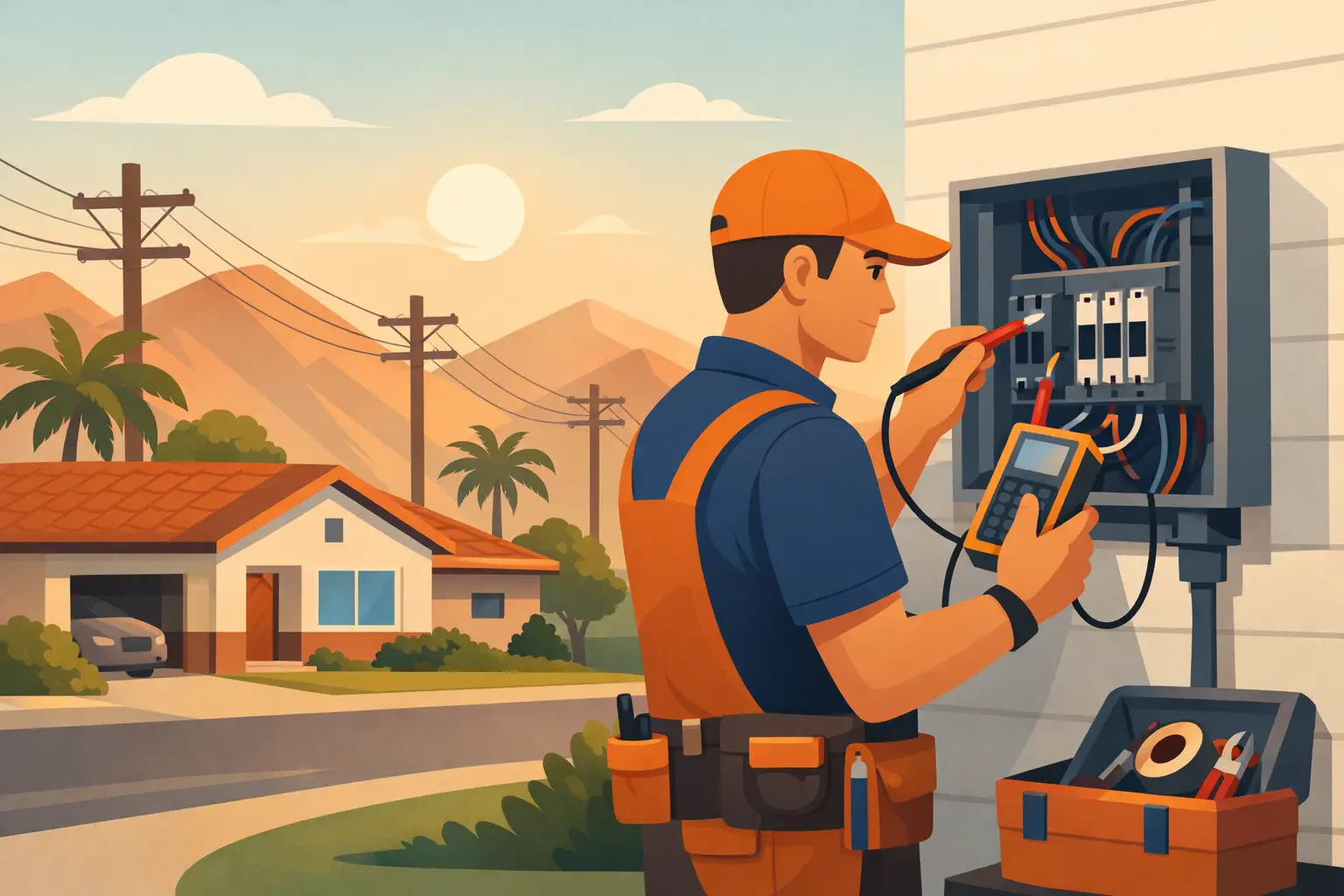
When a breaker keeps tripping or part of the house suddenly loses power, most homeowners are not looking for a theory lesson. They want a Palmdale electrical repair service that finds the real problem, fixes it safely, and helps prevent the same issue from coming back next month.
That is the difference between a quick patch and a proper residential repair. Electrical issues often start small – a warm outlet, lights that flicker when an appliance starts, a switch that works inconsistently – but those small warning signs can point to loose connections, overloaded circuits, aging components, or panel trouble. In a family home, waiting too long can affect more than convenience. It can affect safety, comfort, and the reliability of everything you count on each day.
What homeowners usually mean by electrical repair
Most residential electrical problems are not dramatic at first. They show up as interruptions, annoyances, or patterns that seem easy to ignore. A light dims in one room. A GFCI outlet will not reset. The garage circuit trips every time you use two things at once. Sometimes the issue is isolated. Sometimes it is a sign that the home’s electrical system is under more strain than it was designed to handle.
A trusted electrical repair visit usually starts with diagnosis, not replacement. That matters because the visible symptom is not always the source of the problem. A dead outlet may trace back to a tripped GFCI in another area. Repeated breaker trips may point to an overloaded circuit, but they can also signal a failing breaker, damaged wiring, or a larger panel issue. Good repair work focuses on the cause, not just the symptom.
For homeowners, that practical approach saves time and often avoids unnecessary work. It also leads to safer results. Electrical systems are interconnected, so a repair in one area should make sense within the condition of the home as a whole.
When to call a Palmdale electrical repair service
Some problems should be handled quickly, even if power is still on. A burning smell near an outlet or panel, buzzing sounds from switches or breakers, sparking, discolored wall plates, or breakers that trip repeatedly are not issues to put off. Those are warning signs that something is overheating, loose, damaged, or overloaded.
Other calls are less urgent but still worth scheduling before they become more serious. Flickering lights, outlets that stop working, switches that feel hot, partial power loss, or circuits that no longer support normal household use all fall into that category. So do older homes where the electrical system has not been evaluated in years.
It also depends on what has changed in the home. If you added major appliances, converted a room, started working from home full-time, or bought an EV, your electrical demand may have increased. A system that once seemed adequate can start showing stress when daily use changes.
Common repair issues in residential homes
A lot of service calls come down to a few recurring problems. Worn outlets and switches are common, especially in older homes. These can loosen internally over time, creating poor connections and unreliable performance. Breaker problems are another frequent issue. A breaker that trips once in a while may be doing its job, but repeated tripping should always be investigated.
Panel-related concerns are also common in homes with aging electrical systems. If the panel is outdated, crowded, or showing signs of wear, repair work elsewhere may only address part of the problem. In those cases, a homeowner may need to decide between a targeted repair and a larger upgrade that improves long-term reliability.
Then there are hidden wiring issues. These are harder to spot without testing and inspection, but they often explain intermittent problems. Loose connections, damaged conductors, and poorly done past work can all create risk. That is one reason professional diagnosis matters. The visible issue in the room is not always where the real hazard begins.
Why proper diagnosis matters more than a fast guess
Electrical repair is one of those services where speed matters, but accuracy matters more. If someone replaces the breaker without checking the load, or swaps the outlet without testing the circuit, the problem may return. Worse, it may continue behind the walls while the symptom temporarily disappears.
A dependable residential electrician looks at how the system is performing, what condition the components are in, and whether the repair makes sense for the age and layout of the home. That is especially important in homes that have had additions, remodels, or years of piecemeal electrical work.
There is also a cost side to this. Homeowners often want the most efficient fix, not the biggest invoice. Sometimes that means a straightforward repair. Sometimes the more economical choice is to address a related issue at the same time so you are not paying for repeat service calls. Honest guidance should make that trade-off clear.
Repairs, maintenance, or an upgrade – knowing the difference
Not every problem calls for a major project. In many homes, expert electrical repairs are enough to restore safe function and reliable performance. Replacing worn devices, repairing a damaged circuit, correcting a faulty connection, or resolving a breaker issue may be all that is needed.
At the same time, some repair calls reveal a bigger pattern. If multiple circuits are struggling, if the panel no longer supports household needs, or if parts of the system are outdated, maintenance alone may not be enough. A panel upgrade or circuit addition may offer a better long-term result than repeated small repairs.
That does not mean every older home needs a full overhaul. It means the right recommendation depends on the condition of the system, the age of the components, and how the home is used today. A good electrician will explain what is necessary now, what can wait, and what would improve safety and convenience over time.
What homeowners should expect from a quality repair visit
A quality and safety focused service call should feel clear from the start. The electrician should ask the right questions, inspect the affected area carefully, and explain what they found in plain language. Homeowners should not be left guessing whether the issue was fully resolved or only temporarily managed.
You should also expect attention to the rest of the home environment. Residential work is different from commercial service because it happens where families live every day. That means protecting the home, respecting the space, and making recommendations that fit real household use.
If the repair reveals another concern, the explanation should be practical. For example, if an outlet failed because the circuit is overloaded, that should be explained along with what that means for everyday use. If a panel is showing age-related wear, the next steps should be discussed without pressure. Trust grows when the advice matches the actual condition of the home.
Choosing a local electrician for long-term peace of mind
For homeowners, electrical service is not just about fixing one problem. It is about knowing who to call when the next need comes up, whether that is a repair, an inspection, a panel project, or an EV charger installation. That is where local experience matters.
Homes in the Antelope Valley can vary widely in age, layout, and electrical history. A contractor who has worked in the area for years is more likely to recognize common residential issues, understand local expectations, and recommend solutions that make sense for the home rather than offering a one-size-fits-all answer. A1 Home Electric has built its reputation around that kind of practical, home-focused service.
Consistency matters too. Homeowners want licensed experience, dependable workmanship, and repairs that hold up over time. They are not looking for the cheapest possible fix if it means calling again in a few weeks. They want confidence that the work was done correctly and with the home’s safety in mind.
A Palmdale electrical repair service should protect more than power
Reliable electricity supports almost every part of home life, but good repair work does more than restore power to a room or stop a breaker from tripping. It helps protect appliances, supports heating and cooling equipment, reduces fire risk, and gives homeowners confidence that the system is working the way it should.
That matters even more when a home is busy, growing, or aging. What starts as a minor inconvenience can become a larger disruption if the underlying issue is ignored. Addressing electrical problems early usually gives homeowners more options, less stress, and a better result.
If something in your home’s electrical system has changed, feels off, or no longer works the way it should, trust that instinct. Getting it checked now is often the simplest way to protect your comfort, your routine, and the safety of the people under your roof.
Leave a Reply