
A breaker that trips once after a power outage can be a minor inconvenience. A breaker that trips whenever the microwave, space heater, or hair dryer runs is a warning your home needs attention. The top overloaded circuit signs often start small, but they can point to wiring, panel, or circuit-capacity problems that should be checked before they create a safety risk.
An overloaded circuit occurs when the electrical demand on one circuit exceeds what it was designed to carry. Your breaker is meant to shut off power before wiring overheats. That protective shutoff is doing its job, but repeated tripping is not a problem to work around. It is a reason to identify what is causing the demand.
Top Overloaded Circuit Signs to Watch For
Breakers trip repeatedly
A breaker that trips regularly is one of the clearest signs of an overloaded circuit. It may happen when several appliances are used in the same room, such as a coffee maker, toaster, and microwave in the kitchen. In older homes, several rooms or outlets may share a single circuit, so the cause is not always obvious.
Avoid resetting a breaker again and again without changing what is plugged in. If it trips immediately or continues to trip with normal household use, the issue could be an overload, a damaged appliance, a loose connection, or a fault in the wiring. A licensed electrician can determine which condition is present.
Lights dim, flicker, or brighten when appliances start
Lights that briefly dim when an air conditioner, refrigerator, or vacuum starts can sometimes occur because those appliances draw extra power at startup. However, frequent dimming, strong flickering, or lights that become brighter unexpectedly should not be ignored.
These symptoms can mean a circuit is under strain, but they can also point to a loose electrical connection or a service-panel issue. Because loose connections can generate heat, this is a situation where a professional inspection is the safer choice, particularly if the behavior affects more than one room.
Outlets and switches feel warm
An outlet cover or switch plate should not feel hot. A little warmth from a plugged-in device can occur, but heat at the outlet, switch, plug, or extension cord is not normal. Stop using that outlet, unplug devices if it is safe to do so, and have it evaluated.
Warm outlets may result from excessive load, worn receptacles, loose wiring, or an improperly installed device. Simply replacing the cover plate will not solve the underlying problem. The wiring and connection behind it need to be checked.
You smell burning or see discoloration
A burning odor near an outlet, electrical panel, switch, or appliance is an urgent warning. Brown or black marks around an outlet, a discolored plug, buzzing, crackling, or a melted plastic smell can indicate overheating or arcing.
Turn off power to the affected circuit at the panel if you can do so safely, and do not use the outlet or device. If there is smoke, sparking, or an active fire risk, leave the area and call emergency services. For non-emergency damage or odors, arrange prompt electrical repair rather than waiting to see whether the problem returns.
Extension cords have become a permanent solution
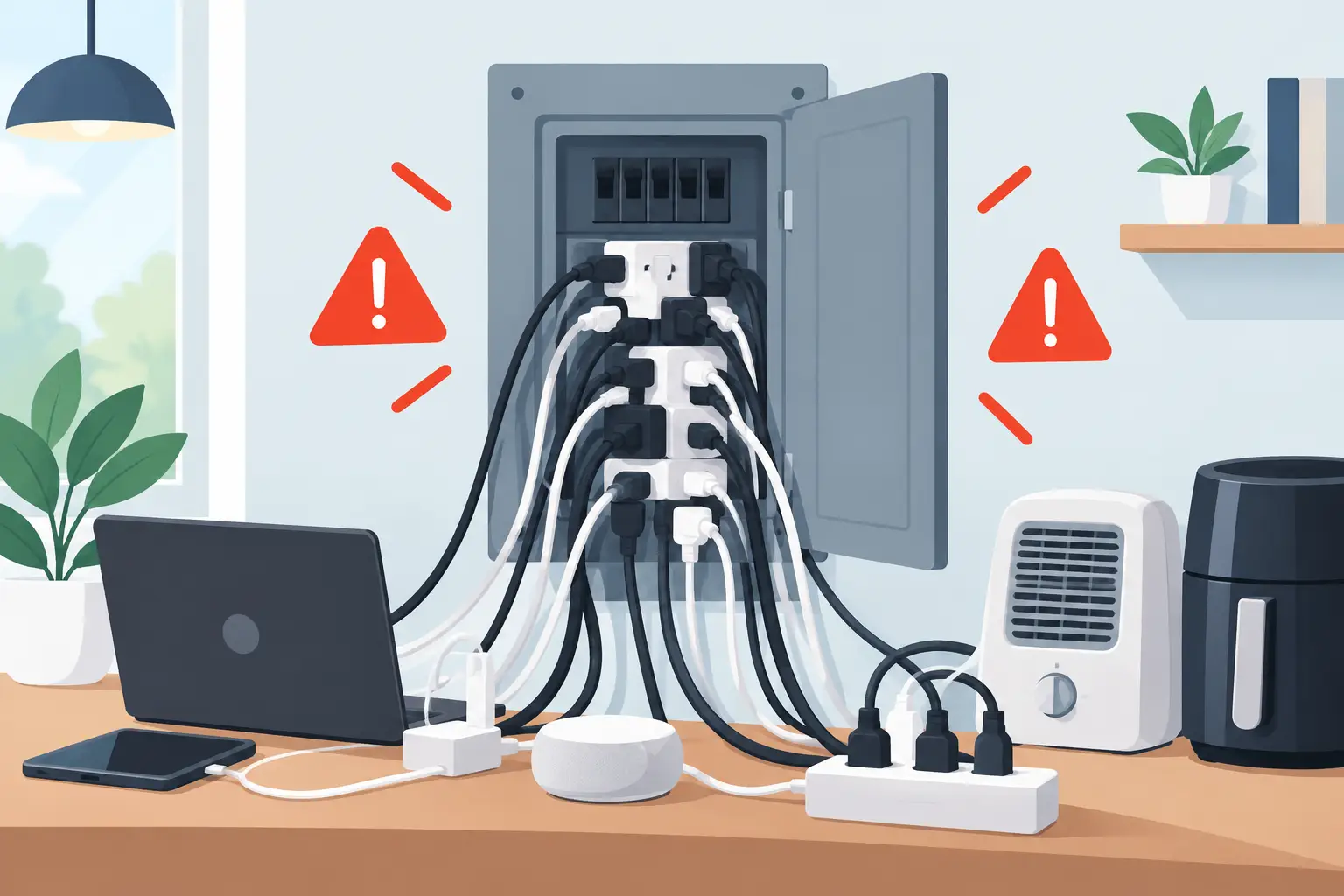
Extension cords and power strips are useful for temporary needs. They are not meant to replace properly located outlets or supply long-term power for high-demand equipment. If a bedroom office relies on multiple power strips, or a garage uses extension cords for tools, chargers, and freezers, the circuit may not be serving the space as it should.
This is especially common when a home gains new electrical needs over time. A room that once needed one lamp may now support computers, monitors, printers, chargers, and portable heating or cooling equipment. Adding correctly sized circuits and outlets is safer and more convenient than continually adding adapters.
Appliances lose power when another device is used
If a bathroom outlet stops working when a hair dryer is used in another room, or garage lights cut out when a power tool starts, your circuits may be sharing more load than expected. Older electrical systems were not designed around modern appliance use, home offices, electric vehicle charging, or large entertainment systems.
A single symptom does not always mean the entire electrical panel must be replaced. Sometimes a dedicated circuit for a specific appliance is the right repair. The best solution depends on the age and condition of the wiring, the available panel capacity, and how your household uses power.
Why Overloaded Circuits Are More Common Than Homeowners Think
Overloads are not always caused by careless use of electricity. They often develop as a home changes. A converted garage becomes a workspace. A new microwave replaces an older, lower-demand model. A family adds portable heaters during cold desert evenings or uses more cooling equipment during Antelope Valley heat.
High-demand appliances deserve special attention. Space heaters, window air conditioners, portable air compressors, microwaves, toaster ovens, hair dryers, and electric vehicle chargers can each place substantial demand on a circuit. Running more than one of these devices on the same circuit can cause nuisance tripping and unnecessary stress on wiring.
The electrical panel also matters. Some homes have limited capacity, outdated equipment, or panels that no longer suit the number of circuits needed for current living. A panel upgrade can provide room for new dedicated circuits, safer equipment, and planned improvements such as an EV charger. It is not automatically the answer to every tripping breaker, but it may be the right long-term answer when an inspection shows the system is at capacity.
What You Can Do Safely Before Calling an Electrician
Start by noticing a pattern. Which breaker trips? What was running when it happened? Does the problem affect one outlet, one room, or several areas of the house? This information helps an electrician diagnose the issue efficiently.
You can unplug nonessential devices from the affected circuit and avoid running several high-demand appliances at once. Check that appliance cords and plugs are not damaged, loose, or unusually hot. If the breaker remains on after reducing the load, that does not prove the wiring is safe, but it can help identify an overload pattern.
Do not replace a breaker with a larger one, remove a breaker panel cover, or attempt to repair wiring yourself. Circuit breakers and wire sizes are matched for a reason. Installing a larger breaker on wiring that cannot safely carry the additional current can allow dangerous overheating before the breaker shuts off.
When a Professional Inspection Is the Right Next Step
Call for expert electrical repairs if a breaker trips repeatedly, lights flicker throughout the home, outlets are warm, or you notice burning smells, buzzing, sparks, or visible damage. You should also schedule an inspection before adding an EV charger, major appliance, workshop equipment, or new high-demand room to an older electrical system.
For homeowners in Palmdale, Lancaster, Quartz Hill, Littlerock, and Lake Los Angeles, a qualified electrician can inspect the affected circuit, test connections, evaluate panel capacity, and recommend only the work the home needs. If a panel upgrade and EV charger installation are appropriate, A1 Home Electric can also manage the permit and inspection process and coordinate with Southern California Edison, including available rebate programs for qualifying customers.
A circuit that keeps asking for attention is not being inconvenient. It is giving you an opportunity to correct a problem before it interrupts your comfort or compromises your home’s safety. A timely inspection brings clarity, protects your electrical system, and lets you use your home with greater confidence.