

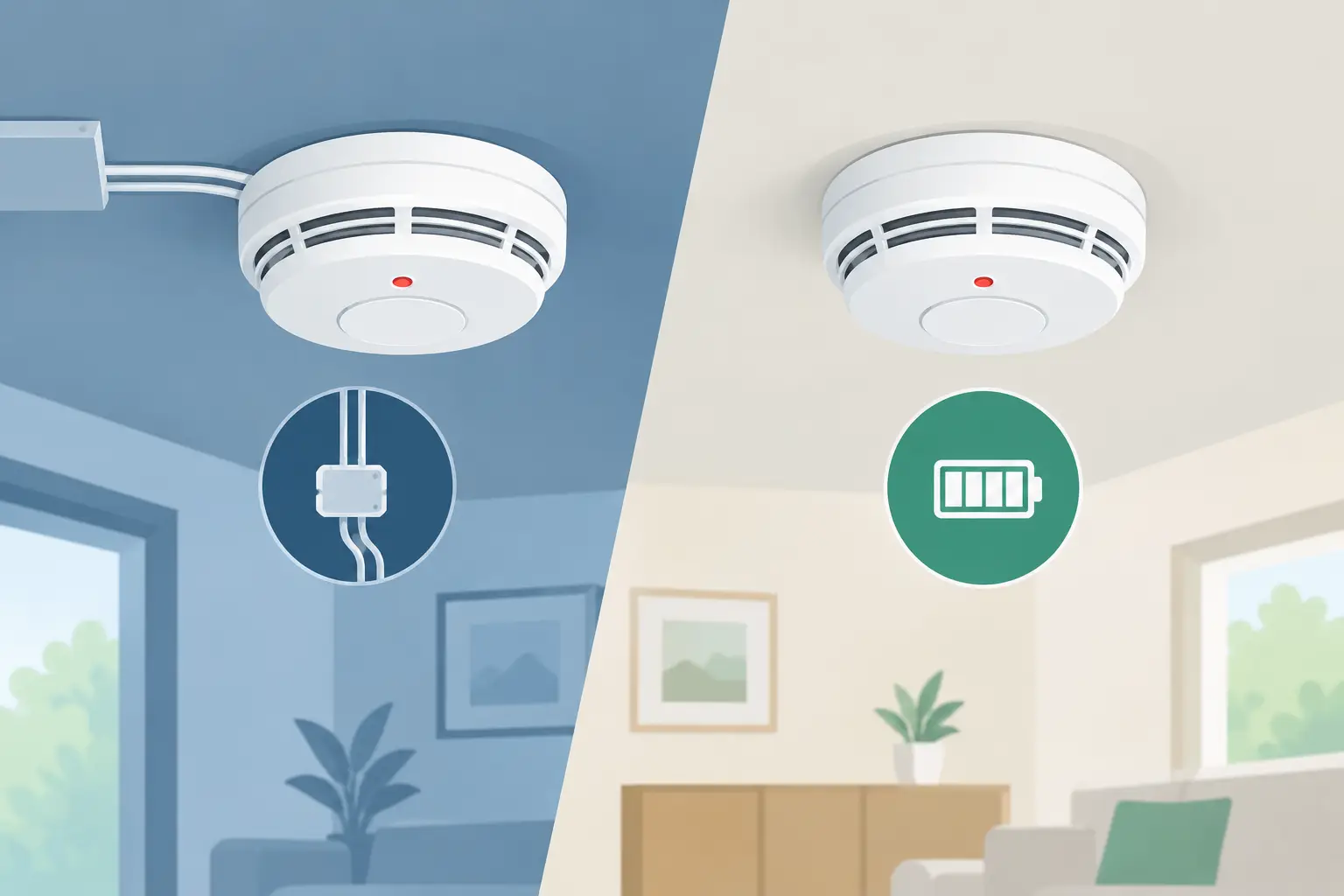
A smoke alarm is only useful if it detects danger early enough to wake everyone in the home. When homeowners compare hardwired versus battery smoke alarms, the right answer usually comes down to the home’s age, existing wiring, local code requirements, and the level of protection the household needs. Both types can save lives when properly installed and maintained, but they do not offer the same reliability or coverage.
For many homes in Palmdale and the Antelope Valley, a hardwired, interconnected smoke alarm system with battery backup is the strongest long-term option. That does not mean battery-operated alarms are always wrong. They can be a practical solution for certain existing homes, additions, or locations where running new wiring would be disruptive. The key is choosing an alarm setup that is code-conscious, properly placed, tested regularly, and dependable during an emergency.
How Hardwired Smoke Alarms Work
Hardwired smoke alarms are connected to the home’s electrical system. They receive normal power from a dedicated circuit, but modern units also include a backup battery so they can continue operating during a power outage.
Their biggest advantage is interconnection. When one alarm detects smoke, every interconnected alarm in the home sounds at the same time. That matters in larger homes, homes with bedrooms on a different floor, and properties where a fire could begin in a garage, laundry room, or other area far from where people sleep.
A hardwired system does require electrical wiring at each alarm location. In a newer home, that wiring may already be in place. In an older home, installing or upgrading alarms may involve accessing attic space, walls, or ceilings. A licensed electrician can assess the existing setup and determine whether the alarms can be replaced directly or whether new wiring is needed.
Hardwired alarms are often the preferred solution when a home is being remodeled, when walls are already open, or when an electrical panel and wiring upgrade is part of a larger project. It is usually more efficient to address smoke alarm wiring while other electrical work is underway than to revisit it later.
How Battery Smoke Alarms Work
Battery smoke alarms run independently on replaceable batteries or sealed long-life batteries. They do not depend on household wiring, which makes them easier and faster to install in some situations.
For a simple replacement in a location where no wiring exists, a battery-powered alarm may be appropriate if allowed by current building requirements. Models with sealed 10-year batteries reduce the chance of an alarm being disabled because of a low-battery chirp or a missing battery. They still need regular testing, cleaning, and replacement at the end of their service life.
The main limitation is that standard battery alarms may not alert the entire home when one unit activates. Some newer wireless interconnected models can communicate with each other, which improves coverage without requiring new hardwired interconnect wiring. However, these systems should be selected carefully and installed according to the manufacturer’s instructions and applicable code requirements.
Battery-only alarms are not a shortcut around a needed electrical correction. If an existing hardwired alarm has failed, removing it and replacing it with a standalone battery unit may leave the home with less protection than it had before. The cause could be a bad alarm, a loose connection, a tripped breaker, damaged wiring, or a failed interconnect circuit. That problem should be diagnosed rather than ignored.
Hardwired Versus Battery Smoke Alarms: The Real Differences
The practical difference between hardwired versus battery smoke alarms is not simply where they get power. It is how reliably they protect the people inside the home.
Hardwired alarms with battery backup provide continuous power under normal conditions and continue working during an outage. When interconnected, they can alert the entire household at once. This is particularly valuable for children, older adults, deep sleepers, and anyone who may not hear a single alarm sounding at the other end of the house.
Battery alarms offer flexibility. They are often less expensive to install initially because there is no new wiring to run. They can be useful in an older home where an electrician determines that a code-compliant retrofit option is appropriate. Their effectiveness, however, depends heavily on homeowner maintenance. A dead battery, expired unit, dust buildup, or disabled alarm can eliminate the protection it was supposed to provide.
Neither option is maintenance-free. Smoke alarms should be tested monthly using the test button, kept free of dust and paint, and replaced when they reach the manufacturer’s stated replacement date. Most smoke alarms need replacement after about 10 years, even if they still seem to work during a basic test.
When a Hardwired System Makes the Most Sense
Hardwired interconnected alarms are generally worth considering when you are completing a major remodel, adding bedrooms, converting a garage, upgrading an electrical panel, or correcting outdated wiring. These projects create an opportunity to bring safety devices up to current expectations without repeating drywall and electrical work later.
They are also a smart choice when an existing hardwired alarm system is aging or unreliable. Replacing old units with compatible, interconnected alarms can restore the protection the home was designed to have. Compatibility matters because not every alarm model communicates properly with every existing interconnect system.
A hardwired upgrade can also benefit real estate transactions. Buyers, sellers, agents, and inspectors often identify smoke alarm deficiencies during inspections. Addressing them properly can prevent last-minute repair requests and give everyone more confidence that the home is safer and ready for occupancy.
When Battery or Wireless Alarms May Be Appropriate
Battery-operated or wireless interconnected alarms may make sense in older homes where wiring access is limited, in specific retrofit locations, or where local requirements permit their use. They can also supplement an existing system when an additional alarm is needed in a location that would be difficult to wire.
The decision should account for the alarm’s placement, not just installation cost. Smoke alarms are commonly needed inside sleeping rooms, outside separate sleeping areas, and on every level of the home. Carbon monoxide alarm requirements may also apply, especially in homes with fuel-burning appliances, fireplaces, attached garages, or other potential carbon monoxide sources.
California and local building requirements can change, and the right setup may differ between a simple replacement, a remodel, and a newly permitted addition. A qualified electrician can review the home’s existing system and help determine what is needed before work begins.
Don’t Overlook Alarm Placement and Type
The best alarm is not effective if it is installed in the wrong place. Smoke alarms should be positioned where occupants can hear them, especially near sleeping areas. Avoid placing standard smoke alarms too close to cooking appliances, bathrooms with heavy steam, supply vents, windows, or ceiling fans, since nuisance alarms can lead people to disable the unit.
For kitchens and areas prone to steam or cooking particles, the alarm type matters. Photoelectric alarms are often favored for smoldering fires and may create fewer nuisance alarms near kitchens when installed at an appropriate distance. Ionization alarms can respond quickly to some fast-flaming fires. Many homeowners choose dual-sensor units or combination alarms to cover more fire conditions, but placement and professional installation remain just as important as the sensor type.
If an alarm chirps repeatedly, sounds without an obvious cause, or fails to respond to a test, do not assume it only needs a new battery. Check the replacement date first. If it is hardwired, the issue may involve the alarm, backup battery, electrical connection, or interconnect wiring.
A Safer Choice Starts With an Inspection
Smoke alarm decisions should be based on the home you actually have, not a one-size-fits-all answer. A small older house may need a different approach than a two-story home with bedrooms upstairs, an attached garage, and a recent addition.
A1 Home Electric helps homeowners in Palmdale, Lancaster, Quartz Hill, Littlerock, and Lake Los Angeles evaluate failing hardwired alarms, outdated devices, wiring concerns, and safety upgrades. A licensed inspection can identify whether a direct replacement, a wireless option, or a fully interconnected hardwired system is the dependable path forward.
If your alarms are old, missing, chirping, disconnected, or no longer interconnected, treat that as a safety concern rather than a minor household annoyance. A properly working alarm system gives your family more warning, more time to respond, and greater peace of mind when it matters most.