
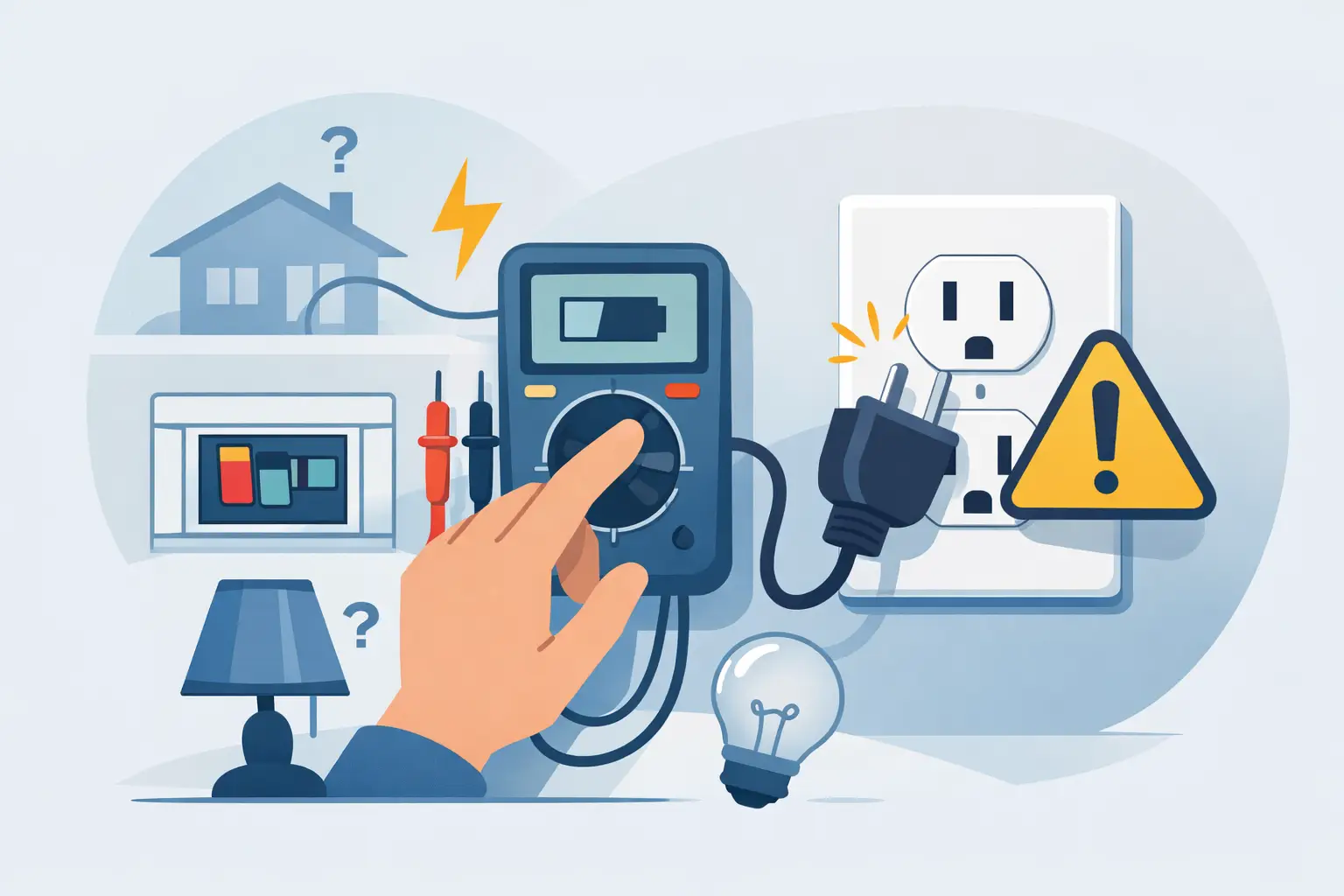
When an electrical outlet not working suddenly leaves part of your home without power, it usually shows up at the worst time – a dead kitchen plug, a bedroom lamp that will not turn on, or a garage outlet that takes a freezer offline. The good news is that not every dead outlet means a major repair. The bad news is that guessing can put your home at risk.
For homeowners, the real question is not just why the outlet stopped working. It is whether the problem is isolated, tied to a tripped safety device, or connected to a larger wiring issue that needs expert electrical repairs.
What causes an electrical outlet not working?
A nonworking outlet can fail for a few different reasons, and the cause is not always at the outlet itself. In many homes, one outlet stops working because a GFCI outlet elsewhere has tripped. Bathrooms, garages, kitchens, laundry rooms, and exterior receptacles often share protection, so one reset can restore power to more than one location.
Another common cause is a tripped breaker. A breaker may not always look fully off, which is why a proper reset matters. In older homes, worn receptacles are also common. The outlet may have loose internal contacts, heat damage, or wiring connections that have weakened over time.
Then there are the issues that deserve more caution. A dead outlet can point to a loose wire in the box, a failed backstab connection, damage somewhere along the circuit, or a problem tied to the electrical panel. If the outlet worked inconsistently before failing, felt warm, sparked, or showed discoloration, that is less likely to be a simple reset and more likely to need professional diagnosis.
Safe first checks before you call
Before assuming the outlet itself is bad, start with the simplest safe checks. Test the device you were plugging in somewhere else first. It sounds obvious, but many service calls begin with a charger, lamp, or appliance that failed rather than the receptacle.
Next, check for a tripped GFCI outlet nearby. Press the reset button firmly. If it clicks and power returns, you may be done for now, but pay attention if it trips again. Repeated tripping usually means there is an underlying issue, not just a one-time nuisance.
Then look at your electrical panel. If a breaker appears tripped, switch it fully off and then back on. If the breaker trips again right away, stop there. That is not a situation to keep forcing.
If the outlet is controlled by a wall switch, make sure the switch did not get turned off. This happens often in living rooms, bedrooms, and garages. It is a minor detail, but it can look exactly like outlet failure.
Signs the outlet problem is more serious
Some outlet issues are inconvenient. Others are warning signs. If you notice any burning smell, buzzing, crackling, warmth at the cover plate, or dark marks on the receptacle, the outlet should not be used until it is inspected. Those symptoms can point to arcing or heat buildup inside the box.
An outlet that works only when a cord is held at a certain angle is also a concern. That usually means the internal contacts are worn and no longer gripping the plug securely. Loose connections create resistance, and resistance creates heat.
If several outlets or lights in the same area stop working together, the issue may be farther upstream. A failed connection at one device can interrupt power to the rest of the circuit. In that case, replacing the visibly dead outlet alone may not solve the real problem.
Why GFCI and AFCI protection can complicate the diagnosis
Homeowners are often surprised when an outlet in one room depends on a reset in another. That is especially true with GFCI protection. The outlet that tripped may be in a bathroom, while the dead receptacle is in the garage or outside.
Newer homes may also have AFCI protection at the breaker. These devices are designed for safety, but they can make troubleshooting less straightforward because they respond to certain fault patterns, not just overloads. If a breaker keeps tripping and there is no obvious reason, it is worth having the circuit checked rather than treating the reset as the repair.
This is where experience matters. The safest repair is not always the fastest guess. A proper diagnosis identifies why the protection device reacted in the first place.
When replacing the outlet is enough – and when it is not
Sometimes the receptacle itself has simply worn out. Homes with heavy daily use, frequent unplugging, or aging devices can end up with outlets that no longer hold plugs properly or fail internally. In those cases, replacing the outlet may restore safe, reliable function.
But outlet replacement is not always the full answer. If the wiring behind the outlet is damaged, if the box is overcrowded, or if the circuit has a history of tripping, the failed receptacle may be just one symptom. The same is true if an aluminum wiring connection, loose neutral, or panel issue is involved.
For homeowners, this is the trade-off. A quick fix may get the power back on, but a thorough repair addresses the reason the problem started. That approach tends to protect long-term home performance and reduce repeat issues.
Older homes need a little more caution
In many neighborhoods, aging electrical systems are part of the picture. An electrical outlet not working in an older home may trace back to worn receptacles, outdated wiring methods, or circuits that were never designed for today’s appliance load.
That does not automatically mean a major upgrade is needed. Sometimes the repair is straightforward. Still, older homes deserve careful inspection because the visible issue at the outlet may be tied to conditions you cannot see from the outside.
If your home has two-prong outlets, ungrounded circuits, frequent breaker trips, or rooms that rely heavily on extension cords, it may be a good time to look beyond a single dead receptacle and consider the overall condition of the system.
What a licensed electrician will usually check
A professional diagnosis typically starts by confirming whether the outlet has lost power, lost neutral, or has a failed connection. The electrician may test nearby outlets, inspect GFCI and breaker protection, and evaluate the wiring path feeding that section of the circuit.
If the outlet shows signs of heat damage, the box and conductor connections need inspection as well. In some cases, the repair is limited to replacing the receptacle and correcting the splice. In others, a damaged section of circuit, overloaded branch, or panel-related issue needs attention.
For homeowners in places like Palmdale, Lancaster, and nearby communities, this matters even more during seasons when HVAC use, garage equipment, and outdoor power needs put extra stress on residential circuits. Reliable repair is about more than restoring one plug. It is about keeping the home safe and functional.
How to reduce the chance of future outlet failures
Outlet problems are not always preventable, but they are often predictable. Receptacles wear out over time, especially where space heaters, hair tools, kitchen appliances, or garage equipment are used regularly. If a plug feels loose, if reset buttons trip often, or if one part of the home has repeated electrical problems, early service is usually the better move.
Preventative maintenance also helps. A home electrical inspection can catch loose devices, outdated protection, and signs of stress before they become a dead outlet or a safety concern. That is especially worthwhile if you are living in an older home, adding new appliances, or planning upgrades like an EV charger.
At A1 Home Electric, the focus is simple: trusted electrical repair that solves the immediate problem while protecting the bigger picture of your home’s safety and reliability.
When to stop troubleshooting and make the call
If the outlet is warm, scorched, sparking, buzzing, or connected to a breaker that will not stay on, it is time to stop testing and call a licensed electrician. The same goes for repeated GFCI trips, multiple dead outlets, or any sign that the issue goes beyond one receptacle.
A dead outlet can be minor, but it can also be the first visible sign of a wiring problem you do not want to ignore. Getting it checked early is usually faster, safer, and less disruptive than waiting for the next failure to tell you more.
Leave a Reply