
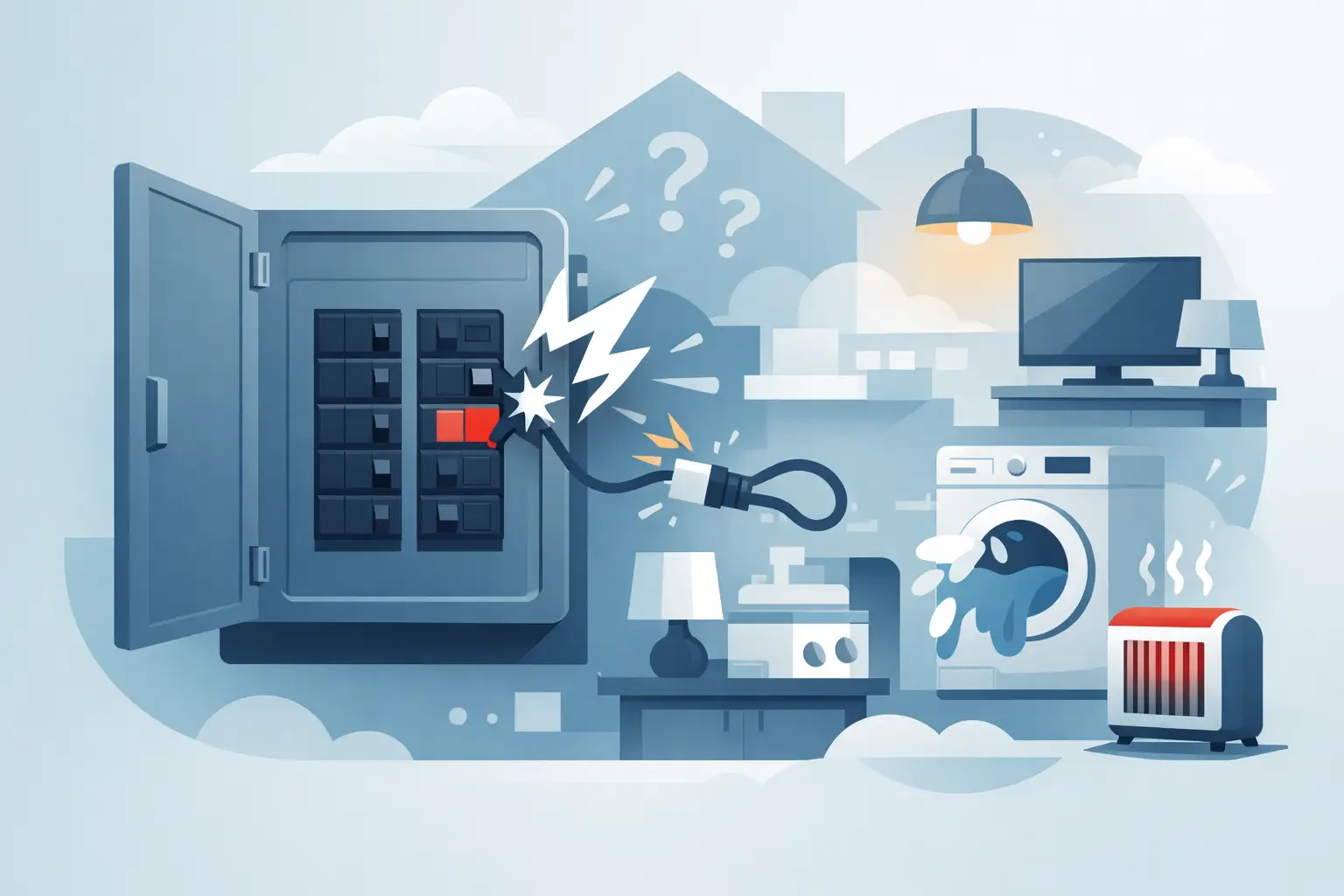
When a breaker trips once, it gets your attention. When it keeps happening, it starts to interrupt daily life fast – the microwave shuts off, the garage door stops, or part of the house goes dark for no clear reason. If you’re asking why do breakers keep tripping, the short answer is that your electrical system is trying to protect your home from a problem.
A tripped breaker is not usually the main issue. It is a warning sign. Sometimes the cause is simple, like too many devices running on one circuit. In other cases, the problem points to damaged wiring, a failing appliance, or an electrical panel that is no longer keeping up with the home.
Why do breakers keep tripping?
Circuit breakers are designed to shut off power when a circuit is overloaded, shorting, or detecting a fault. That shutdown helps prevent wire damage, equipment failure, and fire risk. The breaker is doing its job, but repeated tripping means something behind it needs attention.
For homeowners, the key is knowing whether the issue is a temporary load problem or a sign of a deeper electrical repair need. The difference matters because resetting a breaker without finding the cause can let the problem continue.
Overloaded circuits are the most common reason
An overload happens when a circuit is asked to carry more electrical demand than it was built for. This is very common in kitchens, bathrooms, garages, laundry areas, and older homes where modern appliance use has outgrown the original wiring layout.
You might notice it when a space heater, hair dryer, microwave, or air fryer is running and the breaker trips shortly after. On its own, that does not always mean something is broken. It can simply mean too many high-draw devices are sharing one branch circuit.
This is one of those situations where it depends. If the tripping only happens when several appliances run at the same time, load management may help for the moment. But if the problem is frequent, the better long-term fix may be a dedicated circuit or panel evaluation.
A short circuit is more serious
A short circuit happens when electrical current takes an unintended path, often because a hot wire touches another wire or a grounded metal surface. This creates a sudden surge in current, and the breaker trips quickly to stop it.
Signs can include a breaker that trips immediately when reset, a burning smell, discoloration around an outlet, or buzzing from a switch or receptacle. In some cases, the cause is hidden behind a wall or inside an appliance, which is why this type of issue should not be treated like a routine nuisance.
If a breaker trips the instant you turn it back on, leave it off. That usually points to a fault that needs professional diagnosis.
Ground faults often happen in wet areas
Ground faults are similar to short circuits, but they involve electricity finding a path to ground where it should not. These are especially common in bathrooms, kitchens, outdoor outlets, garages, and laundry spaces.
If the affected circuit includes GFCI protection, the trip may happen even with a smaller fault because the device is designed to react quickly for safety. Moisture, worn receptacles, damaged cords, and failing appliances can all contribute.
This is a good example of why repeated tripping should never be ignored around sinks, patios, or exterior outlets. Water and electricity are never a combination to guess about.
Why breakers keep tripping in older homes
In many homes, repeated tripping is less about one bad device and more about an aging electrical system. Older panels and branch circuits were often designed for a very different kind of household. They were not built around EV chargers, multiple refrigerators, home office equipment, entertainment systems, and year-round HVAC demand.
That does not automatically mean the panel is unsafe or that a full replacement is required. But it can mean the system is under strain. Loose connections, worn breakers, outdated wiring methods, and undersized circuits all become more noticeable as a home’s electrical demand increases.
In places like Palmdale and Lancaster, heavy summer cooling loads can also expose capacity issues that may not be as obvious in milder months. A breaker that only trips during peak heat may be responding to a combination of appliance use, HVAC demand, and panel limitations.
Sometimes the breaker itself is the problem
Not every tripping issue comes from wiring or appliances. Breakers can wear out over time. A breaker that has tripped many times, has an internal defect, or is no longer making proper contact may become overly sensitive or unreliable.
The challenge is that a failing breaker can look a lot like an overloaded circuit. That is why diagnosis matters. Replacing a breaker without checking the condition of the circuit can miss the real problem, and ignoring a weak breaker can leave the home with inconsistent protection.
What you can check safely before calling
There are a few practical steps homeowners can take before scheduling service. Start by noting which breaker is tripping and what was running when it happened. Patterns help. If the same circuit trips every time the toaster oven and coffee maker run together, that points in a different direction than a breaker that trips with nothing obvious plugged in.
You can also unplug portable devices on the affected circuit and reset the breaker once. If it holds with everything unplugged but trips when a specific appliance is used, that appliance may be the problem. Extension cords, older power strips, and garage or outdoor equipment are common causes.
It is also worth checking for visible warning signs such as warm outlets, scorch marks, flickering lights on the same circuit, or a breaker that feels loose or will not reset properly. Those signs suggest the issue goes beyond simple overload.
What you should not do is keep forcing the breaker back on, replace it yourself without proper training, or assume the problem is harmless because power comes back temporarily. Electrical problems often appear intermittent before they become urgent.
When to call for expert electrical repairs
If you smell burning, see discoloration, hear buzzing, or have a breaker that trips immediately, call a licensed electrician. The same applies if the panel feels warm, lights dim when appliances start, or the same area of the house has ongoing power issues.
You should also schedule service if the tripping has become part of normal life. Breakers are not supposed to shut off regularly. If that has become routine, the home is telling you something about capacity, wiring condition, or equipment health.
A proper service call usually involves more than swapping a part. The electrician should identify whether the issue is the breaker, the circuit load, a damaged connection, a faulty outlet, or a panel-related concern. That kind of diagnosis protects both safety and long-term cost because it addresses the actual cause.
For homeowners who want dependable answers instead of repeat interruptions, trusted electrical repair is the better path than trial and error. Companies like A1 Home Electric focus on practical home solutions – repairs, inspections, panel work, and upgrades that improve safety and reliability instead of just masking symptoms.
Preventing breaker trips before they start
The best prevention depends on the reason the breaker is tripping. Sometimes it is as simple as redistributing appliance use. In many homes, though, prevention means making sure high-demand equipment has the right circuit, aging panels are evaluated, and worn devices are replaced before they fail.
If you are planning a remodel, adding a garage refrigerator, installing new kitchen equipment, or preparing for an EV charger, it helps to look at the panel capacity first. A small upgrade done at the right time can prevent a long list of frustrating problems later.
Electrical systems rarely improve on their own. If your home has started showing signs of stress, treating those signs early is one of the smartest ways to protect comfort, safety, and day-to-day reliability.
A breaker that keeps tripping is not trying to make life difficult – it is asking you to pay attention before a minor issue becomes a bigger one.
Leave a Reply