

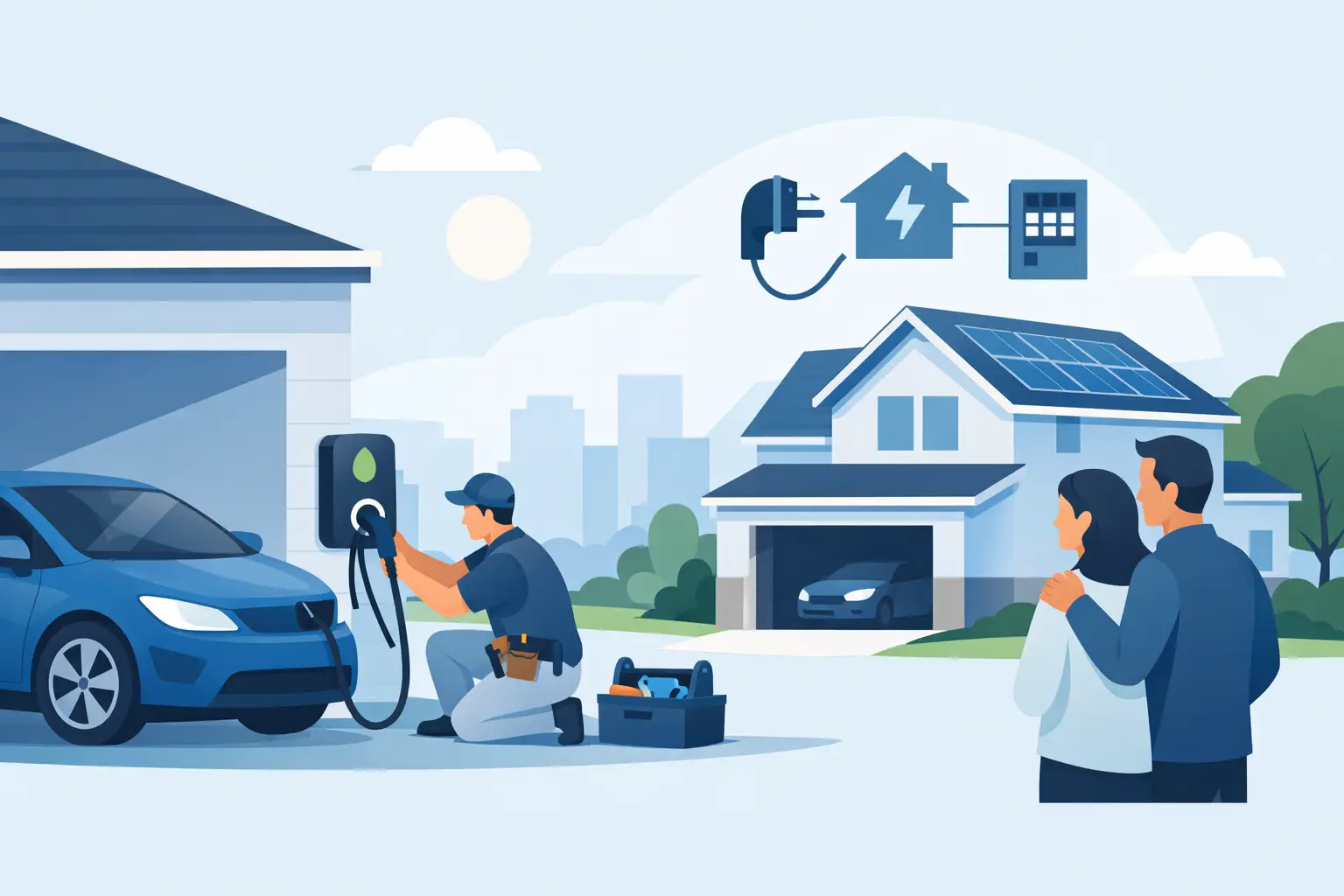
A new EV changes a familiar daily routine: instead of stopping for fuel, you arrive home, plug in, and wake up ready to drive. A home EV charger installation guide helps you plan for that convenience without overlooking the electrical work behind it. The right setup depends on your vehicle, driving habits, garage or parking layout, and most of all, your home’s available electrical capacity.
For homeowners in the Antelope Valley, professional planning is especially valuable. Summer heat can place significant demand on a home’s electrical system, while older homes may have panels and wiring that were never designed for high-amperage vehicle charging. A safe installation is not simply about mounting a charger on the wall. It is about making sure the entire system can support it reliably for years.
Start With Your Daily Charging Needs
The first decision is not which charger looks best. It is how much charging speed your household actually needs. Most homeowners choose a Level 2 charger, which uses a 240-volt circuit similar to a large appliance. It can add far more driving range per hour than a standard 120-volt outlet and is generally the practical choice for regular overnight charging.
A Level 1 connection may work for someone with a short commute, a plug-in hybrid, or plenty of time between drives. It requires less installation work because it uses a standard outlet, but charging is much slower. Level 2 charging is better suited to households that drive daily, have larger EV batteries, or need dependable overnight replenishment.
More power is not automatically better. A charger capable of higher output may require a larger circuit, heavier wiring, and more panel capacity. Your vehicle may also have a limit on how quickly it can accept AC charging. Choosing the right charging level means balancing convenience, electrical capacity, and installation cost rather than paying for capability you will not use.
Home EV Charger Installation Guide: Check the Electrical Panel First
Your electrical panel is the starting point for a safe home EV charger installation. An electrician evaluates the panel’s rating, existing circuits, household loads, available breaker spaces, wiring condition, and the anticipated charger load. This is called a load calculation, and it determines whether the service can safely handle the addition.
A panel may have empty breaker spaces and still lack sufficient capacity. Air conditioning, electric ranges, dryers, water heaters, pool equipment, workshop tools, and other high-demand appliances all matter. In a home with a 100-amp service, adding a high-output charger can sometimes require a panel or service upgrade. In other homes, a lower-amperage charger or a managed charging solution may be the sensible answer.
This assessment should not be skipped or based on guesswork. EV charging is a continuous electrical load, meaning it can operate at a high level for hours at a time. The circuit, breaker, connections, and panel must be sized correctly to manage that demand safely.
Signs Your Panel May Need Attention
A professional evaluation is wise if your home has frequent breaker trips, flickering lights when major appliances run, a crowded or outdated panel, visible corrosion, or a fuse box. These conditions do not always mean an upgrade is required, but they do call for a closer look before adding an EV charger.
A panel upgrade can add cost to the project, yet it can also improve the home’s overall reliability. If you expect to add solar equipment, electric appliances, a heat pump, or another EV later, planning for future electrical demand can prevent repeat work.
Choose the Best Charger Location
The charger location affects daily convenience, wiring cost, weather protection, and safety. In a garage, the ideal location is usually near the vehicle’s charge port while keeping the cable out of walkways and away from doors. The connector should reach comfortably without being stretched, pulled across the floor, or wrapped too tightly.
For a driveway or carport, the equipment must be rated for outdoor use and installed where it is protected from vehicle impact. A wall, sturdy mounting post, or dedicated pedestal may be appropriate depending on the property. An electrician can also determine the most practical route for wiring from the panel to the charger.
Distance matters. A charger installed on the opposite side of the house from the panel may require more conduit, longer wire runs, trenching, drywall access, or repairs after the work is complete. Sometimes a slightly less convenient location results in a significantly cleaner and more cost-effective installation. The best choice is usually the one that works well every day without creating unnecessary construction work.
Understand Hardwired and Plug-In Options
Many Level 2 chargers are available as hardwired or plug-in units. A hardwired charger is permanently connected to a dedicated circuit. It can be a clean, durable option and may support higher charging output, depending on the equipment and electrical design.
A plug-in charger uses a properly installed 240-volt receptacle. This can make it easier to take the charger with you or replace it later. However, the receptacle, plug, and circuit must be rated and installed for the continuous use associated with EV charging. A standard outlet added without careful consideration is not a substitute for a dedicated EV charging circuit.
Your installer can help you select an approach based on the charger model, desired amperage, location, and plans for the property. If the charger is outdoors, equipment ratings and enclosure protection deserve extra attention.
Permits and Code Requirements Protect the Home
EV charger installation commonly requires a permit and inspection. Requirements can vary by jurisdiction, but permits are not just paperwork. They provide a review of circuit sizing, grounding, equipment placement, overcurrent protection, and other safety details that help protect your home and family.
A licensed electrician should handle the installation according to applicable electrical codes and local requirements. This is particularly important if the project involves a panel upgrade, service changes, new underground wiring, or a long exterior run. Quality work is easier to inspect, easier to maintain, and less likely to create problems when selling or refinancing a home.
Avoid relying on extension cords, adapters not intended for EV charging, or a shared appliance circuit. These shortcuts can create overheating and fire risks. A dedicated circuit is the proper foundation for dependable charging.
Plan for Cost Without Guessing
The cost of an EV charger installation can vary widely because every home is different. A straightforward garage installation near a modern panel is often less involved than an outdoor installation with a long wire run or a panel that needs upgrading. Charger equipment, circuit amperage, wall repairs, trenching, permits, and site access can all affect the final price.
The most useful estimate begins with an on-site review. A qualified electrician can identify the actual scope before work begins and explain the options clearly. Ask whether the estimate includes the circuit, breaker, wiring method, charger mounting, permit coordination, inspection support, and any panel work that may be necessary.
It also helps to think beyond the first vehicle. If your household may add a second EV, an electrician can discuss options such as planning extra capacity now or using load management equipment that helps two chargers share available power. The right answer depends on the home and your future plans.
Prepare for Installation Day
Before the appointment, make sure the electrician can access the electrical panel, charger location, attic or crawlspace access points if needed, and any gates or exterior work areas. Have the charger model available if you have already purchased one, along with the vehicle’s charging information.
It is also helpful to mention upcoming electrical projects, such as solar, a hot tub, kitchen remodeling, or a new HVAC system. Those plans may change the best recommendation for panel capacity or charger output. A1 Home Electric approaches this work as part of the home’s larger electrical system, not as an isolated outlet installation.
After installation, keep the charging cable stored neatly, inspect it occasionally for damage, and call a licensed electrician if you notice heat, discoloration, unusual breaker trips, or charging interruptions. With the right design and quality installation, plugging in at home can become one of the simplest and most dependable parts of owning an EV.