

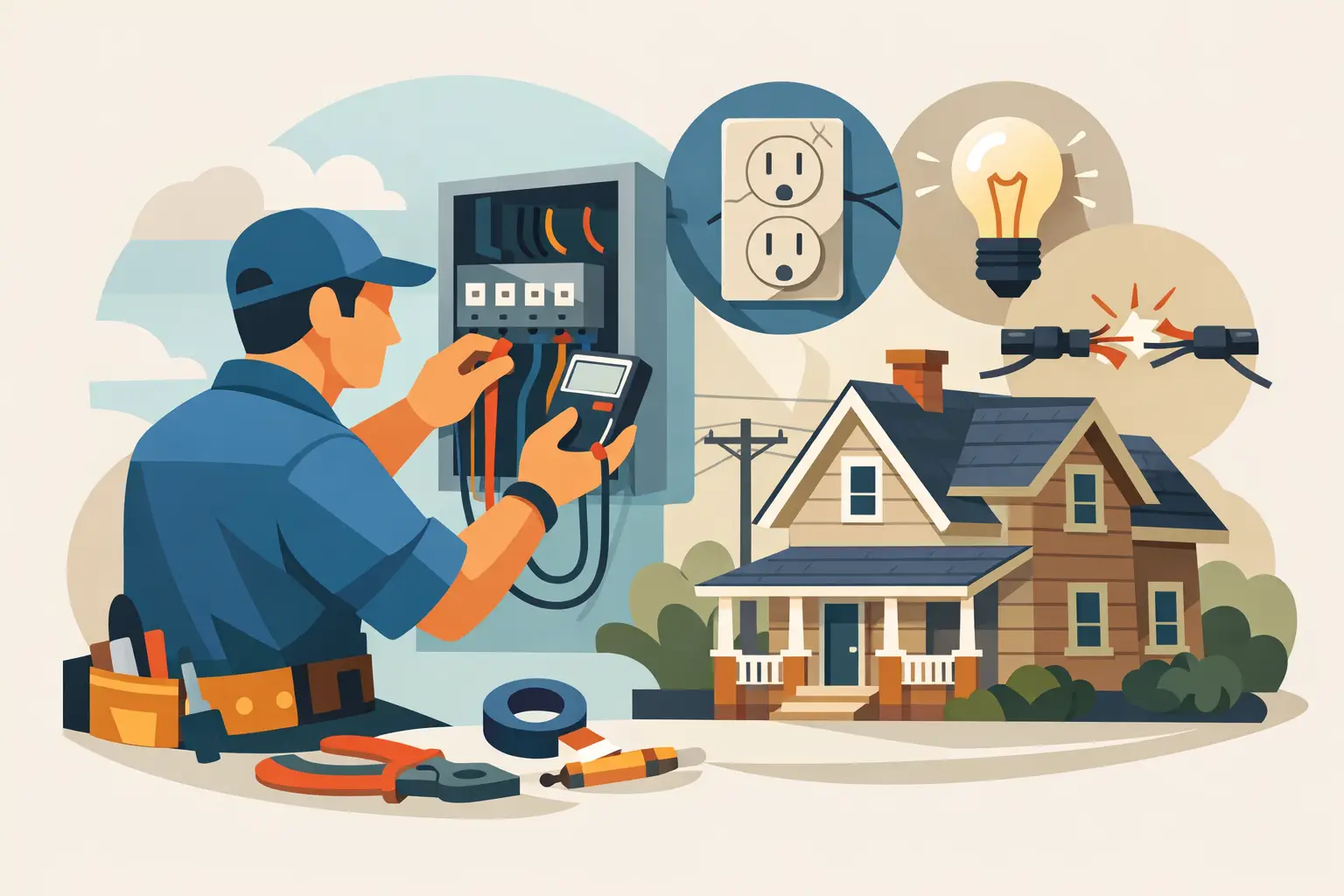
A light that flickers when the microwave starts is easy to ignore – until it becomes a tripped breaker, a dead outlet, or a real safety concern. That is why electrical maintenance for older homes matters. In houses built decades ago, wiring, panels, outlets, and connections often carry today’s electrical demand without being designed for it.
Older homes have character, but their electrical systems do not always age gracefully. Families use more devices, more appliances, and more charging equipment than most homes were originally built to handle. A system that seemed fine for years can start showing small warning signs long before a larger problem appears.
Why electrical maintenance for older homes matters
Aging electrical systems tend to fail quietly at first. You might notice warm switch plates, breakers that trip now and then, lights that dim for a second, or outlets that no longer hold plugs firmly. None of those issues should be brushed off as normal just because a home is older.
Routine maintenance helps catch loose connections, worn components, and overloaded circuits before they lead to damage. It also gives homeowners a clearer picture of whether their home only needs minor repairs or whether it is time to plan for upgrades. That distinction matters, because not every older home needs a full rewire, but many do need focused repairs and safety improvements.
There is also a comfort factor. When your electrical system is in good shape, your home runs more predictably. Air conditioning, kitchen appliances, laundry equipment, garage circuits, and home office devices all depend on stable power. Good maintenance supports safety, but it also supports the way your household functions every day.
Common electrical issues in older homes
Some problems show up more often in homes built several decades ago. Older panels may have limited capacity or worn breakers. Wiring can become brittle, damaged, or outdated. Receptacles and switches wear out through years of use, and connections inside boxes can loosen over time.
In many homes, the biggest issue is not one dramatic failure. It is a system that has been patched over the years to meet changing needs. A room addition, a garage conversion, new kitchen appliances, or a backyard project may have added demand without a matching upgrade to the service panel or circuit layout.
Ungrounded outlets are another common concern. They may still be present in older houses, especially in original bedrooms or living areas. That does not automatically mean the whole house is unsafe, but it does mean the system should be evaluated carefully. The right solution depends on the existing wiring, the panel condition, and how the space is being used now.
Signs your home may need attention
Some warning signs are obvious, and others are easy to dismiss. If your breakers trip often, that is worth investigating. If lights dim when larger appliances turn on, that may point to overloaded circuits or poor connections. Buzzing sounds, a burning smell, sparking outlets, or discoloration around switches and receptacles should be treated as urgent concerns.
There are also less dramatic signs. Maybe certain outlets no longer work consistently. Maybe power seems unreliable in one room. Maybe your panel is older and has never been inspected since you moved in. Maintenance is not only about responding to emergencies. It is also about checking the system before everyday wear becomes an expensive repair.
For homeowners planning renovations or adding major equipment, timing matters. If you are updating a kitchen, replacing an HVAC system, or thinking about an EV charger, it makes sense to evaluate the home’s electrical condition first. An older system may need upgrades to support those changes safely.
What professional electrical maintenance typically includes
Electrical maintenance is not just a quick look at the breaker panel. A proper visit usually starts with the symptoms you have noticed and the age of the home. From there, a licensed electrician can inspect the panel, test outlets and switches, check for signs of overheating or wear, and look for code and safety concerns that are common in older properties.
The panel is a major focus because it is the center of the home’s electrical distribution. A technician may check for double-tapped breakers, corrosion, loose connections, improper labeling, or evidence that the panel is undersized for current demand. If a panel is obsolete or has a history of problems, maintenance may lead to a recommendation for replacement rather than repeated repair.
Outlets, switches, GFCI protection, and grounding are also important. Bathrooms, kitchens, garages, laundry areas, and outdoor spaces often need more protection than older homes originally had. In some cases, maintenance involves straightforward updates that improve safety without major disruption.
It also helps to inspect any visible wiring in garages, attics, crawl spaces, or utility areas. Damage from heat, moisture, pests, or earlier repair work can create hazards that stay hidden until the circuit fails.
Maintenance vs. upgrade – how to know the difference
This is where experience matters. Some homeowners worry that any electrical issue in an older home means a complete overhaul. Sometimes that is true, but often it is not. A home may only need targeted repairs, new devices, added protection, or a panel upgrade.
The answer depends on capacity, condition, and future use. If the wiring is generally sound but the panel is outdated, replacing the panel may solve the biggest risk. If certain circuits are overloaded because modern appliances were added over time, redistributing or adding circuits may be the right step. If the home still has unsafe or deteriorated wiring in multiple areas, broader replacement may be more cost-effective than repeated repairs.
A practical electrician should explain those trade-offs clearly. The goal is not to sell more work than you need. The goal is to make the home safer and more reliable in a way that makes sense for its age and your plans.
Electrical maintenance for older homes in high-use seasons
Seasonal demand can expose weak points in an older system. In the Antelope Valley, summer cooling loads can put extra strain on panels and circuits, especially when homes rely heavily on air conditioning, ceiling fans, refrigerators, and garage equipment at the same time. During colder months, space heaters and holiday lighting can create similar stress.
That is one reason preventative maintenance is valuable before the most demanding parts of the year. If your home already shows signs of strain, waiting for a failure usually means less convenience and more urgency. A planned service visit gives you time to address issues before they disrupt your household.
What homeowners should avoid
It is reasonable to replace a light bulb or reset a breaker. Beyond that, older electrical systems are not good candidates for trial-and-error fixes. Swapping outlets, opening panels, or attempting DIY wiring changes can make a bad situation worse, especially when the home has older conductors, mixed wiring methods, or previous unpermitted work.
Extension cords and power strips are also easy to overuse in older homes. They may solve a short-term need, but they do not solve the underlying issue of too few outlets or inadequate circuit capacity. If a room depends on cords all the time, that is usually a sign the electrical layout no longer matches how the space is used.
Choosing the right electrician for an older home
Older homes need careful inspection and straightforward recommendations. Homeowners are usually not looking for technical jargon. They want to know what is safe, what needs attention now, and what can be planned over time.
That is why it helps to work with a licensed residential electrician who is used to troubleshooting aging systems, identifying practical repair options, and performing code-conscious upgrades when needed. Local experience also matters. Homes in Palmdale, Lancaster, and surrounding Antelope Valley communities often share similar age-related issues, seasonal load patterns, and upgrade needs.
A company like A1 Home Electric approaches maintenance with that home-service mindset. The focus is on dependable repairs, honest guidance, and long-term electrical performance, not quick patchwork that leaves the real problem behind.
When to schedule maintenance
If your home is older and has not had an electrical inspection in years, that alone is a good reason to schedule maintenance. It also makes sense after buying an older property, before starting a remodel, or when adding new electrical demand such as large appliances or an EV charger.
Even if nothing feels urgent, maintenance can still be worthwhile. Small electrical issues often stay small only until usage increases, temperatures rise, or one weak connection finally fails. Addressing them early is usually simpler and less disruptive.
Your home does not need to be perfect to be safe, but it does need an electrical system that is dependable enough for the way you live in it now. A careful maintenance visit can bring clarity, reduce risk, and help your older home keep serving your family well for years to come.
One response to “Electrical Maintenance for Older Homes”
[…] system, but that does not mean any outlet is automatically a safe long-term charging outlet. Older homes may have worn receptacles, shared circuits, or wiring conditions that should be evaluated before […]