
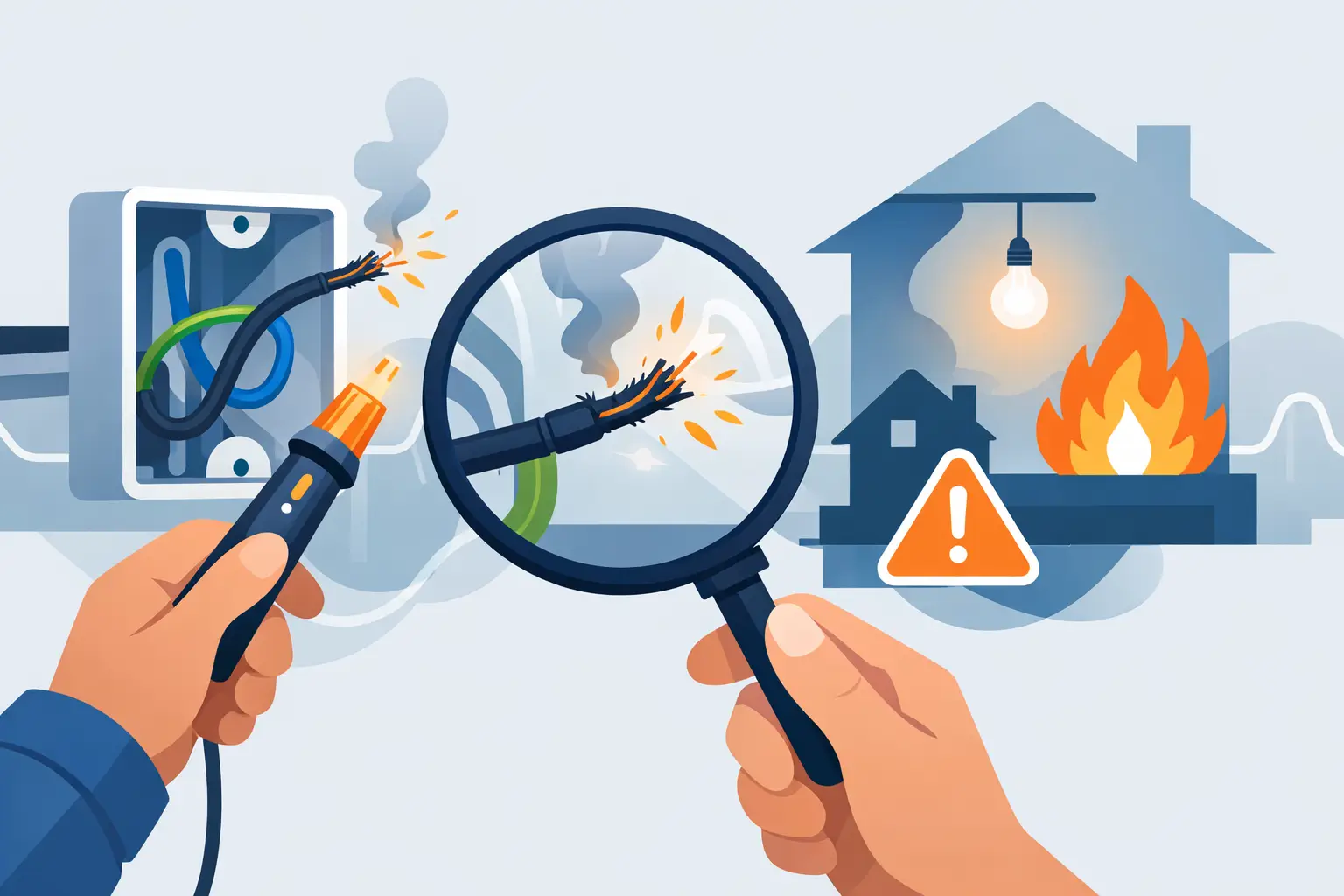
A light that flickers only when the microwave starts, an outlet that feels warm after charging a phone, or a breaker that trips every few weeks can be easy to dismiss. But knowing how to spot faulty wiring gives homeowners a chance to address a developing electrical problem before it threatens the safety, comfort, or reliability of the home.
Electrical issues do not always announce themselves with a dramatic spark. More often, they begin as small, repeatable changes in how outlets, switches, lights, and appliances perform. The right response is not to take apart a device or keep resetting a breaker. It is to recognize the warning sign, stop using the affected circuit when necessary, and have a licensed electrician identify the cause.
How to Spot Faulty Wiring Through Everyday Warning Signs
Faulty wiring can result from loose connections, worn insulation, overloaded circuits, improper past repairs, moisture exposure, rodent damage, or an electrical system that no longer suits the home’s needs. Older homes may have aging components, but newer homes can also develop problems after a poor installation, remodeling work, or damage inside a wall.
Breakers that trip repeatedly
A breaker is designed to shut off power when it detects an overload, short circuit, or ground fault. One trip after running several high-demand appliances on the same circuit may simply mean the circuit was overloaded. Repeated tripping, however, deserves attention.
If the same breaker trips when you use a particular outlet, switch on a light, or plug in a specific appliance, stop treating it as an inconvenience. Do not keep resetting it to restore power. The appliance may be faulty, but the circuit may also have a damaged wire, loose connection, or condition that needs professional repair.
Lights that flicker, dim, or brighten unexpectedly
A single bulb that flickers may only need replacement. Flickering or dimming lights in several rooms, lights that change brightness when an appliance starts, or fixtures that work inconsistently can point to a wiring or connection problem.
Pay particular attention if lights brighten suddenly. That can sometimes indicate a loose neutral connection, which can create unstable voltage conditions and potentially damage electronics. It is a reason to schedule an electrical inspection rather than wait for the problem to worsen.
Warm, discolored, or damaged outlets and switches
Outlets and switches should not feel hot during normal use. A slightly warm charger block is different from a warm outlet cover, switch plate, or plug. Heat at the connection can mean electricity is meeting resistance, often because of a loose or deteriorated connection.
Look for yellowing, dark marks, melting, cracks, buzzing, or a faceplate that seems unusually warm. If you see scorch marks or melted plastic, turn off the circuit at the panel if you can do so safely and avoid using that outlet. This is not a repair to postpone.
Burning odors, buzzing, or crackling sounds
An electrical burning smell is one of the clearest signs that something requires immediate attention. The odor may resemble hot plastic, burning rubber, or an appliance overheating. If the smell is coming from an outlet, switch, electrical panel, or wall area, stop using that circuit and contact a qualified electrician.
Buzzing, crackling, popping, or sizzling sounds from electrical devices are also not normal. Some dimmer switches can make a faint sound depending on the bulb type, but a new or noticeable noise should be checked. It may indicate a loose wire, failing device, or arcing connection.
Outlets that do not hold plugs securely
A plug that slips out of an outlet can seem minor, but worn receptacles do not grip plug blades properly. That weak connection can generate heat and create intermittent power. If a plug falls out, feels loose, or only works when positioned a certain way, the outlet should be replaced by a professional.
This is especially relevant in kitchens, bathrooms, garages, exterior areas, and laundry spaces, where ground-fault circuit interrupter outlets provide added protection around moisture. A GFCI outlet that will not reset, trips frequently, or has no power may be doing its job, but it still needs a proper diagnosis.
Shocks, tingles, and sparks
A small static shock after walking across carpet is different from a tingle when touching an appliance, switch, or metal fixture. Any recurring shock or tingling sensation can indicate grounding trouble, damaged equipment, or faulty wiring. Stop using the item and arrange for an inspection.
A tiny spark can sometimes occur when a plug is inserted into a live outlet, especially with a device already switched on. Large sparks, repeated sparking, burning smells, or sparks from a switch or outlet are not normal. Treat them as a safety concern.
Areas Where Wiring Problems Often Hide
Not every electrical issue is visible at an outlet. Wiring runs behind walls, through attics, under floors, and inside electrical panels. That is why patterns matter. A problem that appears tied to one room, one appliance, or one time of day gives an electrician useful clues.
In the Antelope Valley, high summer temperatures can put extra demand on air conditioning, refrigerators, pool equipment, and other household systems. A circuit that seemed adequate in milder weather may trip when several major loads run at once. That does not automatically mean the wiring is defective, but it can reveal that the circuit is overloaded or that the panel needs attention.
Recent remodeling is another time to stay alert. New lighting, outlets, ceiling fans, appliances, or garage equipment add electrical demand. If problems begin after a project, have the work evaluated instead of assuming the issue will settle on its own. The same applies after water leaks, roof damage, pest activity, or rodent infestations, since all can affect hidden wiring.
What Homeowners Can Check Safely
Homeowners can observe and document symptoms without removing outlet covers, opening the electrical panel, or handling exposed wiring. Notice which rooms lose power, what was running when a breaker tripped, and whether the problem occurs consistently. A short record of dates, appliances, and affected outlets can make diagnosis faster.
You can also reduce immediate risk by unplugging nonessential devices from a suspicious outlet and avoiding extension cords as a permanent solution. Extension cords are meant for temporary use. Running them under rugs, through doorways, or from room to room can hide damage and add fire risk.
Avoid replacing a breaker with a larger one to stop tripping. The breaker is sized to protect the wire in the circuit. Increasing its rating without an electrician’s evaluation can allow wiring to overheat before the breaker shuts off power.
When to Call a Licensed Electrician Right Away
Some symptoms call for prompt professional help rather than observation. Contact a licensed electrician immediately if you notice a burning smell, smoke, visible charring, repeated sparking, an outlet or panel that feels hot, a shock from an appliance, or breakers that will not stay on.
If there is active smoke, flames, or an immediate fire concern, leave the area and call emergency services. Do not attempt to put out an electrical fire with water. For less urgent but persistent issues, an electrical inspection can identify loose connections, damaged conductors, overloaded circuits, grounding concerns, panel issues, and outdated components before they become an emergency.
A licensed electrician can also determine whether the problem is limited to one receptacle or points to a larger system concern. That distinction matters. Replacing a single outlet may be appropriate in one home, while another may need circuit repairs, a panel upgrade, or additional dedicated circuits for modern electrical demand.
Protecting Your Home Before Symptoms Start
Preventive electrical maintenance is particularly valuable for older homes, houses with frequent DIY updates by previous owners, and properties preparing for an EV charger, new appliances, or a remodel. An inspection provides a clear picture of how the system is performing and whether it can safely support upcoming changes.
A1 Home Electric helps homeowners in Palmdale, Lancaster, and nearby Antelope Valley communities address electrical concerns with practical, safety-focused repairs and inspections. A small warning sign is worth checking early, because dependable power starts with wiring you do not have to worry about.