

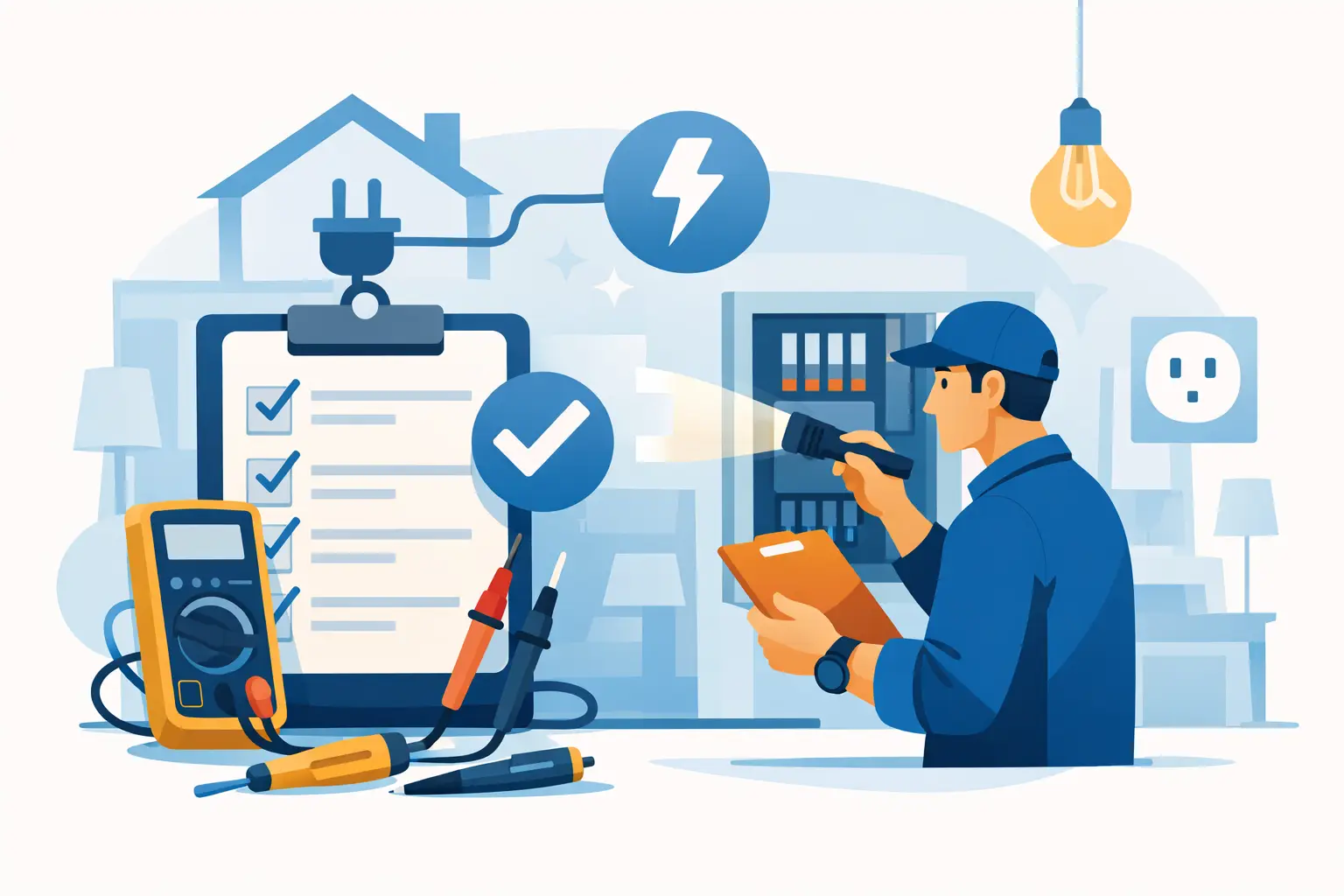
A tripped breaker once in a while may not seem like a big deal. But when lights flicker, outlets feel warm, or a panel looks older than the rest of the house, small electrical issues can point to larger safety concerns. That is where an electrical inspection checklist helps. It gives homeowners a practical way to look for warning signs, understand what matters most, and know when it is time to bring in a licensed electrician.
For most homes, an inspection is less about finding one dramatic problem and more about catching several smaller ones early. Wear and tear, older wiring methods, overloaded circuits, and DIY modifications can all affect safety and reliability. A careful review helps protect the home, the people in it, and the electrical system that supports daily comfort.
What an electrical inspection checklist should cover
A good electrical inspection checklist focuses on the parts of the home that carry the most risk or tend to show trouble first. That usually includes the main panel, breakers, outlets, switches, lighting, visible wiring, grounding, and any high-demand equipment such as air conditioning, electric dryers, or EV chargers.
It also helps to think in terms of performance, not just appearance. An outlet can look fine and still be wired incorrectly. A panel can still have working breakers but be undersized for the home’s needs. The goal is not to make a cosmetic review. The goal is to identify anything that may affect safety, code compliance, or long-term reliability.
Start with the electrical panel
The panel is the control center of the home, so it deserves close attention. Open the panel area only if it is safe and accessible, and leave any internal work to a professional. Homeowners can still look for clear signs that something needs attention.
Check whether the panel is labeled clearly. If breakers are not marked or labels are inaccurate, it becomes harder to shut off power safely during an emergency or service visit. Look for rust, scorch marks, unusual heat, buzzing sounds, or breakers that trip repeatedly. Those are not normal conditions.
Age matters too. Many older homes in the Antelope Valley still have panels that were adequate decades ago but are now strained by modern appliances, added circuits, and higher energy demands. If the home has undergone remodeling, added HVAC loads, or installed an electric vehicle charger, the panel should be evaluated with those demands in mind.
Watch for signs of panel overload
An overloaded panel does not always fail all at once. It often shows up gradually through nuisance breaker trips, dimming lights when large appliances start, or the need for too many extension cords because the original circuit layout no longer fits the way the home is used. In some cases, a repair is enough. In others, a panel upgrade is the safer long-term choice.
Check outlets, switches, and fixtures
Outlets and switches are where many homeowners first notice a problem. During an inspection, look for cover plates that are cracked or missing, receptacles that feel loose, scorch marks, discoloration, or devices that feel warm to the touch. A switch that crackles or a light fixture that flickers regularly should not be ignored.
Bathrooms, kitchens, garages, laundry rooms, and outdoor areas should also have the right protection in place for moisture-prone conditions. If those areas are missing modern safety devices, that is worth correcting. The same goes for older two-prong outlets in parts of the home where grounded protection is expected.
This is one of the places where it depends on the age of the home. Some older systems may have been legal when installed but do not provide the same level of protection homeowners expect today. An inspection helps sort out what is still serviceable, what should be upgraded soon, and what deserves immediate repair.
Look at visible wiring and connections
A homeowner does not need to inspect every inch of wiring inside walls to benefit from a checklist. Start with what is visible in garages, basements, utility areas, attics, or around recent appliance installations. Wiring should be secured, protected, and enclosed where required. Exposed splices, damaged insulation, hanging cable, or makeshift junctions are red flags.
Pay extra attention to any work that looks newer than the rest of the system. Not every upgrade is done poorly, but unpermitted or amateur electrical work is a common source of hidden problems. If a ceiling fan, added outlet, detached structure, or garage conversion was wired at some point, it is worth having those areas checked for proper installation and circuit capacity.
Do not overlook outdoor electrical components
Outdoor receptacles, lighting, and service equipment take more abuse from weather, dust, and temperature swings. Covers should be intact, fixtures should be mounted securely, and wiring should not be left exposed. Homes in dry, windy areas can collect debris quickly, and aging exterior equipment may break down faster than indoor components.
Test safety devices and alarms
No electrical inspection checklist is complete without checking basic safety devices. Test smoke alarms and carbon monoxide alarms according to manufacturer instructions, and replace batteries or units when needed. If the home has GFCI or AFCI protection, those devices should be tested as well.
This part of the inspection is simple, but it has real value. Electrical safety is not only about preventing faults. It is also about making sure the home can respond properly if something does go wrong. Working alarms give families more time to react and reduce the chance that a small issue becomes a serious emergency.
Pay attention to high-demand appliances and newer additions
Modern homes ask more from electrical systems than they used to. Between larger HVAC equipment, kitchen upgrades, home office loads, garage tools, and electric vehicle charging, even a well-kept system can be pushed beyond its original design.
That is why a checklist should include major appliances and newer electrical additions. If a dryer outlet was changed, an EV charger was installed, or a hot tub, workshop circuit, or mini-split system was added, those loads should match the panel capacity and be wired correctly. The trade-off is simple: adding convenience without evaluating capacity can lead to overheating, nuisance trips, or premature equipment wear.
When should a homeowner schedule a professional inspection?
Some inspections are driven by obvious warning signs. Others make sense even before a problem appears. A professional inspection is a smart idea after buying an older home, before a remodel, after repeated breaker trips, after water intrusion near electrical equipment, or when planning a panel upgrade or EV charger installation.
It is also worth scheduling one if the home still has aging components and the electrical history is unclear. Homeowners often inherit years of patchwork repairs without knowing what was done correctly and what was not. A licensed electrician can identify hazards, test system performance, and explain priorities in plain language.
For families who want fewer surprises, preventative inspections are often more cost-effective than waiting for failure. Emergency repairs usually happen at the worst time, and they may involve more damage than a timely inspection would have uncovered.
A practical electrical inspection checklist for peace of mind
The most useful electrical inspection checklist is the one that helps you make good decisions before safety is compromised. It should prompt you to notice patterns, not just isolated issues. One warm outlet may be a localized problem. A warm outlet, a buzzing panel, and flickering lights together tell a different story.
That broader view matters for homeowners who plan to stay in their homes long term. Electrical systems are easy to forget when everything works. But reliability, comfort, and safety all depend on a system that is maintained, updated when needed, and evaluated by someone qualified to spot risks early.
A1 Home Electric has served local homeowners since 2006, and one thing stays consistent from house to house: small electrical concerns are easier to address before they become larger repairs. If something in your home has felt off lately, trust that instinct. A careful inspection today can protect a lot more than just your wiring.