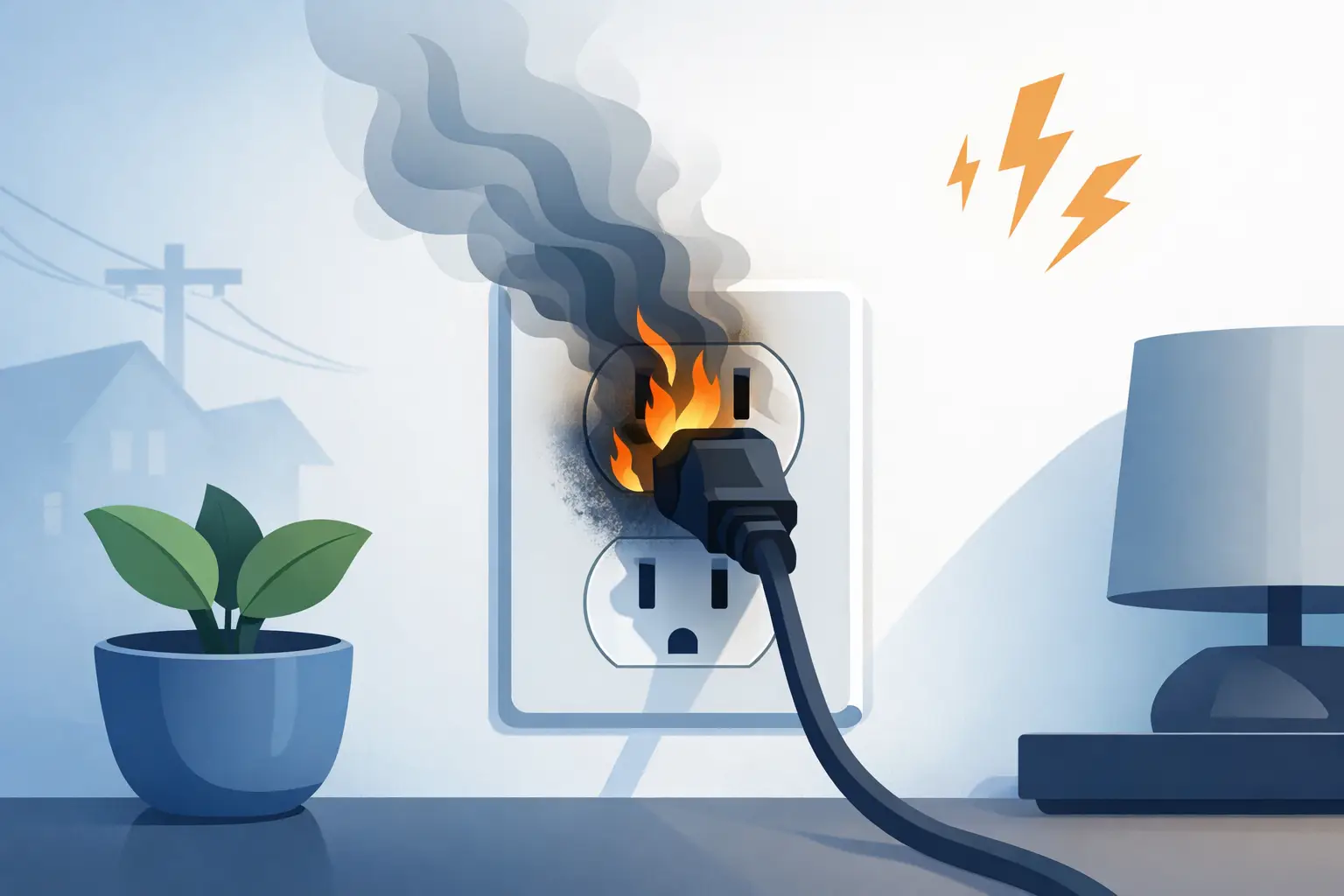
You plug in a lamp, phone charger, or space heater and catch a sharp, hot smell near the wall. If you are wondering what causes burning outlet smell, treat it as a warning sign, not a minor annoyance. An outlet should not smell like burning plastic, hot wires, or scorched dust during normal use.
In some cases, the issue is small and isolated. In others, it points to overheating wiring, a failing receptacle, or a larger electrical problem behind the wall. The safest move is to stop using that outlet immediately until the cause is identified.
What causes burning outlet smell in a home?
A burning smell from an outlet usually means heat is building up where it should not. Electricity naturally creates some heat, but a properly installed and properly functioning outlet keeps that heat under control. When connections loosen, components wear out, or a circuit is overloaded, temperatures can rise quickly.
The smell itself often comes from melting plastic insulation, a damaged outlet face, overheated wiring, or dust and debris getting scorched. The exact cause matters because the right repair depends on whether the problem is at the receptacle, in the wiring, or elsewhere on the circuit.
Loose wire connections
One of the most common reasons an outlet smells like it is burning is a loose connection. Wires attached to the outlet can work loose over time, especially in older homes or in outlets that see frequent use. When a wire is not making a solid connection, electricity can arc or create resistance. That resistance generates heat.
This kind of problem may not be obvious at first. The outlet may still work. A charger may power on. A lamp may light up. But behind the cover plate, the connection can be getting hotter each time the outlet is used.
Overloaded outlet or circuit
Some outlet smells show up after a high-demand device is plugged in. Space heaters, microwaves, hair dryers, air fryers, and window AC units can draw significant power. If the outlet, wiring, or circuit is not in good condition, that extra demand can push it past a safe limit.
There is a difference between an outlet being warm and an outlet smelling hot. A smell suggests something is overheating beyond normal operation. In many homes, the real issue is not just the device plugged into the outlet but the total load on that branch circuit.
Damaged or worn-out receptacle
Outlets do not last forever. Repeated plugging and unplugging can wear out the internal contacts. Once those contacts loosen, plugs may fit poorly, which increases resistance and heat. Cracks, discoloration, or a brittle faceplate can also point to damage.
If an outlet is old, scorched, or no longer holds plugs firmly, replacement is often the safest solution. A worn receptacle is not something to ignore and watch for later.
Faulty device or power cord
Sometimes the outlet is not the only suspect. A damaged appliance cord, failing charger, or defective device can produce a burning smell right at the connection point. That can make it seem like the outlet is the problem when the issue is actually in what is plugged into it.
This is where a careful diagnosis matters. If the smell only happens with one device, that device may be overheating. If the smell continues with nothing plugged in, the problem is more likely inside the outlet or wiring.
Backstabbed connections or older electrical work
Some outlets were installed using quick-push wire connections in the back rather than more secure terminal screw connections. These backstabbed connections can fail over time, particularly under heavier loads. Not every older installation is unsafe, but aging workmanship can become a problem after years of use.
For homeowners in older neighborhoods around Palmdale and Lancaster, this is one of those issues that often shows up without much warning. The outlet may have worked for years before heat damage finally becomes noticeable.
Signs the smell is part of a bigger electrical issue
A burning smell at one outlet can be a local problem, but sometimes it is tied to a broader wiring or panel issue. That is why the surrounding symptoms matter.
If the outlet is warm or hot to the touch, if the cover plate is discolored, or if you see black marks near the slots, stop using it right away. Buzzing, crackling, flickering lights, or breakers that trip when certain devices turn on can also point to a larger problem on the circuit.
A smell that comes and goes is not harmless just because it disappears. Intermittent heat often means the connection is unstable. That can make the problem harder to catch and more dangerous over time.
What to do right away if you smell burning at an outlet
First, unplug anything connected to that outlet if it is safe to do so. If the plug is hot, melted, or difficult to remove, do not force it. Turn off the breaker to that circuit if you can identify it safely.
Next, avoid using that outlet or any nearby outlets on the same wall until the issue is checked. Do not test it again to see if the smell comes back. Do not spray anything into it. Do not cover it up and assume it will be fine later.
If you see smoke, sparking, charring, or active melting, turn off power and treat it as an urgent repair. If there is any concern about fire, call emergency services first.
What not to do
A common mistake is assuming the smell is just dust burning off. That can happen with some appliances, but wall outlets should not produce a persistent burning odor. Another mistake is replacing the outlet without checking the wiring condition behind it. If the wire insulation is heat-damaged or the connection problem extends deeper into the box, replacing the face device alone does not solve the real issue.
Homeowners also sometimes keep using the outlet lightly, thinking the danger only applies to large appliances. In reality, a loose connection can overheat even under moderate use. Reduced load does not always mean reduced risk.
How an electrician diagnoses the cause
A proper electrical inspection usually starts with the outlet itself, but it should not end there. The electrician will check for visible heat damage, loose wiring, worn contacts, and signs of arcing. They may also inspect the box, wire insulation, circuit load, breaker performance, and nearby devices on the same run.
This matters because the repair can vary. In one home, the fix may be a simple outlet replacement with secure new terminations. In another, the wiring in the box may need to be cut back and rebuilt. In more serious cases, the circuit may need further repair or evaluation at the panel.
The goal is not just to make the smell go away. It is to restore safe, dependable operation.
Can a burning outlet smell go away on its own?
It can disappear temporarily, but that does not mean the problem is gone. Electrical heat often builds under load and fades when the outlet is no longer in use. That pattern can create a false sense of safety.
A homeowner may notice the smell only when running a heater or charging several devices at once. Later, with nothing plugged in, everything seems normal again. But once an outlet has overheated, the affected parts may already be damaged. Heat weakens plastic, loosens metal contacts, and degrades insulation. The next event can be worse than the last.
When to call for expert electrical repairs
If you smell burning at any outlet, the safest answer is to have it inspected as soon as possible. This is especially true if the outlet is warm, discolored, loose, or connected to high-use appliances. Homes with older wiring, previous DIY electrical work, or recurring breaker issues should be taken seriously even if the outlet still works.
Trusted electrical repair is about more than fixing one bad receptacle. It is about making sure the wiring, connections, and load demands in your home are still working safely together. That is the kind of issue best handled by a licensed residential electrician who can identify the actual source and correct it the right way.
A burning smell from an outlet is your home asking for attention. The sooner you act, the easier it is to protect your wiring, your devices, and the people living under that roof.
Leave a Reply