
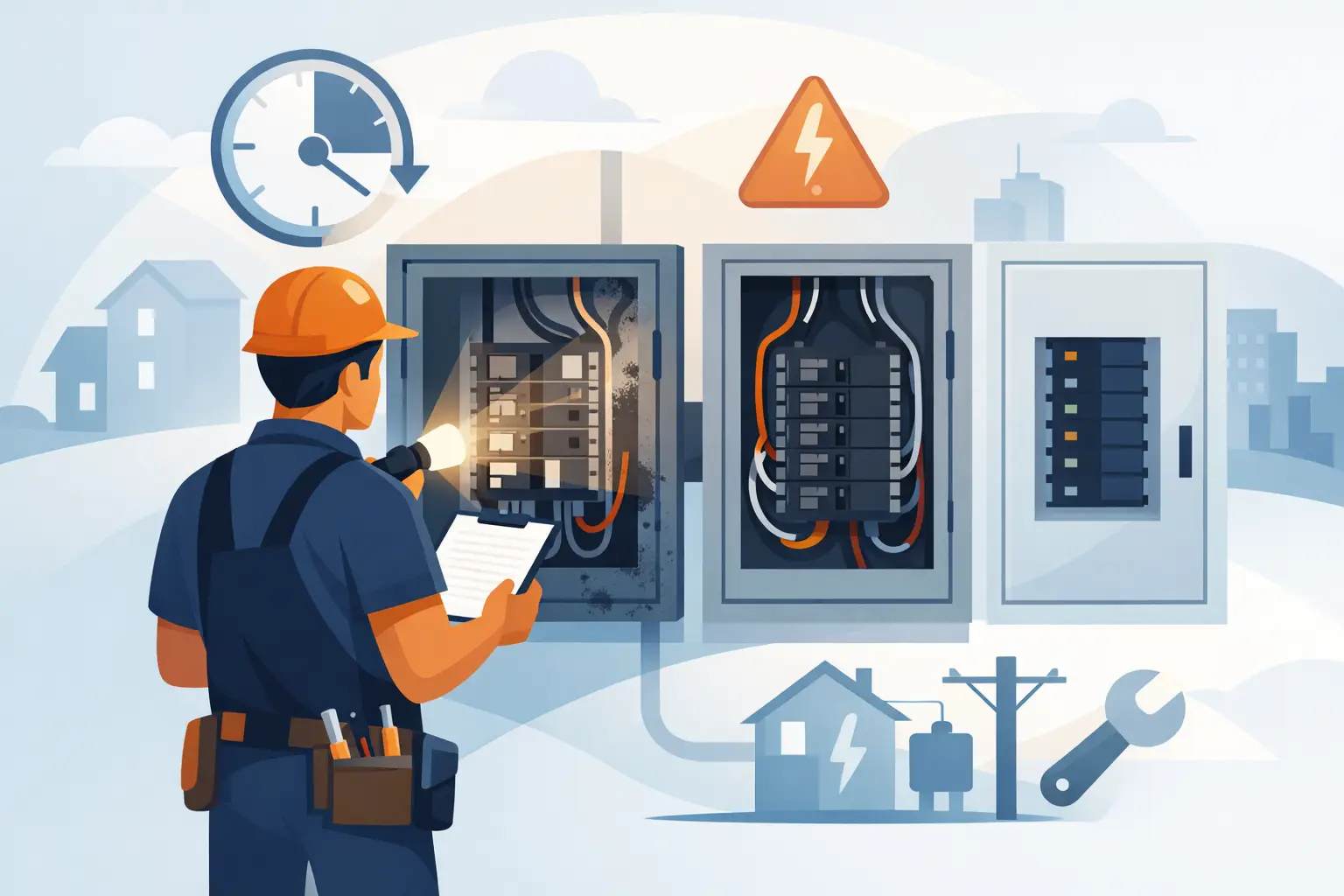
If your lights flicker when the AC starts, breakers trip more often than they used to, or your home still relies on an older electrical panel, service panel replacement may be more than an upgrade. It may be the step that keeps your home safer, more reliable, and better prepared for the way your family actually uses power now.
For many homeowners, the panel is easy to ignore because it sits quietly in the garage, outside wall, or utility area. But it does one of the most important jobs in the house. It distributes electricity to every circuit and helps protect your wiring from overloads and faults. When the panel is outdated, damaged, undersized, or simply no longer a good fit for the home, problems can show up in ways that feel minor at first and expensive later.
What a service panel replacement actually solves
A service panel replacement is not just about swapping one metal box for another. It is about correcting the central point where your home receives and manages electrical power. A newer panel can improve breaker performance, support added circuits, and make the system easier to inspect, maintain, and expand.
That matters in older homes, but it also matters in homes that have changed over time. Many houses were built for a much lighter electrical load than families use today. A home office, larger HVAC equipment, kitchen upgrades, a workshop, hot tub, or EV charger can all add up quickly. If the panel was never updated to match those changes, the electrical system may be working harder than it should.
In practical terms, replacing the panel can reduce nuisance tripping, improve capacity, and create a safer foundation for future electrical work. It does not fix every issue in the home by itself, but it often addresses the source of recurring electrical problems.
Signs you may need service panel replacement
Some signs are obvious. Others are easy to dismiss until they become a larger problem. If breakers trip repeatedly without a clear cause, that deserves attention. The same goes for a panel that feels warm, smells burnt, shows rust or corrosion, or has visible wear around breakers.
Flickering lights can also point to panel trouble, especially when the flicker happens during high-demand moments like starting the microwave, air conditioner, or dryer. If circuits seem overloaded or too many parts of the home are sharing the same breakers, the panel may no longer be sized correctly for the house.
Age matters too. Some older panels have known reliability concerns, while others simply reach a point where replacement is the more sensible choice than continuing to patch around them. A panel does not have to fail completely before it becomes a safety concern.
Another common reason is planning ahead. If you are remodeling, adding major appliances, or installing an EV charger, the panel should be evaluated before the new equipment goes in. Waiting until after installation can create delays and added cost.
Older panels and modern power demands
Homes built decades ago were not designed around today’s electrical habits. Families now run more devices, more charging equipment, and more high-demand appliances at the same time. Even a well-built older panel may be outmatched by current usage.
That does not mean every older home automatically needs a new panel. Sometimes the system has enough capacity and remains in good condition. Other times the panel may technically function, but it leaves little room for safe expansion or reliable daily use. That is where a professional inspection helps separate what is adequate from what is becoming a risk.
When replacement makes more sense than repair
There are situations where a repair is enough. A faulty breaker, loose connection, or isolated issue can sometimes be corrected without replacing the full panel. But if the panel has widespread wear, insufficient capacity, outdated components, or recurring issues, repair can turn into a temporary fix that does not address the bigger problem.
This is where homeowners benefit from a straightforward evaluation rather than a one-size-fits-all answer. If a panel has room, is code-conscious for its era, and the issue is limited, repair may be reasonable. If the panel is overloaded, difficult to source parts for, or showing signs of deterioration, replacement is often the safer long-term investment.
The goal is not to replace equipment just because it is old. The goal is to make sure the home has a dependable electrical foundation that supports daily use without ongoing concern.
What happens during a service panel replacement
A professional service panel replacement starts with evaluating the home’s electrical demand, the condition of the existing equipment, and whether other upgrades are needed at the same time. In some cases, the work is limited to the panel itself. In others, grounding, bonding, meter-related coordination, or service entrance components may also need attention.
During the replacement, power is typically shut off so the old panel can be removed and the new one installed safely. Circuits are transferred, labeled, and tested. The new panel should be organized clearly so future maintenance or troubleshooting is easier.
For homeowners, the most important part is not memorizing the technical steps. It is knowing the work should be completed by a licensed electrician who understands residential systems, permitting requirements, and code expectations. Clean workmanship matters here because shortcuts at the panel can affect the entire house.
How long does the work take?
Many panel replacements can be completed in a day, but it depends on the condition of the existing system and whether added corrections are needed. An older home with previous modifications, crowded wiring, or related service issues may take longer than a straightforward swap.
That is why accurate planning matters. A careful contractor will explain what is included, whether utility coordination is needed, and what kind of temporary outage to expect.
The benefits homeowners usually notice first
Most homeowners do not walk past a new panel and admire it. What they notice is what stops happening. Fewer tripped breakers. More confidence running appliances at the same time. Better readiness for future projects. Less worry about an older panel that has been on the list for too long.
There is also peace of mind in knowing the electrical system has been updated with safety in mind. For families thinking long term, that benefit carries real value. A panel is not a decorative upgrade, but it supports comfort and reliability in a way that shows up every day.
If you are planning to stay in your home, the value is practical. If you are preparing to sell, an updated panel can also help remove a concern buyers often raise during inspections.
Why local experience matters with panel work
Residential electrical systems are rarely identical from one home to the next, especially in communities with a mix of older properties and newer additions. In areas like Palmdale, Lancaster, and across the Antelope Valley, homes may have seen years of remodels, equipment changes, and rising power demand. That makes accurate diagnosis just as important as the replacement itself.
A contractor with local residential experience is more likely to recognize common panel issues, understand how climate and seasonal usage affect demand, and recommend improvements that fit the home instead of overselling what is not needed. A1 Home Electric has built its reputation around that kind of practical, home-focused service.
How to know if now is the right time
If your panel is showing warning signs, if your home is struggling to keep up with daily electrical demand, or if you are planning an upgrade that requires more capacity, now is the right time to ask questions. Waiting can be reasonable when the system is healthy and fits the home. Waiting is less reasonable when the panel is already giving you warnings.
A good inspection gives you clarity. You should come away knowing whether repair is enough, whether replacement is the safer choice, and what improvements would actually benefit your home.
Electrical work is easiest to put off when the problem is not constant. But the panel is one place where being proactive can protect far more than convenience. If your home has started asking more from its electrical system, it may be time to give that system the support it needs.
Leave a Reply