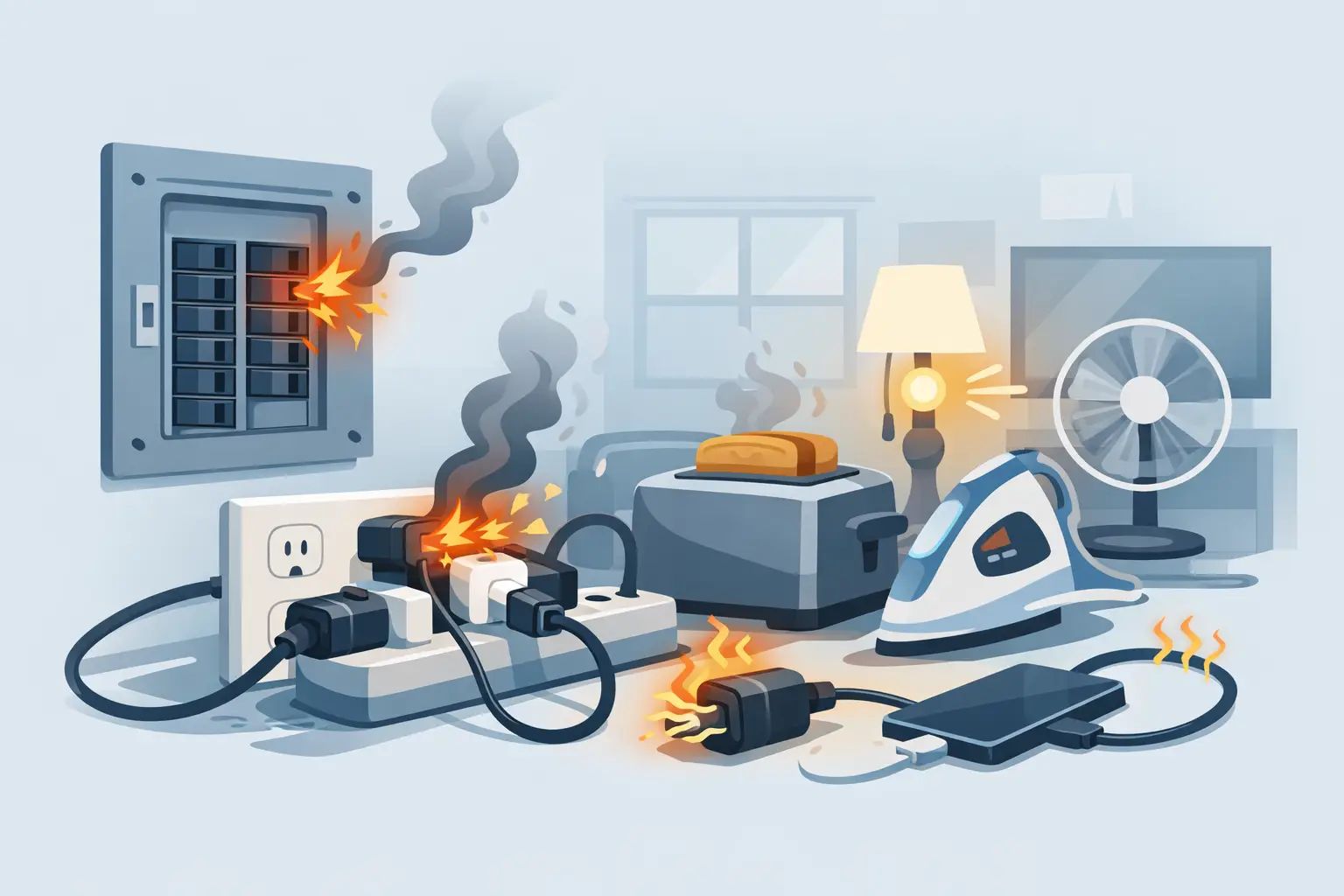
You usually notice an overloaded circuit when your home starts acting a little off. A breaker trips when the microwave and toaster run together. Lights dim when the space heater kicks on. An outlet feels warm for no clear reason. If you are wondering how to spot overloaded circuits, those early signs matter because they often show up before a more serious electrical problem develops.
For homeowners, this is less about technical theory and more about safety, reliability, and peace of mind. A circuit that is carrying more electrical demand than it was designed for can wear down wiring, strain breakers, and increase fire risk. The good news is that many overloaded circuits give clear warnings if you know what to look for.
How to spot overloaded circuits before they become dangerous
An overloaded circuit happens when too many devices or appliances are drawing power from the same circuit at the same time. Every circuit in your panel has a limit. When that limit is pushed too far, the breaker is supposed to trip and shut the power off. That is the system doing its job.
The problem is that homeowners do not always connect the symptoms to the cause. A tripped breaker may seem like a random nuisance. A flickering light may look like an old bulb. A buzzing outlet may be ignored because it still works. Taken together, though, these issues often point to a circuit under too much strain.
Breakers that trip repeatedly
This is one of the most common warning signs. If a breaker trips once after an unusual high-demand situation, that does not always mean something is wrong. If the same breaker trips again and again during normal use, the circuit may be overloaded.
Pay attention to patterns. If the kitchen breaker trips whenever multiple countertop appliances run at once, or a bedroom breaker shuts off when a portable AC unit is plugged in, the circuit may no longer match how that space is being used. Homes change over time. Electrical demands change too.
Lights that dim when appliances turn on
A brief dip in brightness can happen when a large appliance starts up, but frequent dimming is worth attention. If lights dim every time a vacuum, microwave, hair dryer, or window AC unit starts running, the circuit may be nearing its limit.
This is especially relevant in older homes, where rooms were not always designed for the number of electronics families use now. Charging stations, entertainment systems, home office equipment, and portable cooling or heating devices can quietly add up.
Warm outlets, switches, or faceplates
An outlet should not feel hot. Slight warmth from a plugged-in charger may not mean much, but noticeable heat at the outlet, switch, or cover plate is a warning sign. Heat suggests electrical resistance or excess current, and both deserve prompt attention.
If you notice warmth along with a burning smell, discoloration, or a buzzing sound, stop using that outlet right away. That may be more than an overloaded circuit. It could point to loose wiring or a failing connection, which should be inspected by a licensed electrician.
Buzzing sounds or a burning odor
Electrical systems should be quiet. A faint hum from certain dimmers or larger equipment can be normal, but buzzing from outlets, switches, or the panel is not something to ignore. Neither is a sharp, burning smell that seems to come from a wall, outlet, or appliance connection.
An overloaded circuit can create heat and stress that affect wiring and device connections. Even if the breaker has not tripped yet, these symptoms suggest the circuit is not operating normally.
Common causes of overloaded circuits
In many homes, overloaded circuits are not caused by one dramatic mistake. They build up gradually as new demands are added to an electrical system that may already be stretched.
One common cause is using several high-wattage appliances on the same circuit. Kitchens are a good example. A toaster oven, microwave, coffee maker, and air fryer may all seem harmless on their own, but together they can overload a circuit fast.
Another cause is heavy use of extension cords and power strips. These tools are often treated like solutions, but they do not increase the capacity of the circuit behind the wall. They only give you more places to plug things in. If the circuit is already close to its limit, adding a power strip can make the problem worse.
Older panels and outdated wiring can also play a role. A house built years ago may not have been designed for today’s mix of electronics, appliances, and charging equipment. That does not automatically mean the house is unsafe, but it does mean the electrical system may need evaluation if breakers trip often or circuits seem overworked.
Rooms where overloads happen most often
Some areas of the home are more likely to develop overloaded circuits because of how much power is used there.
The kitchen is at the top of the list. Countertop appliances draw a lot of power, and they are often used at the same time during busy mornings or family meals. Bathrooms can also run into trouble when hair dryers, curling irons, and heaters share one circuit.
Living rooms and bedrooms are another common trouble spot, especially in homes where one circuit now supports TVs, sound systems, gaming consoles, lamps, chargers, and portable AC or heating units. Garages are easy to overlook too. Freezers, power tools, battery chargers, and workshop equipment can place more demand on a circuit than many homeowners realize.
In hotter parts of the Antelope Valley, summer cooling can expose circuit limitations quickly. Portable air conditioners and extra fans may solve a comfort problem while creating an electrical one.
What you can safely check yourself
Homeowners can notice warning signs and make practical observations, but this is not a situation for trial-and-error repairs.
Start by identifying what happens when the breaker trips. Think about which devices were running and whether the same combination causes repeat shutdowns. If you can clearly connect the issue to too many appliances running at once, reduce the load and see if the problem stops.
You can also unplug unnecessary devices from the affected area and avoid using high-demand appliances together on the same circuit. Check whether outlets or switches feel unusually warm, and watch for flickering or dimming that happens consistently.
What you should not do is replace a breaker with a larger one, ignore repeated tripping, or keep resetting a breaker without understanding why it is shutting off. The breaker is there to protect your home. Forcing the issue can make a bad situation worse.
When an overloaded circuit points to a bigger issue
Sometimes the fix is simple. You may just need to spread appliances across different circuits or change how a room is being used. Other times, frequent overloads are a sign that your electrical system needs professional attention.
If your panel is older, if your home relies heavily on extension cords, or if new equipment like an EV charger, hot tub, or workshop tools has been added, the original circuit layout may no longer fit your household needs. In that case, expert electrical repairs or a panel-related upgrade may be the safer long-term move.
A licensed electrician can test the circuit, inspect the panel, evaluate the wiring, and determine whether the issue is overload, a failing breaker, a loose connection, or a larger capacity problem. That kind of diagnosis matters because similar symptoms can have different causes.
How to prevent overloaded circuits going forward
Prevention usually starts with being realistic about how your home uses power. If one room has become a home office, media center, and charging station all at once, it may need more than the original circuit can handle. If your kitchen setup has grown over time, the wiring should keep up with how the space is actually used.
A professional electrical inspection can help identify circuits that are carrying too much demand before they start causing outages or safety concerns. For many homeowners, that is the value of trusted electrical repair and maintenance. It is not just about fixing what failed. It is about keeping the home dependable.
At A1 Home Electric, that practical approach is part of protecting long-term home performance. When a circuit shows signs of strain, the goal is not just to restore power. It is to make sure your electrical system supports daily life safely and reliably.
If your breakers keep tripping, your lights dim under load, or an outlet feels warmer than it should, treat that as useful information from your home. Catching the warning signs early is one of the simplest ways to protect your family, your comfort, and the quality and safety of your electrical system.
Leave a Reply