
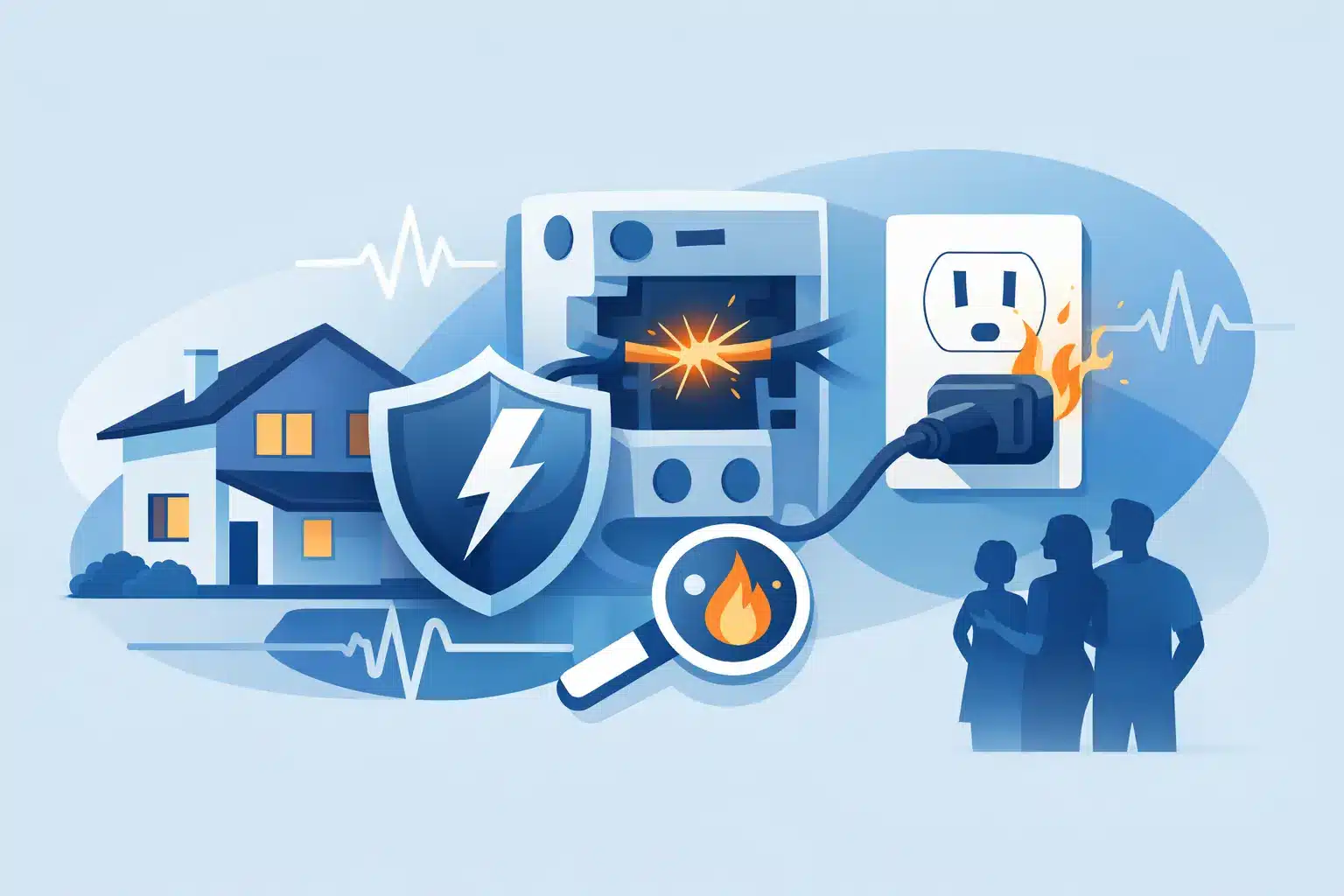
A breaker that trips after you plug in a vacuum, turn on a bedroom light, or use an older power strip can be more than an inconvenience. This arc fault protection guide explains how AFCI protection helps reduce hidden fire risks in residential wiring, what repeated trips may be telling you, and when it is time to have a licensed electrician inspect the circuit.
What Arc Fault Protection Does
An arc fault occurs when electricity jumps across a damaged or loose connection rather than following its intended path. The arc can generate significant heat, sometimes inside a wall, at an outlet, or within a cord where homeowners cannot see it. Over time, that heat can damage insulation and create a fire hazard.
Arc-fault circuit interrupters, commonly called AFCIs, are designed to recognize electrical patterns associated with dangerous arcing. When the device senses that pattern, it shuts off power to the affected circuit. In most homes, AFCI protection is provided by a special breaker in the electrical panel. Some applications may use an AFCI receptacle instead.
A standard circuit breaker protects wiring primarily from overloads and short circuits. It may not react to a smaller, intermittent arc that does not draw enough current to trip a conventional breaker. AFCIs add another layer of protection by monitoring the quality of the electrical current, not just the amount of current flowing through the circuit.
Where AFCI Protection Is Commonly Needed
Modern electrical codes generally require arc-fault protection in many living areas of a home, particularly where people regularly use lamps, chargers, televisions, extension cords, and other plug-in devices. Requirements have expanded over the years, so newer homes and recently remodeled spaces often have more AFCI-protected circuits than older homes.
Bedrooms are a familiar example, but requirements can also apply to living rooms, family rooms, dining rooms, hallways, closets, dens, and similar finished spaces. The exact requirements for a Palmdale, Lancaster, or Antelope Valley home depend on the age of the property, the scope of the work, the circuit involved, and the code adopted by the local authority.
That distinction matters during a remodel or panel upgrade. An older home does not necessarily need every circuit changed simply because newer construction follows a more recent code cycle. However, adding outlets, extending a circuit, finishing a room, or replacing electrical equipment can trigger code-related upgrades for the work being performed. A qualified electrician can assess the specific project instead of relying on a one-size-fits-all answer.
AFCI Protection and GFCI Protection Are Not the Same
AFCIs and GFCIs are both safety devices, but they address different hazards. A ground-fault circuit interrupter, or GFCI, helps protect people from shock when electricity takes an unintended path through water, damp surfaces, or a person. This is why GFCI protection is common in bathrooms, kitchens, garages, outdoor areas, and laundry spaces.
An AFCI is focused on fire prevention from arcing faults. In some areas of a home, a circuit may require both types of protection. Depending on the panel and circuit design, that protection may be supplied by a dual-function breaker or through a carefully planned combination of devices. Installing the wrong device, or wiring a correct device incorrectly, can leave the circuit unreliable or fail to meet the intended safety purpose.
Why an Arc-Fault Breaker Trips
A tripped AFCI does not automatically mean the breaker is defective. It may have detected a legitimate issue, and ignoring repeated trips can allow a wiring problem to worsen. At the same time, not every trip points to damaged wiring. AFCIs are sensitive by design, and the source may be an appliance, a cord, a connection, or the circuit itself.
Common causes include a worn extension cord, a loose outlet connection, a damaged appliance cord, a failing power strip, or a light fixture with a poor connection. Older vacuum cleaners, treadmills, shop tools, and equipment with brushed motors can sometimes create electrical noise that resembles arcing. Loose neutral connections in a panel, outlet box, or junction box can also cause intermittent problems that deserve prompt attention.
A single trip after a temporary issue may not be alarming. Repeated trips on the same circuit are different, especially if they occur when the circuit is lightly loaded or when no obvious device is in use. Other warning signs include a warm outlet cover, a buzzing sound, flickering lights, a burning odor, discoloration around an outlet, or a breaker that will not stay reset. Those conditions call for expert electrical repairs rather than trial-and-error resets.
What Homeowners Can Safely Check First
Before calling for service, you can take a few reasonable steps without opening the panel or removing outlet covers. Start by identifying what stopped working when the AFCI breaker tripped. Unplug portable devices on that circuit, including chargers, power strips, lamps, and extension cords. Then reset the breaker firmly by moving it fully to the OFF position before returning it to ON.
If it stays on, reconnect devices one at a time. This can help identify a damaged cord or appliance. Stop immediately if the breaker trips again, a plug feels hot, or you notice any odor, sparks, or visible damage.
For a safer and more useful service call, make a note of four details:
- The room or outlets that lost power
- The devices that were operating before the trip
- Whether the breaker trips immediately or after a period of use
- Any flickering, buzzing, heat, odors, or recent electrical changes
Do not replace an AFCI breaker with a standard breaker just to stop nuisance trips. Do not repeatedly reset a breaker that continues to trip. These actions can bypass a safety feature or make an underlying fault harder to diagnose.
Upgrading Arc Fault Protection in an Older Home
An older electrical panel may not support every type of modern AFCI breaker. Breakers are not interchangeable between panel brands, and using an incompatible breaker can create serious safety and performance concerns. Before recommending an upgrade, an electrician should identify the panel manufacturer, verify its condition, inspect the circuit wiring, and determine whether the existing wiring configuration can support the appropriate AFCI device.
Some older circuits share neutrals, have deteriorated insulation, or contain past modifications that are not visible from the panel. These conditions can complicate AFCI installation and may require repairs before the protection operates correctly. That does not mean an upgrade is not worthwhile. It means the job should be approached as part of the home’s overall electrical health, not as a quick breaker swap.
A panel upgrade can also be a practical time to review arc-fault protection. If a home needs more capacity for an EV charger, air conditioning equipment, a remodel, or added circuits, the electrician can evaluate safety devices, grounding, panel condition, and circuit labeling as part of one coordinated project. This helps homeowners make decisions based on long-term reliability rather than repeated small fixes.
When to Schedule an Electrical Inspection
Schedule an inspection when an AFCI breaker trips repeatedly, an older panel has unexplained electrical issues, or you are planning a remodel that will alter existing circuits. An inspection is also wise after purchasing an older home, particularly if outlets are loose, lights flicker, breakers are mislabeled, or past work appears inconsistent.
During a professional evaluation, the electrician can test the circuit, examine accessible outlets and connections, check the panel for proper breaker compatibility, and look for signs of overheating or loose wiring. The goal is not simply to get power back on. It is to find the source of the problem and restore dependable operation without compromising quality and safety.
For homeowners, arc-fault protection is most valuable when it is treated as part of a well-maintained electrical system. If a circuit keeps demanding attention, let a trusted local electrician determine whether the issue is a device, a connection, the wiring, or the panel itself. A1 Home Electric can help Antelope Valley homeowners make informed repairs and upgrades that support a safer, more dependable home.