
A power outage can turn a normal evening into a stressful one quickly, especially when it affects refrigeration, heating and cooling, lighting, or medical equipment. A backup generator transfer switch gives your household a safe, organized way to use generator power without putting your family, your electrical system, or utility workers at risk.
For homeowners in Palmdale, Lancaster, and throughout the Antelope Valley, backup power is not only about convenience. It can help protect food, preserve comfort during temperature swings, keep security systems operating, and make an unexpected outage more manageable. The right equipment depends on your generator, your electrical panel, and the circuits your family needs most.
What a Backup Generator Transfer Switch Does
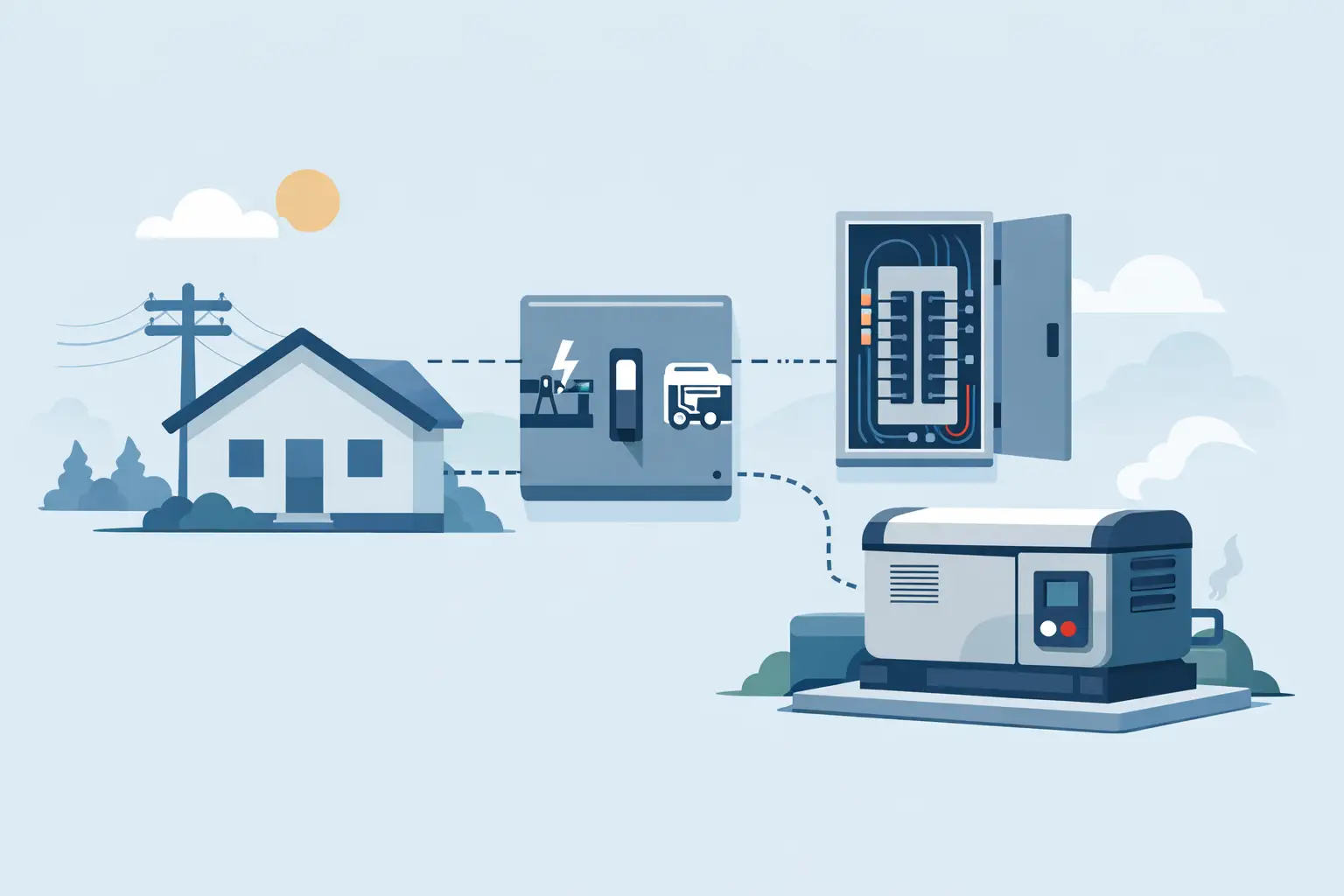
A transfer switch is installed between your home’s electrical panel and an approved generator connection. Its job is to isolate the home from the utility grid before generator power is supplied. This separation is essential because electricity from a generator must never flow back onto utility lines.
Without a properly installed transfer switch or approved interlock system, generator power can backfeed into the electrical system. That creates a serious shock and fire hazard and can endanger utility crews working to restore power. Plugging a generator into a standard wall outlet is never safe and should never be used as a backup-power solution.
A properly selected and installed system allows you to power chosen circuits or, in some cases, much of the home. When utility service returns, the system lets you transition back to normal power safely.
Manual vs. Automatic Transfer Switches
The best choice depends on the type of generator you own, how often you expect to use it, and how much convenience your household needs during an outage.
Manual transfer switches
A manual transfer switch is commonly used with a portable generator. During an outage, you start the generator outdoors, connect it to a weather-rated power inlet, and move the transfer switch from utility power to generator power. You then manage which designated circuits receive electricity.
This option can be a practical fit for homeowners who want dependable power for essentials, such as the refrigerator, selected lights, internet equipment, garage door opener, microwave, and a few outlets. It is generally less expensive than a whole-home standby system, but it requires someone to be home and able to operate the generator.
Manual systems also require careful load management. A portable generator may not have enough capacity to run central air conditioning, an electric range, a clothes dryer, and other high-demand appliances at the same time. A qualified electrician can help identify a realistic group of priority circuits before installation.
Automatic transfer switches
An automatic transfer switch is typically paired with a permanently installed standby generator. When utility power fails, the switch senses the outage, starts the generator, and transfers the home to backup power. When utility service is stable again, it returns the home to normal power and shuts the generator down.
This is a strong option for households that need backup power even when no one is home, or for homeowners who want less hands-on involvement during an outage. It can be especially helpful for homes with essential medical equipment, sump pumps, security systems, refrigerated medications, or family members who may not be able to set up a portable generator safely.
Automatic systems offer greater convenience, but they require a larger investment. The project may include generator sizing, fuel planning, electrical panel evaluation, site placement, permits, and ongoing generator maintenance.
Choosing the Right Circuits for Backup Power
Backup power works best when it is planned around the way your household actually lives. Many homeowners begin by thinking about every appliance they would like to run. A more useful approach is to separate true necessities from items that can wait until utility power returns.
Priority circuits often include refrigeration, kitchen lighting, bedroom and bathroom lighting, selected outlets, internet equipment, a garage door opener, security equipment, and heating-system controls. Depending on the home and generator size, a well pump, sump pump, or a small window air conditioner may also be considered.
Central air conditioning can be more complicated. It often requires substantial starting power, and the correct solution may involve a larger generator, load-management equipment, or a decision to leave the HVAC system off during an outage. Electric water heaters, electric dryers, ovens, and other high-demand appliances can also exceed the available generator capacity quickly.
An electrician should calculate the anticipated load rather than relying on assumptions. Generator ratings, appliance starting loads, panel capacity, and the circuits you want to power all affect the final design. Choosing more circuits than the generator can reasonably support may lead to overloads and repeated shutdowns when you need power most.
Transfer Switches, Interlocks, and Electrical Panels
A transfer switch is not the only approved option for connecting a generator to a home. In some situations, a listed generator interlock kit may be suitable. An interlock works with specific electrical panel equipment to prevent the utility main breaker and the generator breaker from being on at the same time.
The right choice depends on the condition and model of your panel, local code requirements, the generator connection, and how much control you want over backed-up circuits. A manual transfer switch usually provides a clearly labeled set of selected circuits. An interlock may allow more flexibility in choosing circuits, but it requires disciplined load management and a compatible panel.
Older panels deserve special attention. If a panel has corrosion, damaged components, limited space, improper wiring, or a history of breaker problems, adding generator equipment may reveal that a panel repair or upgrade is needed first. Backup power should strengthen your home’s safety and reliability, not place additional demand on equipment that is already compromised.
Why Professional Installation Matters
A backup generator setup involves more than mounting a switch beside the panel. The installation must include properly sized breakers and wiring, an approved generator inlet, correct grounding and bonding, outdoor-rated equipment where needed, safe generator placement, and code-conscious labeling.
Permitting and inspection requirements can apply, particularly for permanent standby generators and panel modifications. A licensed electrician can evaluate the home, explain the available options, and complete work that supports both safety and dependable operation.
Generator placement also matters. Portable generators must operate outdoors, away from doors, windows, vents, and attached garages because carbon monoxide can enter the home. They should never be operated in a garage, shed, or enclosed patio, even with doors open. A transfer switch makes the electrical connection safer, but it does not replace safe generator operation.
Keep Your Backup Power Plan Ready
A generator and transfer switch are most valuable when they are ready before the outage begins. Test the system periodically according to the manufacturer’s instructions, keep the generator maintained, and make sure everyone responsible for the home knows the basic operating steps.
For portable generators, use the correct power cord, inspect it for damage, and store fuel safely according to local requirements and manufacturer guidance. Never refuel a hot generator. For standby systems, follow the recommended maintenance schedule and address warning lights, battery issues, or service alerts promptly.
It is also wise to label the circuits you plan to use and keep a simple outage plan nearby. Knowing which appliances to turn on first can prevent overloads and reduce stress when the power goes out.
A thoughtfully installed backup generator transfer switch gives your family a safer way to keep essential parts of the home running. If you are considering backup power, A1 Home Electric can help evaluate your panel, generator plans, and priority circuits so your system is built for quality, safety, and reliable performance when it matters.