

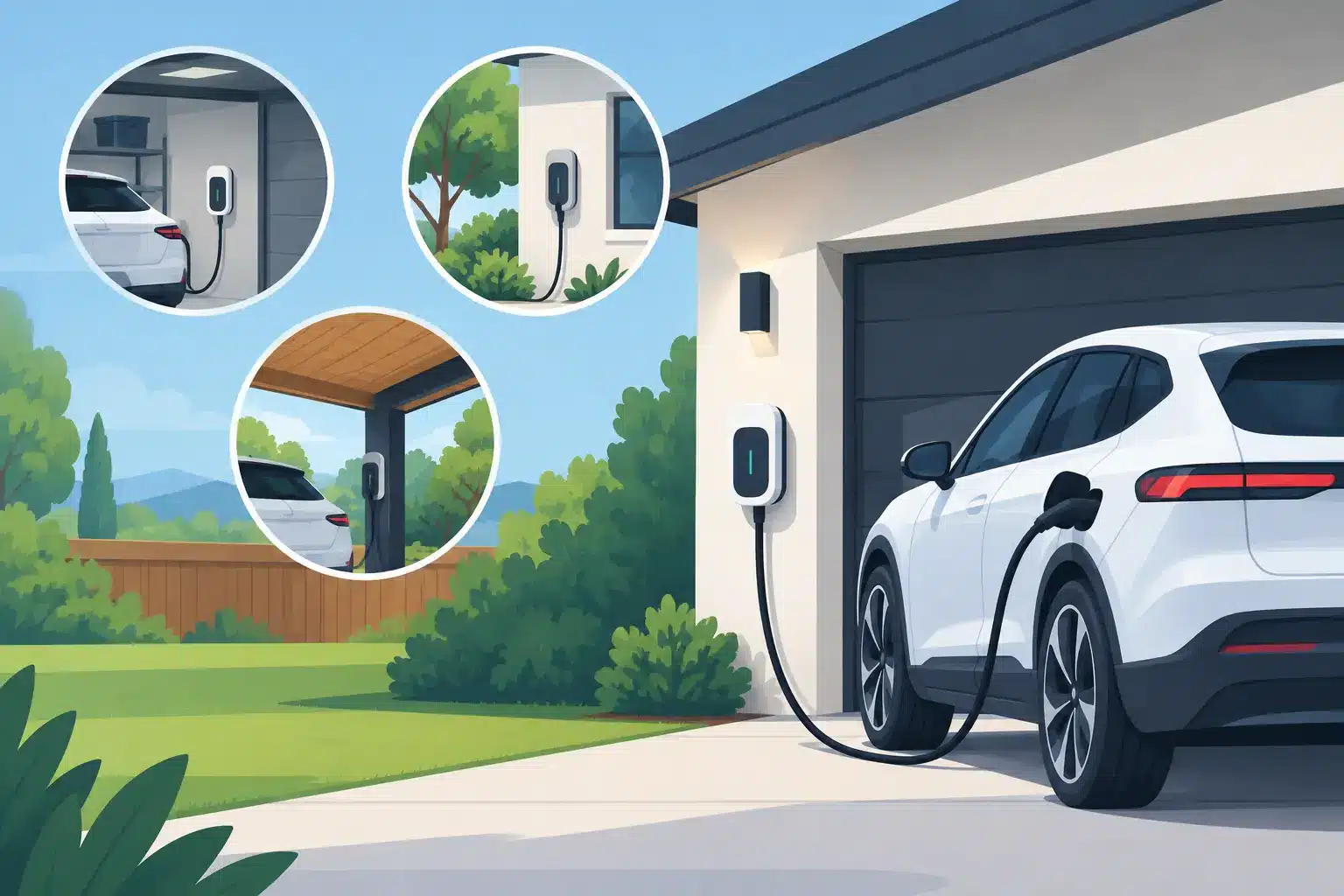
A charger can be the most convenient part of owning an electric vehicle, but only when it is placed where your vehicle actually spends its time. The best EV charger locations make daily charging simple without creating tripping hazards, stretching cables across walkways, or putting unnecessary strain on your home’s electrical system.
For most homeowners, the right spot is not determined by appearance alone. It depends on where you park, the length and position of the charging cable, weather exposure, your electrical panel capacity, and the condition of the wiring already serving that area. A thoughtful installation helps protect your home, supports reliable charging, and avoids an expensive relocation later.
Best EV Charger Locations for Everyday Use
The garage is usually the first choice, and for good reason. It protects the charging equipment and vehicle connection from direct sun, rain, wind, and dust. It also provides a controlled environment where cables are less likely to become a safety concern. When the vehicle is parked consistently in the same bay, a wall-mounted charger near the driver-side or charging-port side of the vehicle can make plug-in time quick and comfortable.
That said, a garage wall is only ideal if the cable can reach the vehicle without being pulled tight. The connector should rest comfortably in its holster when not in use, and the cable should not cross a door opening, a walking path, or the area where bicycles, tools, and storage bins are moved around.
A dedicated parking space beside the home is another strong option, especially for households that use the garage for storage or have more vehicles than garage spaces. An exterior installation can work very well when the equipment is rated for outdoor use and mounted in a protected, accessible position. The charger should be high enough to avoid standing water and accidental contact with landscaping equipment, while still being easy to reach.
Driveway charging is practical, but it needs more planning than many homeowners expect. A charger mounted near the front of the home may require a longer wiring route from the panel, which can affect project cost. It also calls for special attention to cable management. A cord should never run across the driveway, sidewalk, or public right-of-way, where it can be damaged by vehicles or create a trip hazard.
Start With Where You Park, Not Where the Outlet Is
An existing outlet near the garage or exterior wall may seem like the obvious installation point. However, the closest outlet is not always the safest or most useful charger location. EV charging is a sustained electrical load, and the circuit, receptacle, wiring, and panel all need to be suitable for the equipment being installed.
Begin by looking at your normal routine. Consider where the vehicle sits overnight, whether you pull in forward or back in, and which side contains the charging port. Measure the distance from the preferred mounting area to the port with room for the cable to hang naturally. It is better to have a reasonable amount of slack than a cable that must be stretched around the vehicle.
Also consider future habits. A household may buy a second EV, change which car gets the garage space, or replace the current vehicle with a model that has its charging port in a different location. Choosing a central wall or a location that can serve both sides of a two-car garage may offer more flexibility. In other homes, installing conduit now for a future charger can be a sensible long-term decision.
Garage wall installations
For many homes, a side wall near the front or middle of the garage is the most convenient choice. This placement often keeps the charger visible and accessible without interfering with the garage door, storage cabinets, or the path into the house.
Avoid placing the unit where it will be blocked by parked vehicles, shelving, or a frequently opened door. A charger should be easy to inspect and use. If plugging in becomes inconvenient, drivers are more likely to postpone charging until it becomes a problem.
Exterior wall installations
An exterior wall near a driveway can be an excellent solution when indoor parking is not available. Look for a spot that is close to the vehicle but protected from direct impact and excessive weather exposure. Equipment rated for outdoor installation is designed for these conditions, but a thoughtful location still improves durability.
In the Antelope Valley, strong sun, windblown dust, and temperature swings are worth considering. A protected mounting area can help keep the charging connection cleaner and more comfortable to use. The installer should also ensure exterior penetrations are properly sealed to help prevent moisture intrusion.
Detached garage and workshop installations
A detached garage may be the best parking location, but it can require additional electrical planning. The building’s existing feeder, subpanel, and available capacity must be evaluated before a charger is added. Older detached structures sometimes have electrical systems that were adequate for lights and a few outlets, but not for continuous EV charging.
This does not mean a detached garage cannot support a charger. It means the installation should be designed around the actual electrical capacity of the building, rather than assumptions about what the existing wiring can handle.
Electrical Panel Capacity Matters as Much as Location
A charger may be located only a few feet from the electrical panel, yet still require an upgrade or load calculation before installation. Homes use electricity for far more than lighting and outlets. Air conditioning, electric dryers, ovens, pool equipment, water heaters, and other major appliances all affect the available capacity.
A licensed electrician can assess the panel, breaker space, service capacity, and anticipated charging load. This evaluation helps determine whether the home can support the selected charger as-is, needs a dedicated circuit, or would benefit from a panel upgrade.
For homeowners with older panels, this is an especially valuable step. EV charger installation can reveal issues that were already present, such as overcrowded panels, outdated components, damaged wiring, or insufficient capacity for the household’s current needs. Addressing those concerns supports safer charging and improves the home’s overall electrical reliability.
Choose a Location That Protects the Cable
The charging cable deserves as much attention as the charger itself. It should not be pinched by a garage door, driven over by a vehicle, exposed to sharp edges, or left where children and pets can pull on it. A proper holster and cable management setup keeps the connector off the ground and reduces unnecessary wear.
In a garage, keep the cable clear of workbenches and storage areas. Outside, avoid locations near sprinklers, gates, trash bins, or spots where landscaping tools are regularly used. If the charger is near a parking area, consider vehicle clearance carefully. A protective bollard or other barrier may be appropriate where accidental impact is a realistic concern.
The goal is not to make the equipment hard to reach. It is to make charging easy while reducing the chance of damage during normal household activity.
Permits, Code Requirements, and Professional Installation
EV charger work often requires permits and code-compliant installation, particularly when a new dedicated circuit, panel work, or electrical service upgrade is involved. Requirements can vary by jurisdiction, so homeowners should not assume that a charger can simply be added to any available outlet or breaker space.
Professional installation provides more than a neat-looking finished job. It includes evaluating the electrical system, selecting appropriately rated equipment and wiring methods, installing required protection, and making sure the work is prepared for inspection when needed. This is particularly important for Level 2 chargers, which typically provide faster home charging but require more electrical capacity than a standard household receptacle.
A1 Home Electric helps homeowners in Palmdale, Lancaster, and nearby Antelope Valley communities evaluate their electrical systems before installation. That practical assessment can make the difference between a charger that merely works and one that serves the household safely for years.
A Better Location Makes Charging Feel Effortless
The right charger location should fit your life quietly. You should be able to park, connect the vehicle, and walk inside without rearranging cars, moving cords, or worrying about the electrical system behind the wall.
Before choosing a spot, stand where you normally park and picture the full routine after a long day. The best location is the one that keeps the cable protected, the connection convenient, and your home ready for the road ahead.