

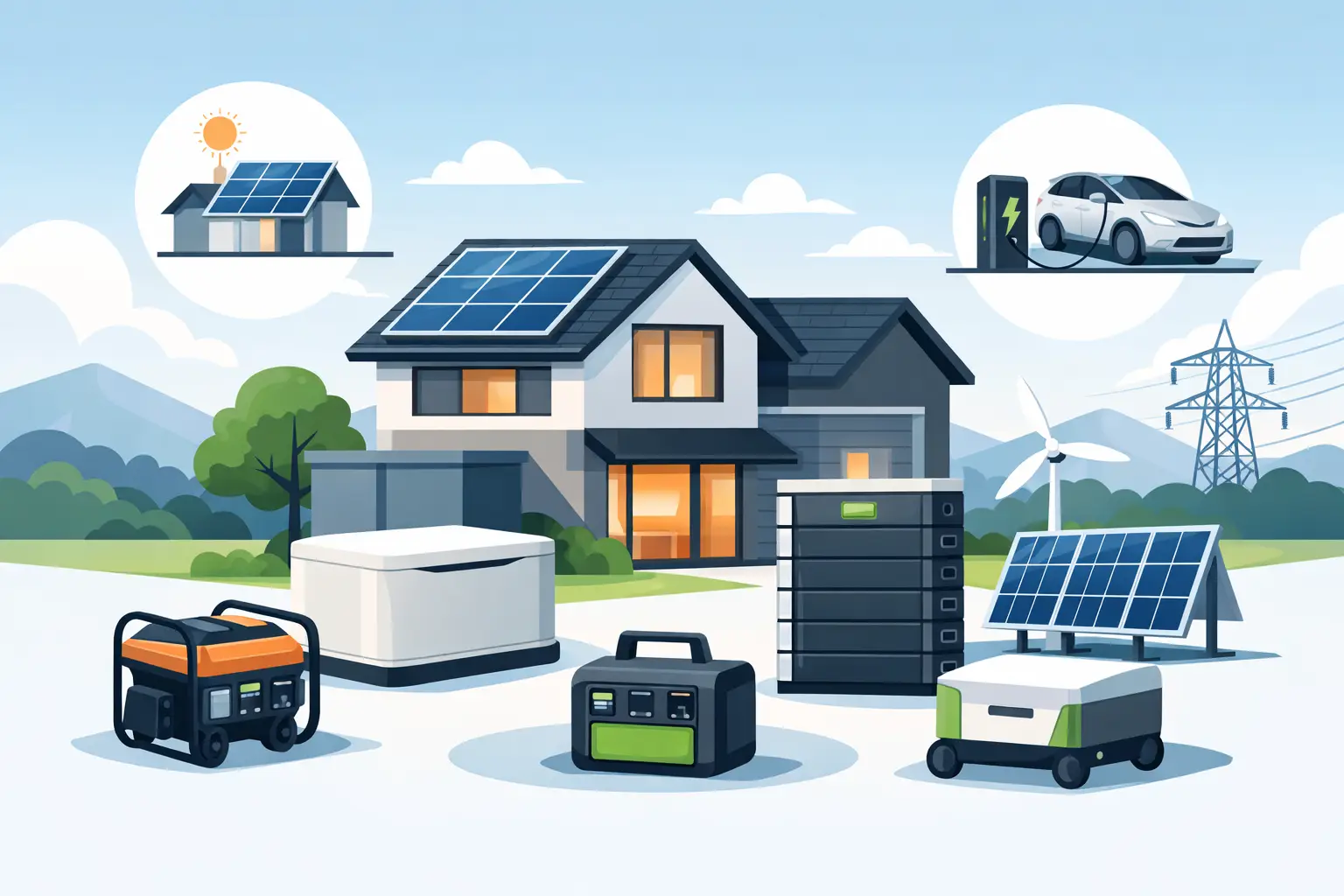
A power outage feels very different when it is your refrigerator, medical equipment, garage door, and HVAC system on the line. For many homeowners, the best home backup power options are not about convenience alone. They are about keeping the house safe, livable, and functional when the grid goes down.
The right choice depends on what you need to keep running, how long outages typically last, and what your electrical system can safely support. A small backup setup may cover the essentials for a few hours. A whole-home solution can keep daily life moving with much less interruption. The key is matching the equipment to the home instead of buying the biggest or cheapest unit and hoping for the best.
How to choose the best home backup power options
Start with your real priorities, not the marketing on the box. Most homeowners do not need to power every light and appliance during an outage. They need refrigeration, a few circuits for lighting, internet, some outlets, and maybe heating or cooling depending on the season.
That distinction matters because backup power costs rise fast as your power demands increase. Running a refrigerator and a few lights is one thing. Running central air, an electric water heater, an oven, and a pool pump is another. If your goal is comfort and safety, a targeted plan is usually more practical than trying to back up the entire house without limits.
Fuel source also matters. Gasoline is easy to find until everyone is trying to buy it at the same time. Propane stores well but requires tank planning. Natural gas is convenient for standby generators, though it is still wise to understand local outage risks and fuel supply realities. Battery systems are clean and quiet, but runtime depends on battery size and how carefully you manage loads.
Portable generators
Portable generators are often the first option homeowners consider because the upfront cost is lower than permanent systems. They can be a sensible choice if outages are occasional and your priority is keeping essential items running for short periods.
A portable unit can support basics like the refrigerator, freezer, lights, a few outlets, and possibly a sump pump or microwave if the generator is sized correctly. For some homes, that is enough. For others, especially homes with larger HVAC loads or more frequent outages, portable power starts to feel like a temporary patch.
The trade-offs are important. Portable generators require manual setup, safe fueling, outdoor placement, and careful connection to the house. They should never be plugged into home wiring without the proper transfer equipment. That creates serious safety risks for the home and for utility workers. Noise, maintenance, and fuel storage are also part of the deal.
For homeowners who want lower cost and occasional backup, portable generators can make sense. For homeowners who want automatic protection and less hands-on work, they usually fall short.
Inverter generators
Inverter generators are a more refined version of portable backup power. They are typically quieter, more fuel efficient, and better suited for sensitive electronics like computers, modems, and modern appliances.
That makes them attractive for homeowners who want to keep communications, basic lighting, and refrigeration going without the louder operation of a traditional portable generator. They are also easier to live with in neighborhoods where noise is a concern.
The trade-off is output. Many inverter models are not built to carry large household loads, so they are best for selective backup rather than broad home coverage. If your expectations are modest, this can be a smart middle ground. If you want to support major appliances or HVAC equipment, you may outgrow this option quickly.
Standby generators
When homeowners ask about the best home backup power options for reliability, standby generators are usually at the top of the list. These systems are permanently installed, connected through an automatic transfer switch, and designed to start on their own when utility power fails.
That automatic response is what sets them apart. You do not need to roll equipment out of the garage, refuel in the dark, or manage extension cords. If your home experiences repeated outages, or if someone in the household depends on medical devices, refrigeration for medication, or dependable climate control, that peace of mind matters.
Standby generators can be sized for essential circuits or for much broader home coverage. Some homeowners choose to back up only the most important loads. Others want a system that can carry most of the home with minimal lifestyle changes. There is no single right answer. It depends on the home, the panel capacity, the fuel source, and the budget.
The downsides are mostly upfront. Installation costs more, and proper placement, permitting, and electrical integration need to be handled correctly. Ongoing maintenance is also part of ownership. Still, for households that prioritize dependable backup power, this is often the most complete solution.
Battery backup systems
Battery backup systems have become much more appealing in recent years, especially for homeowners who want quiet operation and no on-site fuel combustion. These systems store electricity for use during outages and can often be paired with solar, though solar is not required in every setup.
The biggest advantages are convenience and cleanliness. Batteries switch over quickly, operate silently, and avoid the fueling and exhaust concerns that come with generators. For short outages or for homeowners focused on essential circuits, they can work very well.
The main limit is duration. A battery system is only as useful as its storage capacity and your load management. If you try to run large air conditioning loads, electric dryers, or other heavy-demand equipment for long periods, stored energy disappears fast. That means battery systems are excellent for some homes and frustratingly limited for others.
For homeowners who value quiet backup and want to keep key circuits online, battery storage can be a strong option. For extended outages with high energy demands, it may need to be part of a larger strategy rather than the whole answer.
Solar plus battery backup
There is a common assumption that solar panels alone keep the lights on during an outage. In most homes, that is not how it works. Standard grid-tied solar systems shut down during outages unless they are designed with battery backup and the right controls.
When solar is paired with batteries, the setup becomes much more useful during daytime outages and can help recharge stored energy. This can stretch your backup capability beyond what batteries alone can provide. For homeowners in sunny areas like the Antelope Valley, that can be an appealing long-term approach.
Still, this option is not automatically the best fit for everyone. It tends to cost more upfront, and performance depends on system design, battery capacity, and the loads being supported. If your goal is whole-home backup during a multi-day outage, you may still need careful load planning or even generator support.
Transfer switches and interlock setups
When people compare backup equipment, they sometimes overlook the part that makes the system safe to use with the home. A transfer switch or approved interlock setup is what allows backup power to feed selected home circuits without dangerous backfeeding.
This is not just an accessory. It is a core part of a safe backup plan. If you are using a generator and want to power household circuits, proper switching equipment protects your home and helps the setup function as intended. It also makes backup power far more practical than relying on a maze of extension cords.
For many homeowners, a professionally installed transfer setup can make a smaller generator much more useful. It is one of those upgrades that often matters more than people expect.
What usually works best for most homeowners
If outages are rare and short, a portable or inverter generator may be enough, especially if you only need refrigeration, lights, and a few outlets. If outages are more disruptive or frequent, a standby generator usually offers the most dependable protection with the least hassle.
Battery systems fit best when quiet operation, low maintenance, and essential-circuit backup are the priority. Solar plus battery can be attractive for homeowners thinking long term, but it needs realistic expectations about runtime and heavy electrical loads.
The right answer often comes down to your electrical panel, your major appliances, and whether your household can comfortably reduce power use during an outage. That is why backup power planning works better when it starts with a home-specific assessment instead of a guess.
A dependable backup system should support your life, not add new risks. If you are weighing the best home backup power options, focus on safe installation, realistic load planning, and a setup you can trust when the power actually goes out.