
A breaker panel is not a place to choose by appearance or the lowest installed price. It is the control center for the electrical safety of your home, and the brand must match the equipment, the home’s electrical demands, and current code requirements. This breaker panel brands review gives Antelope Valley homeowners a practical way to compare common options without treating any one name as the right answer for every house.
A quality panel installation begins with more than a brand. The electrician must evaluate service capacity, existing wiring, available circuit space, outdoor exposure, future additions, and the condition of the utility connection. A respected manufacturer is a strong starting point, but proper sizing and installation are what help protect your family, appliances, and home over the long term.
What Matters Most When Comparing Breaker Panel Brands
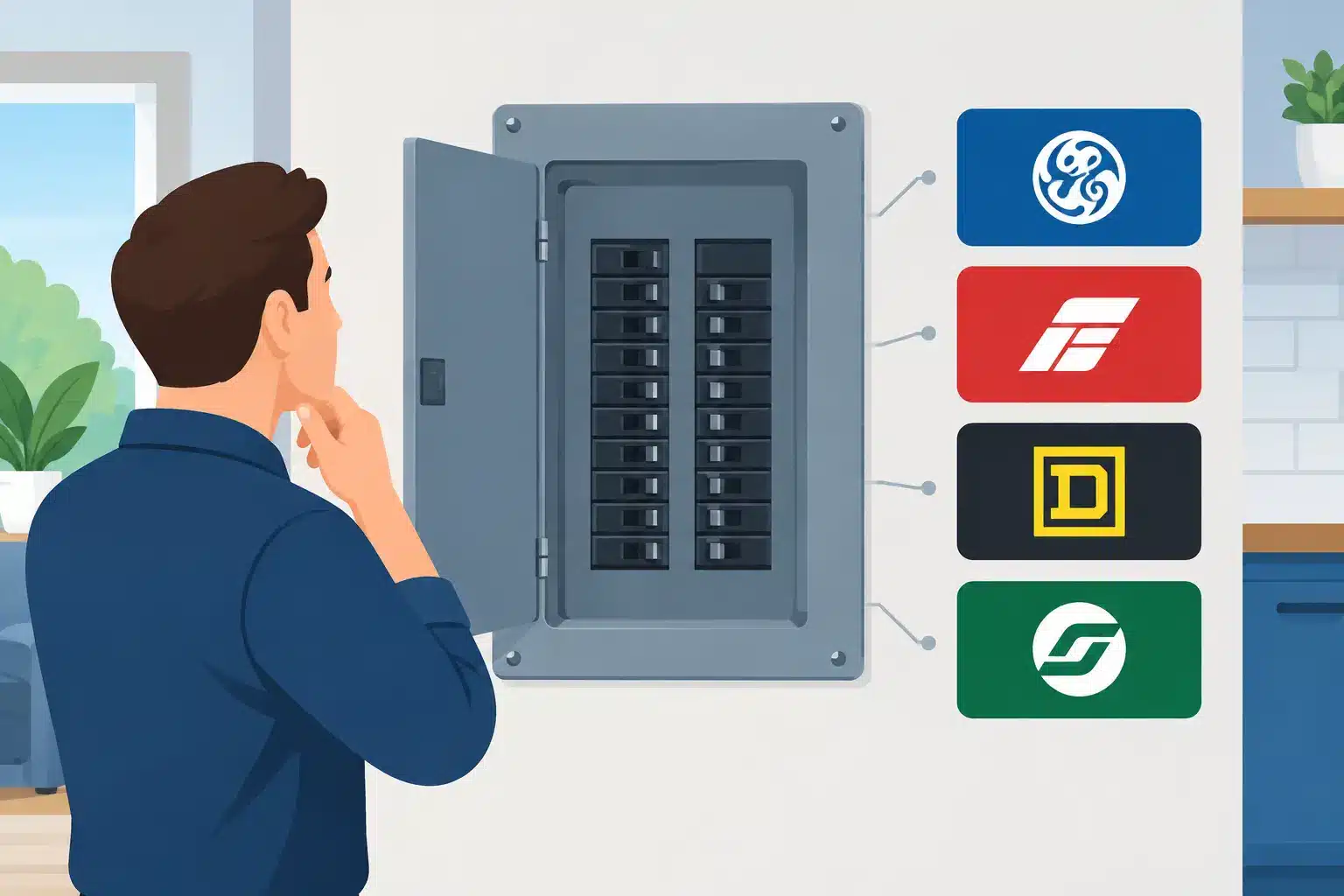
Homeowners often ask which panel brand is best. The more useful question is which listed panel and breaker system is right for the home. Breakers are tested as part of a specific system. A breaker that physically fits inside another manufacturer’s panel is not automatically approved or safe to use there.
The best choice usually comes down to four practical factors: compatibility, capacity, support, and the condition of the home. Compatibility means using breakers specifically listed for that panel. Capacity means allowing enough room for current circuits and planned improvements, such as an electric range, air conditioning upgrade, workshop equipment, solar equipment, or EV charger. Support includes product availability, warranty coverage, and access to replacement breakers years from now.
For many homes in Palmdale, Lancaster, Quartz Hill, and nearby communities, heat is also part of the conversation. High summer demand can place sustained stress on aging electrical systems as air conditioners, pool equipment, refrigerators, and household electronics operate at the same time. A panel should be selected and installed with real household use in mind, not just the minimum number of circuits needed today.
Breaker Panel Brands Review: Common Residential Options
Square D
Square D is one of the most recognized names in residential electrical equipment. Its QO and Homeline product lines are common in homes across the country, but they are distinct systems with different breaker designs and price points. QO equipment is often viewed as a premium residential option, while Homeline is widely used for dependable, cost-conscious installations.
A key advantage is availability. Electricians and supply houses commonly stock Square D components, which can make future additions or approved repairs more straightforward. The brand also offers panels with modern features, including surge protection options and equipment designed to simplify organized installations.
The trade-off is that Square D products can cost more than some alternatives, particularly within the QO line. That added cost may be worthwhile for a homeowner who values a familiar system and broad parts availability, but it is not a reason to replace a sound, properly installed panel from another major manufacturer.
Eaton
Eaton is another established choice for residential breaker panels. Its BR and CH lines are both well known, and, like other manufacturers, they use different breaker families that should not be mixed. Eaton panels are often chosen for their solid construction, broad residential product selection, and accessibility of replacement parts.
The CH line is commonly associated with premium features, while BR equipment is frequently used for standard residential applications. Eaton also offers products that support whole-home surge protection, generator connections, and other upgrades homeowners may consider as electrical needs grow.
Eaton can be a practical option when a home needs a service upgrade or when an existing Eaton system requires code-conscious expansion. The right selection depends on the panel series, the available space, and whether the installation is being designed for future loads rather than only immediate needs.
Siemens
Siemens is a widely used manufacturer with a long history in residential and commercial electrical equipment. Its residential panels and breakers are often a good fit for homes where Siemens equipment is already installed, provided the system is in good condition and has sufficient capacity.
Homeowners may appreciate Siemens for its established product line and practical options for panel upgrades, subpanels, and additional circuits. Availability can vary by local supplier, but it remains a familiar and trusted brand for many licensed electricians.
As with every brand, the panel’s age and configuration matter. An older Siemens panel may still be serviceable, while another may be too full, damaged, improperly modified, or undersized for modern electrical demand. The name on the door does not replace a complete inspection.
GE and ABB Equipment
GE-branded residential panel equipment remains common in many existing homes. ABB now owns GE’s electrification business, and product availability and labeling may reflect that transition. For homeowners with an existing GE panel, the central concern is finding the correctly listed, compatible breaker and confirming that the panel itself remains in sound condition.
A GE or ABB system can be a reasonable choice when it is properly installed and parts are available. However, a homeowner planning a major service upgrade may want an electrician to compare current product support, expansion options, and local availability against other major brands. This is especially helpful when adding large electrical loads or replacing a crowded panel.
Leviton Smart Load Centers
Leviton offers modern load centers with smart monitoring features. Depending on the configuration, these systems can provide visibility into energy use and individual circuit activity through connected technology. For homeowners who want more information about how their home uses power, that can be appealing.
Smart features are not necessary for electrical safety. A conventional, properly sized panel with correctly installed breakers remains a dependable choice for most homes. Smart panels also carry a higher upfront cost and may not be the best fit for every budget or household. Their value depends on whether the homeowner will use the monitoring tools and whether the system supports the home’s long-range electrical plans.
Why Brand Compatibility Is a Safety Issue
A panel door may list the breaker types approved for use inside. That label is not a suggestion. Mixing brands or installing unlisted breakers can create problems with fit, electrical performance, heat control, and safety certification. Even when a breaker appears to snap into place, it may not make the correct connection with the panel bus.
This is why a licensed electrician should inspect a panel before adding a circuit, replacing a breaker, or installing an EV charger. The work may reveal issues that are not visible from the outside, such as overheating, corrosion, double-tapped conductors, damaged bus bars, missing knockouts, or a panel with no remaining capacity.
Some panels also have legacy concerns that deserve professional attention. Federal Pacific Electric, Zinsco, and certain older Sylvania-Zinsco equipment are frequently flagged during inspections because of well-documented performance and safety concerns. Not every older panel presents the same condition or risk, but these brands call for a qualified evaluation rather than a simple breaker replacement.
Panel Size Can Matter More Than the Logo
A homeowner upgrading from a 100-amp service to a 200-amp service is making a decision that affects far more than breaker space. The service equipment, meter connection, grounding and bonding, feeder conductors, panel location, and local requirements may all need review. The correct size is determined by a load calculation, not by guessing or copying a neighbor’s installation.
A larger panel can be especially useful when planning an EV charger, electric heat pump, induction cooking, hot tub, detached garage, or home addition. It can also provide much-needed room to separate overloaded circuits in an older home. Still, oversized equipment is not automatically better. The goal is a safe, code-conscious system with enough capacity and circuit space for the way your household actually lives.
A Better Way to Choose a Panel Upgrade
When comparing brands, ask your electrician which systems are approved for the project, readily supported locally, and suitable for your anticipated loads. Ask whether the quote includes a load calculation, permits when required, proper grounding and bonding, labeling, and a clear plan for surge protection. These details say more about the quality of the upgrade than a brand name alone.
A1 Home Electric approaches panel work with the home’s long-term safety and reliability in mind. A panel upgrade should leave you with a system that is easier to maintain, prepared for future needs, and installed with the care your home deserves.
If your lights flicker, breakers trip often, the panel feels warm, or you are planning a major electrical addition, do not wait for a small warning sign to become a larger repair. A professional panel evaluation can give you clear answers and help you make a confident choice for the years ahead.