
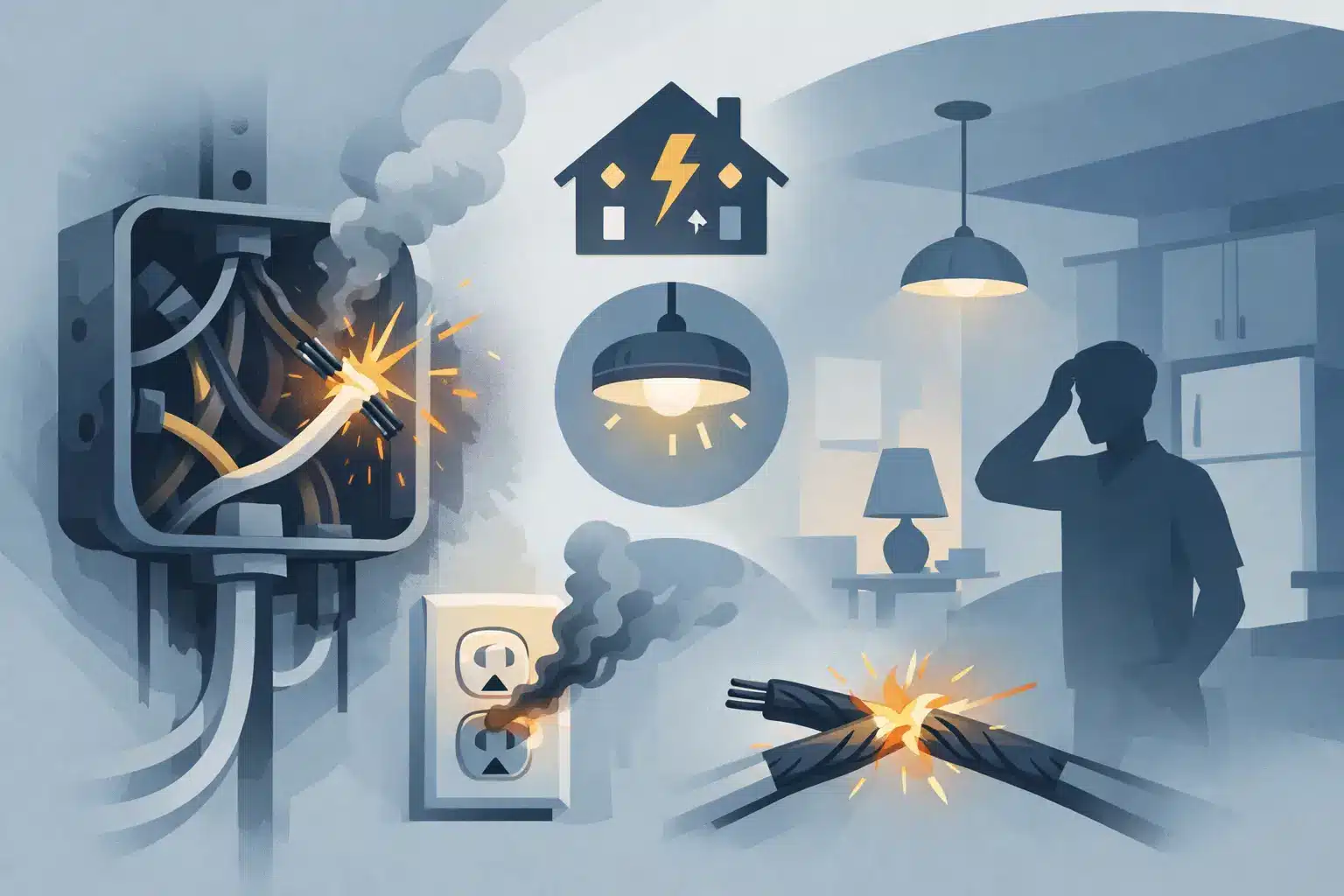
A light that flickers once may be harmless. A breaker that suddenly trips every time the microwave runs, an outlet that feels warm, or a faint burning smell is different. Can old wiring fail suddenly? Yes, it can. More often, though, an electrical failure is the final visible sign of a problem that has been developing behind walls, in outlets, or at the electrical panel for years.
For homeowners, the key is not trying to predict the exact moment a wire will fail. It is recognizing when an aging electrical system needs professional attention before it affects your safety, comfort, or ability to use your home normally.
Can Old Wiring Fail Suddenly Without Warning?
Old wiring can stop working abruptly when insulation breaks down, a connection loosens, a circuit becomes overloaded, or heat damages a component. The power may go out in one room, a breaker may trip repeatedly, or an outlet may simply stop working. In more serious cases, failing wiring can overheat and create a fire risk.
Still, truly warning-free failures are less common than they seem. Electrical systems often provide smaller clues first. Those clues may be easy to overlook because they happen intermittently: a lamp dims when the air conditioner starts, an outlet only works if a plug sits a certain way, or a breaker trips once and then appears fine for weeks.
In older homes across Palmdale, Lancaster, and the Antelope Valley, years of heat, household use, past repairs, and changing power needs can all add stress to wiring that was installed for a very different era of appliances and electronics.
Why Aging Wiring Breaks Down
Electrical wiring is designed to last a long time, but it is not permanent. The wire itself, its protective insulation, the connections at outlets and switches, and the equipment in the panel all age differently. A system can look acceptable from the outside while a weak connection is creating heat inside a box or panel.
Heat and brittle insulation
Heat is one of the biggest enemies of electrical materials. Over time, insulation can dry out, crack, or become brittle. This is especially relevant in areas with long periods of high temperatures. Damaged insulation can expose conductors or make them more vulnerable to contact with other materials, increasing the chance of short circuits or arcing.
Loose connections
Every outlet, switch, junction box, and panel connection depends on secure contact. Connections can loosen gradually from normal expansion and contraction, vibration, older installation practices, or repeated use. A loose connection creates resistance, and resistance creates heat. That heat can damage the connection further until the circuit starts failing or presents a safety concern.
More demand than the system was built for
Many older homes were not designed around modern electrical use. Today, a single household may run large televisions, computers, kitchen appliances, HVAC equipment, garage tools, chargers, and smart devices at the same time. Adding a new appliance does not automatically mean the wiring is unsafe, but frequent overloads are a signal that the circuit layout or electrical panel may no longer match the home’s needs.
Damage from pests, moisture, or previous work
Rodents can chew wiring. Moisture can corrode connections. Remodeling work can disturb or nick a cable inside a wall. DIY repairs and poorly completed past work may also leave hidden problems behind. These issues can remain unnoticed until a circuit is called on to carry more power and the weak point fails.
Warning Signs Homeowners Should Not Ignore
A single odd electrical event is worth noticing. A repeated pattern deserves prompt attention from a licensed electrician. Watch for these signs, particularly in an older home:
- Breakers that trip repeatedly or fuses that blow more than once
- Flickering, dimming, or surging lights when appliances turn on
- Warm, discolored, cracked, buzzing, or sparking outlets and switches
- A burning, fishy, or smoky odor near an outlet, fixture, or electrical panel
- Plugs that fall out of outlets or outlets that work only intermittently
- A mild shock or tingling feeling when touching an appliance, switch, or metal fixture
A breaker trip is not always evidence of bad wiring. Sometimes a circuit is simply overloaded by too many appliances. But resetting the breaker repeatedly without identifying the cause can allow a real problem to continue. Breakers are safety devices, not a nuisance to work around.
If you smell burning, see smoke, hear persistent buzzing, notice sparking, or find an outlet or panel that is hot to the touch, turn off power to the affected circuit if it is safe to do so. Avoid using the equipment, and arrange for expert electrical repairs as soon as possible. If there is active smoke or fire, leave the home and call emergency services.
Older Wiring Types and What They Mean
Age alone does not tell the full story. A well-maintained older system may be safer than a newer system with poor workmanship or overloaded circuits. What matters is the wiring type, its condition, the quality of previous modifications, and whether the system can safely support current use.
Some older homes may have ungrounded two-prong outlets, cloth-covered wiring, aluminum branch-circuit wiring, or outdated panel equipment. Each situation calls for a different response. Two-prong outlets, for example, do not provide the same grounding protection as modern receptacles. Aluminum wiring can be safe when properly installed and maintained, but it requires appropriate connections and experienced evaluation. Older panels may not offer the capacity or reliability a household now needs.
This is why visual assumptions can be risky. Replacing a faceplate or installing a three-prong outlet does not necessarily correct what is happening behind the wall. A proper electrical inspection can identify the actual condition of circuits, grounding, connections, and panel components.
What a Professional Inspection Can Find
An electrical inspection is not just about locating a failed outlet. It helps determine why the issue occurred and whether the same condition could be present elsewhere in the home. A licensed electrician can test circuits, inspect the panel, look for signs of overheating, evaluate grounding, and check whether the home has enough capacity for its current electrical load.
The recommended repair may be small, such as replacing a damaged receptacle or correcting a loose connection. In other homes, the safer long-term solution may involve adding a dedicated circuit, upgrading older wiring in a specific area, improving grounding, or planning a panel upgrade. The right choice depends on the condition of the home and the family’s electrical needs, not on a one-size-fits-all recommendation.
That distinction matters when planning projects too. A kitchen remodel, air conditioning replacement, workshop equipment, hot tub, or EV charger can change the demands on a home’s electrical system. Checking capacity before installation helps avoid nuisance trips, unsafe extensions, and expensive changes later.
Do Not Wait for a Complete Failure
It is tempting to wait until a circuit stops working before calling for service. The trade-off is that a small, scheduled repair can become an urgent problem at the least convenient time. Electrical faults do not follow business hours, and a failed circuit can affect refrigeration, lighting, internet equipment, heating and cooling controls, or essential daily routines.
Preventive maintenance is especially useful for homeowners who have recently purchased an older property, noticed recurring electrical quirks, or are planning to add high-demand equipment. It provides a clearer picture of what needs attention now and what can be planned for later.
A1 Home Electric approaches older-home electrical concerns with practical, home-focused recommendations. The goal is not to replace more than necessary. It is to correct unsafe conditions, improve reliability, and help homeowners make informed decisions about repairs and upgrades.
If your home is showing repeated electrical warning signs, treat them as useful information rather than an inconvenience. A timely inspection can protect the comfort and safety of the people who live there, while giving your electrical system a better chance to serve the home reliably for years to come.