

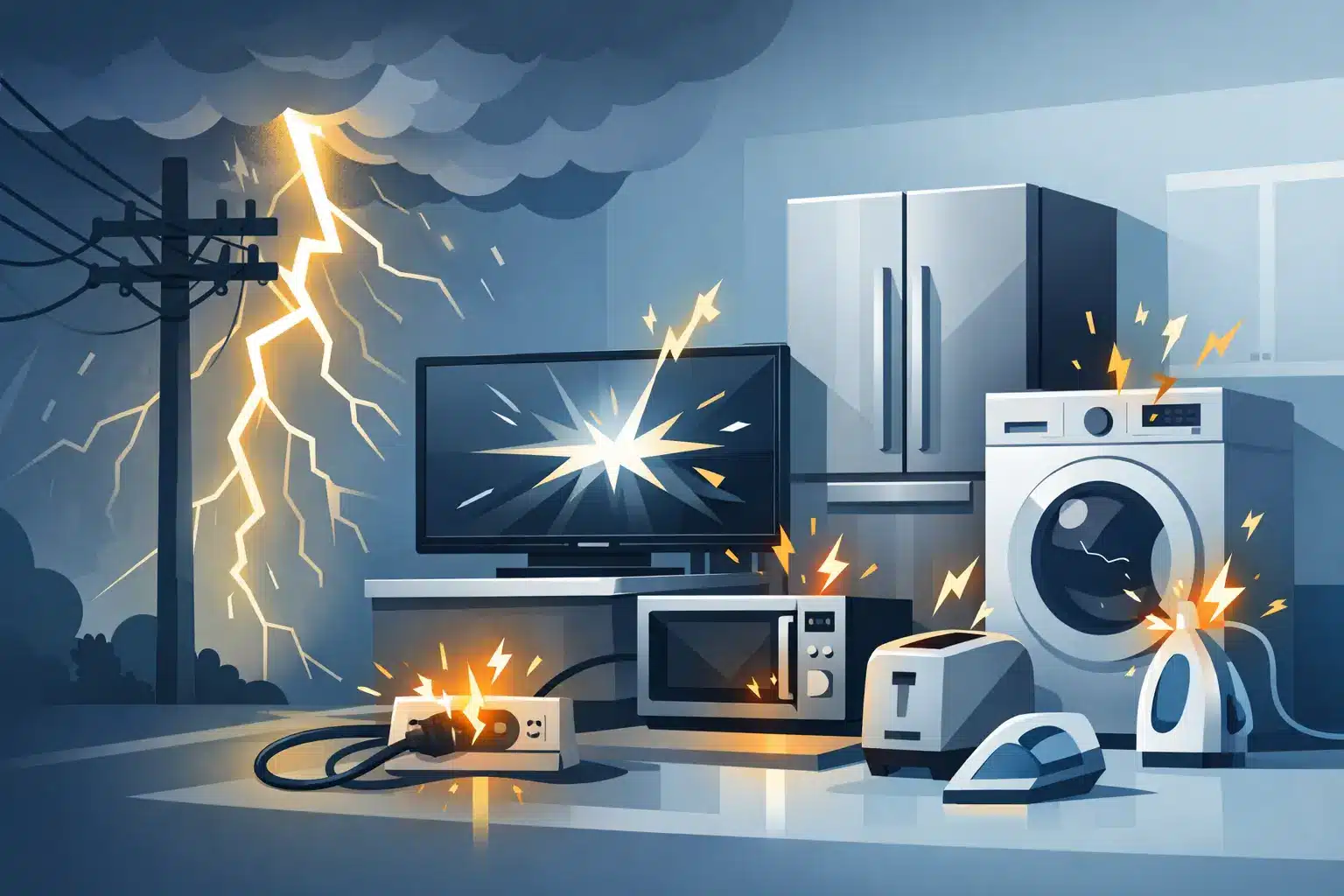
A refrigerator that suddenly stops cooling, a microwave with a blank display, or a television that will not turn back on after an outage can leave homeowners asking: can power surges damage appliances? Yes. A strong surge can damage an appliance immediately, while smaller, repeated surges may slowly weaken sensitive components until the appliance fails much sooner than expected.
For Antelope Valley homeowners, protecting appliances is not just about replacing a power strip. It starts with understanding where surges come from, which equipment is most at risk, and when an electrical inspection is the safer next step.
Can Power Surges Damage Appliances and Electronics?
A power surge is a brief spike in voltage traveling through a home’s electrical system. Household wiring is designed to deliver a steady level of electricity. When voltage rises beyond what an appliance or electronic device can handle, the extra energy can overheat, stress, or destroy internal parts.
The damage is not always dramatic. A major surge may leave an appliance completely dead, trip a breaker, create a burning odor, or damage visible circuitry. More often, the problem is less obvious. Repeated small surges can wear down control boards, motors, charging systems, and electronic displays over time.
Modern appliances are particularly vulnerable because many rely on electronic controls. Refrigerators, dishwashers, washing machines, HVAC equipment, smart TVs, computers, internet equipment, garage door openers, and EV chargers all contain components that can be affected by unstable power.
Older, simpler appliances are not immune, but they may have fewer sensitive electronic parts. The level of risk depends on the size of the surge, the appliance’s design, its age, and the condition of the home’s grounding and electrical panel.
Where Household Power Surges Come From
Lightning is the cause many people think of first. A nearby strike can create a powerful surge, even if it does not hit the home directly. However, lightning is not the only concern, and it is not usually the most common source of smaller everyday surges.
Utility switching, power outages, and restoration of power after an outage can all cause voltage changes. In some cases, an issue on the utility side affects several homes at once. A problem inside the house can also be the source. Large appliances with motors, such as air conditioners, refrigerators, and washing machines, can create small voltage fluctuations when they cycle on and off.
Loose connections, damaged wiring, an outdated electrical panel, or poor grounding can make a home less able to handle electrical disturbances safely. These conditions do not always mean a surge is happening, but they can increase the chance of equipment problems and deserve professional attention.
Signs an Appliance May Have Been Damaged by a Surge
A surge does not always leave clear proof behind. If an appliance stopped working immediately after a blackout, flickering power event, or storm, surge damage is a reasonable possibility. But homeowners should avoid assuming the appliance is the only issue, especially if more than one device is affected.
Common signs include an appliance that will not turn on, resets itself unexpectedly, shows error codes, has a flickering display, loses settings, or works inconsistently. Electronics may develop distorted audio or video, fail to charge, lose network connectivity, or become unusually hot during use.
A burning smell, buzzing sound, scorch marks, or a breaker that repeatedly trips should be treated as a safety concern. Turn off or unplug the affected device if it is safe to do so, and arrange for expert electrical repairs. Do not continue using equipment that appears overheated or damaged.
What to Do After a Suspected Surge
After a significant power event, start with safety rather than troubleshooting every outlet. Check for signs of smoke, heat, damaged cords, or a burning odor. If you notice any of these conditions, keep clear of the area and contact a qualified electrician.
If there are no immediate hazards, unplug sensitive electronics that are still connected. Check the electrical panel for a tripped breaker, but do not repeatedly reset a breaker that trips again. A breaker is doing its job when it interrupts power due to a possible fault.
Next, identify the scope of the problem. If one appliance is affected, the issue may be limited to that unit or circuit. If multiple appliances, outlets, or lights are acting strangely, the home may need an electrical inspection. In particular, dimming and brightening lights, frequent breaker trips, or partial power loss can point to a larger wiring, panel, or utility-related concern.
Take photos of visible damage and keep notes about when the event occurred. This can be helpful for appliance repair decisions and, in some situations, an insurance claim.
How to Protect Appliances From Future Surges
The best protection is layered. A plug-in surge protector can help protect certain electronics, but it is not a complete solution for the whole house. It also cannot correct an overloaded circuit, poor grounding, loose connection, or failing electrical panel.
A whole-home surge protective device is installed at or near the electrical panel. It is designed to redirect excess voltage away from the home’s electrical system during many common surge events. This helps protect hardwired equipment and appliances that cannot be connected to a power strip, such as an air conditioner, dishwasher, oven, or garage door opener.
Point-of-use surge protectors still have a role. Use quality protectors for televisions, computers, gaming systems, network equipment, and other sensitive electronics. These devices should be rated for surge protection, not simply power strips with extra outlets. Replace them after a known major surge or when their protection indicator shows they are no longer functioning.
Homeowners can also reduce risk by keeping their electrical system in good condition. That includes addressing flickering lights, warm outlets, breaker problems, outdated panels, and damaged wiring promptly. For homes adding high-demand equipment such as an EV charger, panel capacity and circuit condition should be evaluated before installation.
Why grounding matters
Grounding gives excess electrical energy a controlled path to follow. Proper grounding supports the safe operation of surge protection equipment, but grounding alone does not stop every surge. Think of it as one part of the home’s overall electrical safety system.
Older homes may have grounding limitations, and some outlet issues are not visible from the outside. A licensed electrician can test the system and recommend practical improvements based on the home’s age, panel condition, and electrical needs.
When a surge protector is not enough
No surge protection device can guarantee that every appliance will survive every electrical event. An extremely powerful lightning-related surge can overwhelm protective equipment. Surge protection also cannot repair an appliance that already has internal damage or solve an underlying service problem.
That is why the right approach is not simply buying more power strips. A homeowner who has experienced repeated equipment failures, frequent power irregularities, or unexplained breaker trips should have the electrical system assessed. The goal is to find the cause before another appliance becomes the warning sign.
When to Call a Licensed Electrician
Call for professional help when multiple appliances stop working after a power event, breakers will not stay reset, lights fluctuate, outlets show discoloration, or you hear buzzing from the panel. These issues can involve energized components and should not be handled as a do-it-yourself repair.
A licensed electrician can inspect the panel, circuits, grounding, connections, and surge protection options for the home. A1 Home Electric helps homeowners in Palmdale, Lancaster, and nearby Antelope Valley communities address electrical concerns with a focus on quality and safety.
Appliances are significant investments, but the greater priority is a home electrical system that operates safely and reliably. If power behavior in your home has changed, acting early can protect more than the equipment plugged into the wall.