

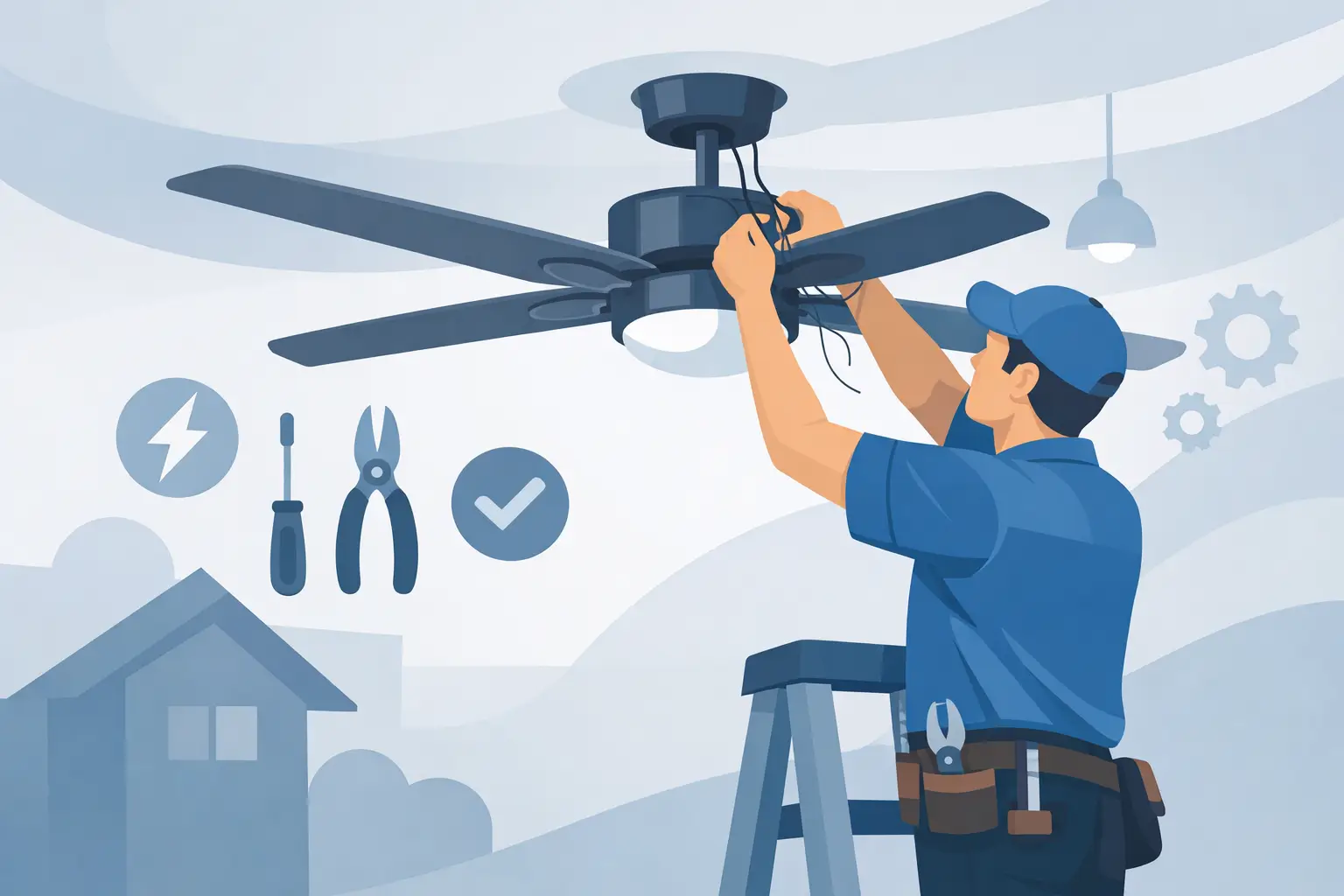
A ceiling fan should make a room more comfortable, not create a wobble, a clicking noise, or a safety concern hanging over your family room. That is why many homeowners start their search for a ceiling fan installation electrician before they even buy the fan. The right installation protects the fixture, the wiring, and the people living under it.
For homeowners, ceiling fans seem simple until the details start stacking up. The existing box may not be fan-rated. The switch may control an outlet instead of the ceiling point. The room may need a new support brace, a better wall control, or a wiring update to handle the setup you want. A fan is part comfort upgrade and part electrical project, which is why professional installation matters.
Why hire a ceiling fan installation electrician?
A ceiling fan is heavier than a standard light fixture, and it moves constantly. That combination changes the installation requirements. A licensed electrician looks at more than whether the fan turns on. The support, wiring, controls, and overall safety all need to be right.
In many homes, the existing ceiling box was installed for a basic light. That does not always mean it can safely hold a fan. If the box is not rated for fan support, the fixture can loosen over time, especially if it is used often or runs at higher speeds. A proper installation starts by confirming the mounting point is built for the load and movement.
There is also the question of wiring. Some homeowners want a fan with a light kit, separate controls for fan and light, or a wall switch instead of pull chains. Others are replacing an older unit that has started humming, wobbling, or tripping a breaker. Those situations call for expert electrical repairs or installation work, not guesswork.
What a professional installation usually includes
A good ceiling fan installation is straightforward, but it is not one-size-fits-all. The electrician typically starts by checking the existing wiring, the ceiling box, and the switch setup. If the wiring is already in place and the support is correct, the job may be relatively simple. If not, there may be a little more work involved to get the installation done safely.
Checking the ceiling box and support
This is one of the most important steps. A fan-rated box and proper mounting support help prevent movement, noise, and long-term strain on the ceiling connection. If the fan is going into a room with no previous fixture, a new electrical box and wiring path may be needed.
Reviewing the wall switch and controls
Some fans can work from a basic on-off wall switch, while others are better with dedicated fan controls or separate switching for the light and motor. It depends on the fan model and what your home is already wired for. If you want cleaner control and less reliance on pull chains or remote-only operation, this is the time to address it.
Installing and balancing the fan
Even a quality fan can wobble if it is not mounted and balanced correctly. Professional installation helps reduce noise, improves performance, and extends the life of the fan. That matters even more in bedrooms, living rooms, and covered patios where comfort and quiet operation are the whole point.
Signs the job may be more than a simple swap
Sometimes replacing one fan with another is easy. Other times, the old fixture reveals problems that need attention before the new one goes up. Homeowners are often surprised by how often older wiring, weak mounting, or outdated controls come into play.
If the breaker trips when the fan turns on, if the switch behaves inconsistently, or if the old fan had flickering lights, that points to an electrical issue worth evaluating. A buzzing sound from the switch or ceiling box is another sign not to ignore. These are not just annoyances. They can signal loose connections, wiring wear, or compatibility problems.
The age of the home matters too. In some older houses, previous fixture installations were done years ago under very different conditions or by someone focused only on getting the light to work. A licensed electrician looks at the whole setup so the new fan is not sitting on top of an old problem.
Ceiling fan installation electrician choices that affect comfort
Not every room needs the same fan, and not every installation should be approached the same way. The size of the room, the ceiling height, and how the room is used all affect the best result.
A large family room may need a wider fan blade span for better air movement. A bedroom might call for quieter operation and separate light control. A room with a high or angled ceiling may need a downrod and a more careful mounting approach. Covered outdoor areas also need the right fan rating for the environment.
There are trade-offs. A larger fan can move more air, but only if the space and mounting height are right. A remote-controlled fan can be convenient, but some homeowners prefer wall controls for simplicity and reliability. If a room already has limited wiring options, achieving every feature you want may require added electrical work.
That is where practical guidance helps. The best setup is not always the most feature-packed one. It is the one that fits your room, your home wiring, and the way your household actually uses the space.
When installation is also a good time for electrical upgrades
A ceiling fan project can be a smart moment to take care of nearby electrical needs. If the existing switch is worn, if the room lighting has never been especially functional, or if the circuit is showing signs of age, it may make sense to address those issues while the work is already underway.
For some homeowners, this means replacing an outdated switch. For others, it may mean adding better control for the fan and light, updating an older fixture box, or checking whether the circuit is carrying more than it should. Small improvements made during installation can help prevent service calls later.
This is especially relevant in homes where comfort and electrical performance go hand in hand. A fan is not just decorative. In warmer months, it can improve airflow and help rooms feel more usable without overworking cooling systems. But that only works well when the installation is done with quality and safety in mind.
What to expect when you schedule the work
Most homeowners want two things from this kind of service – a safe installation and a clear process. That is reasonable. You should know whether the current wiring can support the fan you want, whether additional work is needed, and how the controls will function once everything is complete.
A dependable residential electrician will explain the condition of the existing setup in plain language. If the job is simple, you should hear that. If there is a problem with the box, wiring, or switch leg, you should hear that too. Clear recommendations matter because they help you make the right call for your home, not just the fastest one.
For homeowners in Palmdale, Lancaster, and nearby Antelope Valley communities, local experience also matters. Heat, long cooling seasons, and day-to-day home use make ceiling fans a practical upgrade, not just a style choice. Working with a company that understands residential electrical service and long-term home performance can make the project easier from start to finish.
Choosing the right electrician for ceiling fan installation
You are not just hiring someone to hang a fixture. You are trusting them with wiring inside your home and with a moving device mounted overhead. That is why it makes sense to look for a licensed residential electrician with experience in installation, repair, and home electrical safety.
Good service should feel steady and professional. You want someone who checks the support, verifies the wiring, installs the fan correctly, and leaves you confident in how it operates. If the project reveals a larger issue, you want honest guidance, not pressure.
A1 Home Electric serves homeowners who want trusted electrical repair and installation work done with care and practical attention to the home as a whole. That kind of approach matters on small projects as much as major upgrades.
If you are planning a new fan or replacing one that has become noisy, unstable, or unreliable, it helps to treat the job as part of your home’s overall electrical health. Better comfort starts with safe wiring, proper support, and workmanship you do not have to second-guess.