
A circuit breaker vs fuse box decision often comes up after a breaker trips repeatedly, a light flickers, or a homeowner discovers an older electrical panel during a renovation. Both systems are designed to stop dangerous overloads before wiring overheats. The difference is how they respond, how easily they can be used safely, and whether they can support the electrical demands of a modern home.
For many homes in Palmdale, Lancaster, and the surrounding Antelope Valley, the right answer depends on the age and condition of the electrical system, the home’s service capacity, and planned upgrades such as central air, a remodeled kitchen, or an EV charger. A licensed electrician can assess those details without guessing or relying on a quick visual inspection alone.
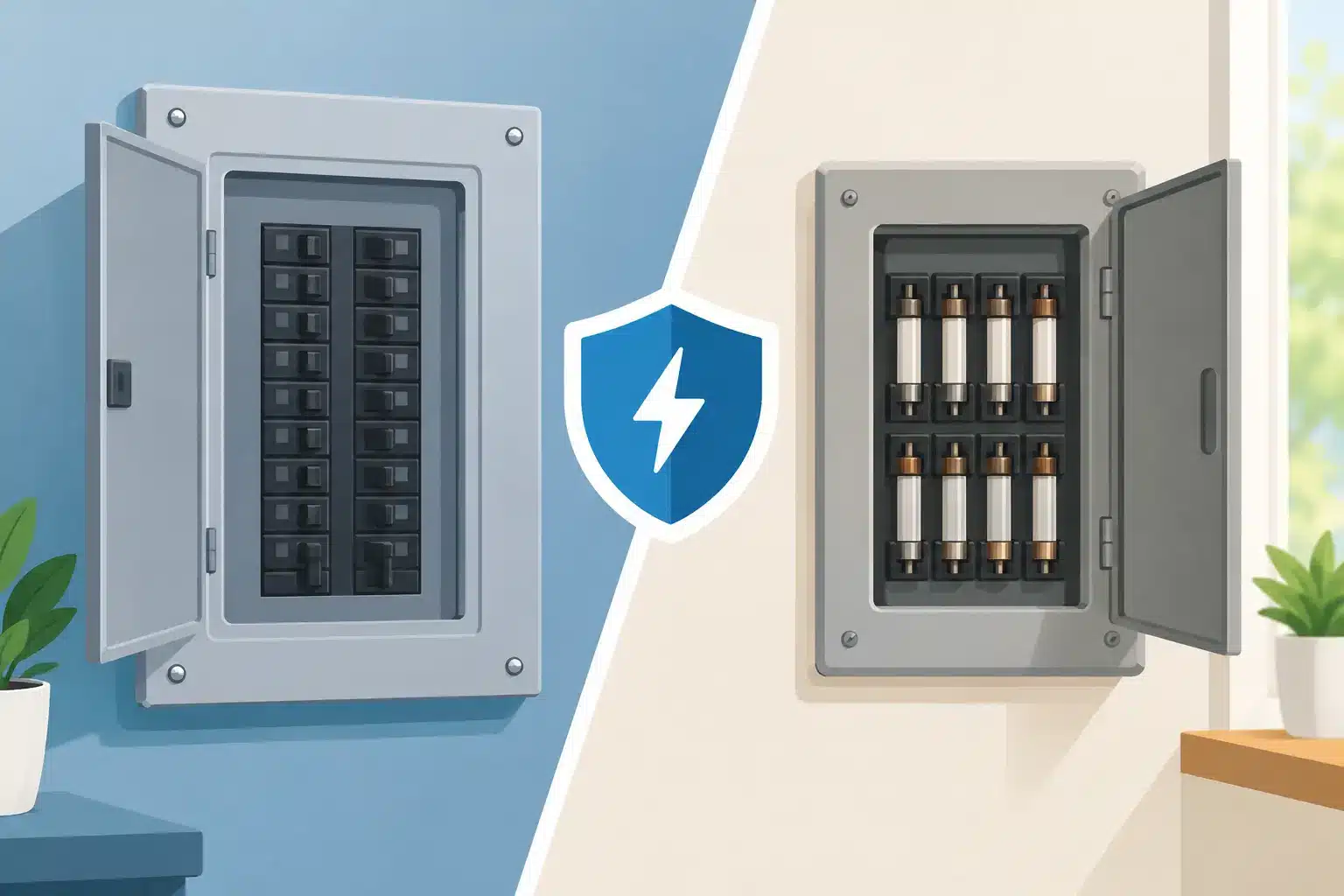
Circuit Breaker vs Fuse Box: The Basic Difference
A fuse box uses small devices called fuses to protect individual electrical circuits. When a circuit draws more current than the wiring is designed to handle, the metal element inside the fuse melts and stops the flow of electricity. The fuse has done its job, but it must be replaced before the circuit can work again.
A circuit breaker panel uses switches called breakers instead. When a circuit overloads or a fault is detected, the breaker trips to the off position. After the underlying problem is addressed, the breaker can usually be reset. That resettable design is the feature most homeowners notice first, but it is not the only reason breaker panels have become the standard in newer homes.
Neither system should be judged only by age. A fuse box that has been properly maintained may still provide basic protection for certain circuits. At the same time, an older breaker panel can have capacity issues, corrosion, loose connections, or outdated components that need professional attention. The condition of the equipment matters as much as the type of equipment.
Why Circuit Breakers Are Usually Better for Modern Homes
Modern households use far more electricity than homes did when many fuse boxes were installed. Appliances, microwaves, refrigerators, computers, large televisions, laundry equipment, garage tools, HVAC systems, and chargers all place demands on the electrical system. Circuit breaker panels are generally better suited to organize, protect, and expand these circuits.
A properly sized breaker panel also makes it easier to add dedicated circuits. A dedicated circuit serves one major appliance or electrical use, helping prevent overloads and improving reliability. This is especially relevant for electric ranges, dishwashers, air conditioners, hot tubs, and EV charging equipment.
Many newer breaker panels can also include protection that older systems do not offer. Ground-fault circuit interrupters, often called GFCIs, help reduce shock hazards in areas such as bathrooms, kitchens, garages, and outdoor spaces. Arc-fault circuit interrupters, or AFCIs, are designed to detect certain dangerous arcing conditions that can lead to fires. Whether these protections are required depends on the location and scope of the work, but they are valuable safety tools in a modern electrical system.
Are Fuse Boxes Unsafe?
A fuse box is not automatically unsafe simply because it is a fuse box. The concern is that older equipment can be paired with aging wiring, limited capacity, poor past repairs, or modifications made by someone trying to keep power running without correcting the actual problem.
One common risk is installing the wrong fuse size. A fuse must match the amp rating of the circuit wiring. If an oversized fuse is installed, the circuit may allow more electricity through than the wire can safely carry. That can cause wires and connections to overheat inside walls, creating a serious fire risk.
Some older fuse boxes have also been altered with improvised items, such as pennies or other metal objects placed behind a fuse. This bypasses the protective function entirely and should be treated as an urgent electrical safety concern. A fuse that blows repeatedly is not an inconvenience to work around. It is a warning that the circuit may be overloaded, damaged, or improperly wired.
Signs Your Electrical Panel May Need Attention
Homeowners do not need to remove a panel cover to recognize potential warning signs. If you notice any of the following conditions, it is wise to schedule an electrical inspection:
- Fuses blow or breakers trip repeatedly.
- Lights dim or flicker when appliances start.
- The panel feels warm, makes buzzing sounds, or has a burning odor.
- You rely on extension cords or power strips because outlets are limited.
- The home still has a fuse box and you plan a major appliance, remodel, or EV charger installation.
- There is visible rust, moisture damage, scorch marks, or unlabeled circuits.
These signs do not always mean a full panel replacement is necessary. A single failing breaker, loose connection, overloaded circuit, or damaged outlet can sometimes be repaired. The purpose of an inspection is to identify the actual cause and recommend work that fits the home, not to replace equipment without a clear reason.
When a Fuse Box Upgrade Makes Sense
Replacing a fuse box with a modern breaker panel is often a practical investment when the existing system has limited capacity or cannot safely support the way the home is used. An upgrade may be recommended when adding central HVAC, a garage workshop, a spa, an electric appliance, solar equipment, or an EV charger.
It can also make sense during a kitchen or addition remodel. These projects commonly require new circuits, updated protective devices, and a clear plan for electrical loads. Completing panel work before walls are closed can avoid disruption and help the finished space operate reliably.
In some cases, the panel itself is not the only issue. The service equipment, meter connection, grounding system, branch wiring, or subpanel may also need evaluation. This is why capacity cannot be determined by counting empty spaces in a panel. A qualified electrician performs a load calculation and examines the full system before recommending the right service size.
What to Expect From a Professional Panel Assessment
A thorough electrical assessment starts with questions about how you use your home now and what you expect to add later. For example, a household planning to buy an electric vehicle in the next year may benefit from an upgrade plan that accounts for future charging needs instead of paying for multiple rounds of work.
The electrician should inspect the panel condition, breaker or fuse ratings, circuit labeling, grounding and bonding, visible wiring, and signs of overheating or water intrusion. They should also consider the home’s electrical load and identify whether specific circuits need repair, rebalancing, replacement, or expansion.
For homeowners, the goal is straightforward: dependable power without nuisance tripping, unsafe overloads, or uncertainty about whether the system can handle the next upgrade. Quality electrical work is not just about turning the lights back on. It is about protecting the wiring and equipment that operate behind the walls every day.
Can You Replace a Fuse or Reset a Breaker Yourself?
Resetting a tripped breaker can be appropriate if there is no heat, damage, burning smell, or repeated tripping. Turn off or unplug the items that may have overloaded the circuit, move the breaker fully to the off position, then reset it to on. If it trips again, leave it off and arrange for expert electrical repairs.
Replacing a properly matched plug fuse may seem simple, but repeated blown fuses need diagnosis rather than another replacement. Never install a larger fuse to stop it from blowing. Never bypass a fuse or breaker. These actions can allow dangerous current to continue through wiring that is not designed to carry it.
Do not remove a panel cover or attempt internal panel repairs. Even with a main breaker turned off, some parts of the equipment may remain energized. Panel work should be completed by a licensed electrician using proper safety procedures.
Choosing Reliability Over a Quick Fix
A circuit breaker panel is usually the better long-term choice for a home that needs modern safety features, added circuits, and room for future electrical needs. Still, the best next step is based on the condition and capacity of your specific system. A careful inspection can separate a repairable issue from an upgrade that will improve safety and comfort for years.
If your home has an older fuse box, unexplained power problems, or plans for new electrical equipment, do not wait for a small warning sign to become a major disruption. A1 Home Electric can help homeowners evaluate their electrical system and make practical decisions centered on quality, safety, and dependable home power.