

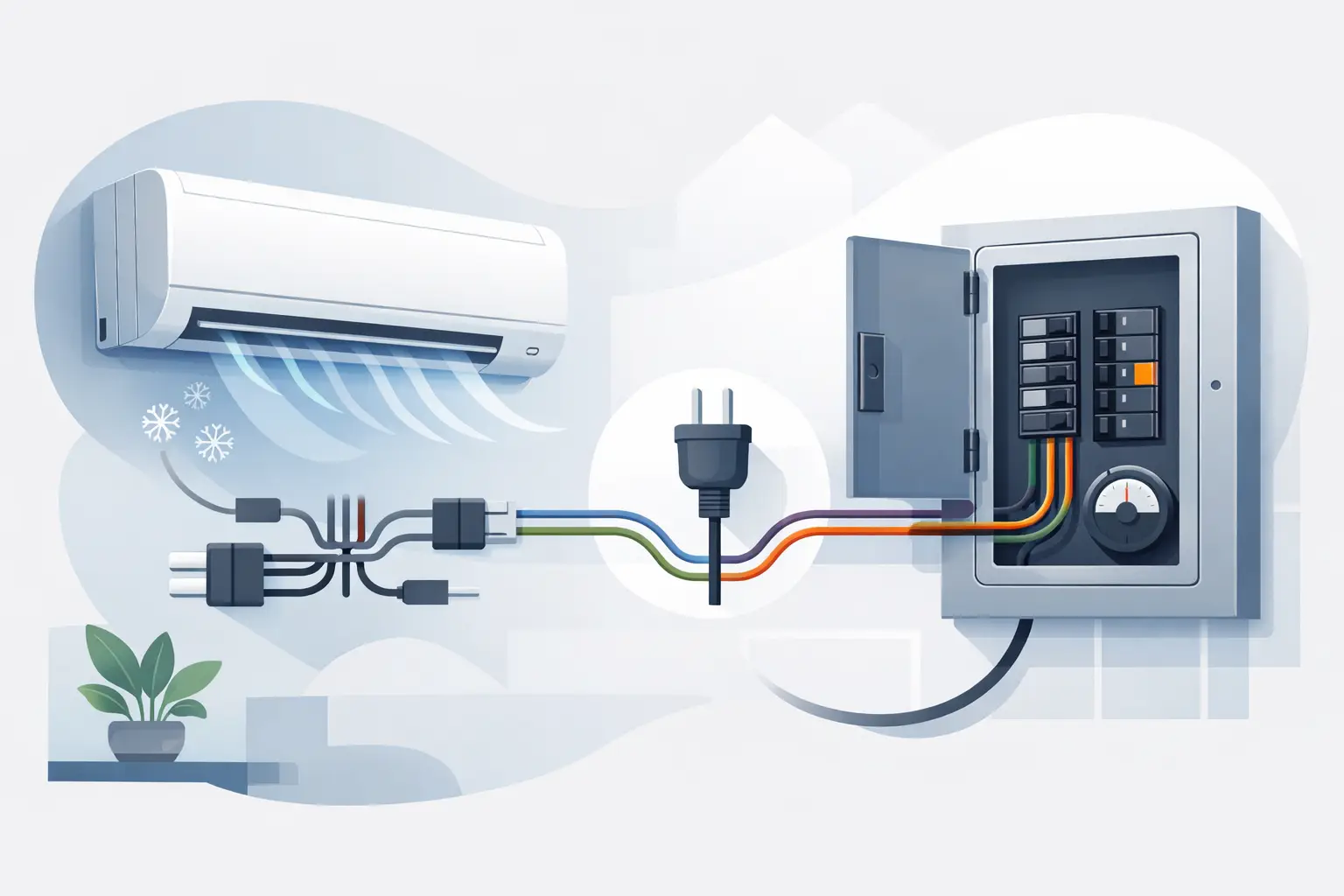
When an air conditioner trips a breaker on a hot afternoon, the problem usually is not the weather. It is often the circuit. A dedicated circuit for air conditioner use is one of those details homeowners rarely think about until cooling becomes unreliable, breakers start tripping, or a new unit is being installed.
For most homes, the question is not whether a dedicated circuit sounds nice to have. It is whether the system can run safely, consistently, and without overloading wiring that was never meant to handle that kind of demand. If you are adding a new AC unit, replacing an older one, or noticing electrical issues when the system starts up, this is worth paying attention to.
What a dedicated circuit for air conditioner use actually means
A dedicated circuit is a circuit that serves one appliance and one appliance only. In this case, it is reserved for the air conditioner. That means the AC is not sharing power with bedroom outlets, garage tools, kitchen appliances, or anything else that can add extra electrical load.
Air conditioners draw a significant amount of power, especially at startup. Even smaller systems can create enough demand that a shared circuit becomes a weak point. When that happens, you may see nuisance breaker trips, dimming lights, overheated wiring, or performance issues that seem random but are tied to how the circuit is loaded.
This is why dedicated circuits are common for major household equipment. The goal is simple – safer operation and more reliable performance.
Does every air conditioner need its own circuit?
Not every air conditioner is exactly the same, so the honest answer is it depends on the type and size of the unit.
Central air conditioning systems almost always require their own circuit. The same is true for many mini-split systems and larger window or wall units. Small portable units may plug into a standard receptacle, but even then, sharing a circuit with other heavy-use devices can still create problems.
The manufacturer specifications matter here. So does the electrical setup in the home. Two air conditioners with similar cooling capacity may have different electrical requirements based on voltage, amperage, and startup demand. That is why it is risky to assume an existing outlet or nearby circuit is good enough just because the plug fits.
Why dedicated circuits matter in real homes
The practical reason comes down to load management. Your electrical system is designed to carry only so much current on each branch circuit. When an air conditioner shares that path with other devices, the total load can exceed what the breaker and wiring are meant to handle.
Sometimes the breaker does its job and trips. That is inconvenient, but it is also a warning. Other times the issue shows up more subtly. Wires heat up, connections wear faster, and the AC struggles during startup. Those are not small annoyances. They can shorten equipment life and increase the risk of electrical damage.
In older homes, this matters even more. A house built years ago may not have been designed around today’s cooling demands, added appliances, or panel capacity. Homeowners in places like Palmdale and Lancaster often rely heavily on cooling during long stretches of heat, so the electrical side of the system needs to be just as dependable as the equipment itself.
Signs your air conditioner may not be on the right circuit
A few warning signs show up often. If the breaker trips when the AC kicks on, that is an obvious one. If lights flicker noticeably at startup, the system may be pulling hard on a circuit that is already busy. Warm outlets, buzzing at the panel, or extension cord use for a room AC unit are also red flags.
Another sign is inconsistent cooling that seems unrelated to thermostat settings. While many AC performance issues are mechanical, electrical supply problems can also affect operation. A unit that is underpowered or interrupted by circuit issues may run poorly, short cycle, or fail to start when needed most.
If you have recently upgraded your air conditioner without upgrading the electrical supply, it is smart to have the circuit checked. A newer system may be more efficient overall, but that does not automatically mean it can run safely on whatever circuit served the previous unit.
Shared circuits create more problems than most homeowners expect
A shared circuit does not always fail right away. That is part of what makes it easy to ignore. The air conditioner may run for weeks or months before problems begin, especially if the overload only happens during peak use.
For example, a window AC in a bedroom may seem fine until someone plugs in a space heater, vacuum, hair dryer, or gaming setup on the same line. A garage mini-split may work most of the time until power tools or a second refrigerator kick on. These situations create a pattern of intermittent issues that feel hard to pin down but often trace back to the same root cause.
When a circuit is dedicated, that uncertainty goes away. The equipment gets the power path it was intended to have, and the rest of the home is less likely to be affected.
Installation is not just about the breaker size
Homeowners sometimes hear that an air conditioner needs a 15-amp, 20-amp, 30-amp, or larger circuit and assume the fix is simply changing the breaker. That is not how safe electrical work is done.
The breaker has to match the wire size, the equipment requirements, and the overall design of the circuit. Voltage matters too. Many central air systems require 240 volts, while smaller plug-in units may use 120 volts. Disconnects, receptacle types, panel capacity, and local code requirements can also come into play.
That is why air conditioner circuit work should be treated as a full electrical evaluation, not a quick swap at the panel. Installing the wrong breaker on undersized wiring can create a serious hazard instead of solving the problem.
When a panel upgrade may be part of the conversation
Sometimes the home has room for a dedicated AC circuit. Sometimes it does not. If the panel is already full, outdated, or showing signs of wear, adding a new air conditioner circuit may lead to a bigger discussion about capacity and safety.
That does not mean every AC installation requires a panel upgrade. In many cases, the existing service can support the addition just fine. But if the home already struggles with overloaded circuits, frequent trips, or limited breaker space, the panel may be part of the issue.
This is especially common in older properties where electrical systems have been expanded piece by piece over time. A careful inspection can show whether the right move is a simple dedicated circuit, a subpanel, or a broader upgrade that improves long-term reliability.
The code side matters, but so does day-to-day comfort
Electrical code exists for safety, but homeowners usually feel the benefits in everyday life. A properly installed dedicated circuit for air conditioner operation means fewer interruptions, less strain on the system, and more confidence during the hottest part of the year.
That matters when your household depends on steady cooling, whether for comfort, sleep, pets, children, or older family members. Reliable power to the AC is not a luxury detail. It supports the way the home functions.
It also helps protect the investment you made in the equipment itself. Air conditioners are not cheap, and electrical problems can undermine performance from day one if the supply is not matched to the unit.
What homeowners should do before installing or replacing an AC unit
Before a new air conditioner goes in, the electrical requirements should be reviewed along with the HVAC side. That means confirming the circuit size, voltage, breaker compatibility, wire sizing, and available panel capacity. If there is already an AC unit in place, the existing circuit still needs to be verified rather than assumed.
This is one area where experience matters. A licensed residential electrician can identify whether the current setup is safe, whether a dedicated circuit is needed, and whether any panel work should happen before the new system is connected. For homeowners who want fewer surprises, that check is worth doing early.
A1 Home Electric has worked with homeowners since 2006 on the kinds of practical electrical issues that affect comfort and safety every day, including circuit corrections, panel-related work, and home electrical upgrades.
If your air conditioner is tripping breakers, sharing power with other loads, or being replaced with a larger unit, it is a good time to ask whether the circuit is doing its job as well as the equipment is expected to do its own.