

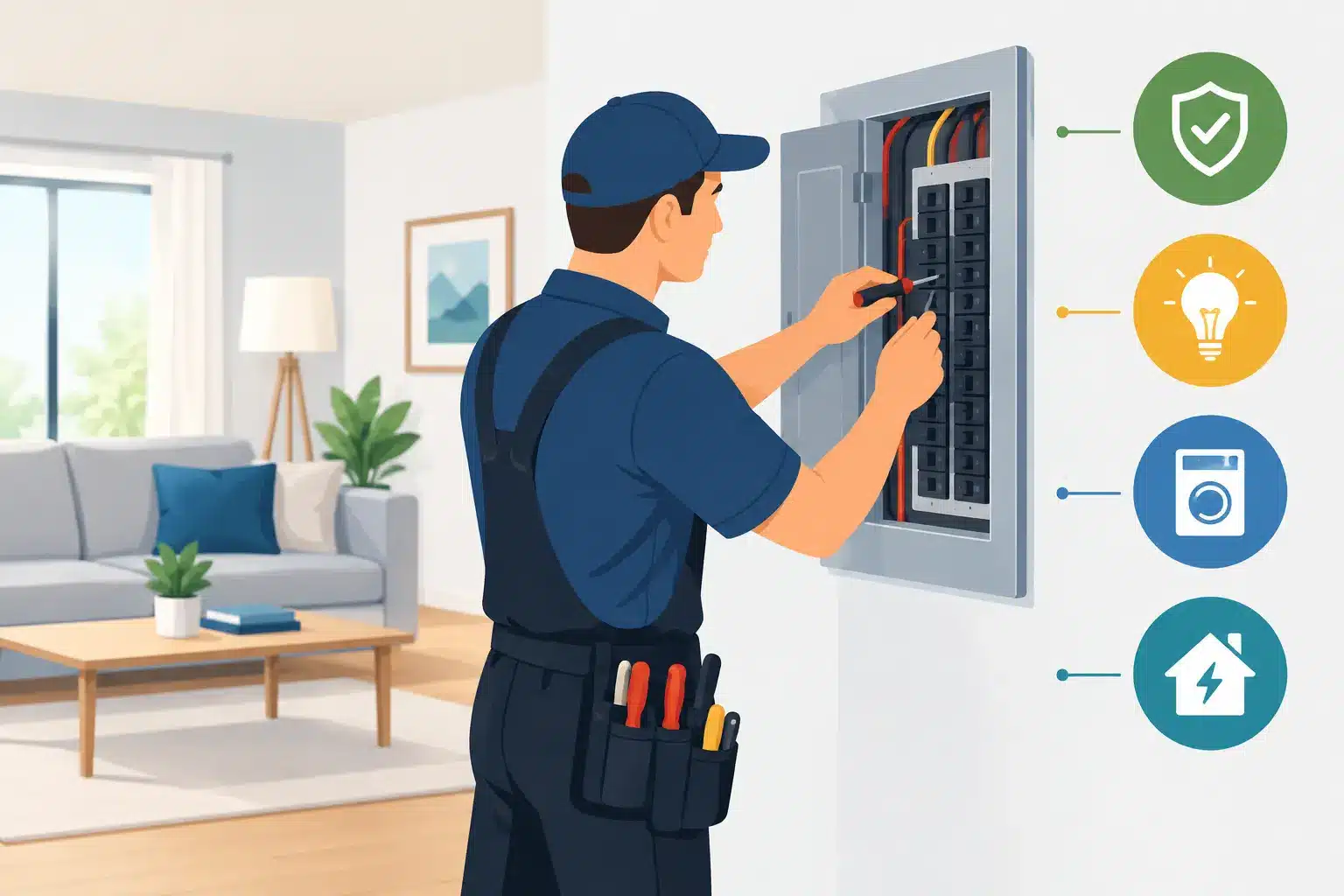
A kitchen outlet that trips whenever the microwave runs, a garage circuit that struggles with power tools, or lights that dim when the air conditioner starts are more than everyday annoyances. They can point to a circuit carrying more demand than it was designed to handle. The dedicated circuit installation benefits homeowners notice most are safer power delivery, better appliance performance, and fewer interruptions in the rooms they use every day.
A dedicated circuit serves one major appliance or one specific electrical load. Rather than sharing capacity with outlets, lighting, and other equipment, it runs from the electrical panel directly to the equipment it supports. For Palmdale, Lancaster, and Antelope Valley homeowners, this can be a practical upgrade for a growing household, a remodeled space, or an older home with electrical needs that have changed over time.
What Is a Dedicated Circuit?
Every circuit in a home has a limit. The breaker is designed to shut off power when the circuit draws more electricity than it can safely carry. That protection is valuable, but frequent tripping is a sign that the circuit needs professional attention rather than repeated resets.
A dedicated circuit gives a high-demand appliance its own protected path to the electrical panel. Common examples include electric ranges, ovens, dishwashers, garbage disposals, refrigerators, washers, dryers, HVAC equipment, sump pumps, hot tubs, and EV chargers. Some equipment requires a dedicated circuit under applicable electrical requirements, while other installations depend on the appliance rating, the home’s existing wiring, and the scope of the project.
The goal is not to add circuits simply because more is better. The right solution starts with determining what the appliance needs, what the current circuit can safely support, and whether the panel has adequate capacity for the upgrade.
Dedicated Circuit Installation Benefits for Safety
The most meaningful benefit is reducing the risk created by overloaded wiring. When too many devices share one circuit, wires, outlets, and connections may carry more current than intended. A breaker that trips can prevent a dangerous condition, but ongoing overloads should never be treated as normal.
A dedicated circuit helps keep a large appliance from competing with other household loads. That reduces strain on the shared circuit and can help prevent hot outlets, damaged plugs, nuisance breaker trips, and wear on electrical connections. It also gives an electrician a clearer way to protect the equipment with the correct breaker size, wire size, and receptacle type.
This matters especially in older homes. A house may have been well suited to its original electrical use, then later gained a second refrigerator, a workshop, a remodeled kitchen, home-office equipment, or a vehicle charger. Those additions can place new demands on wiring that was never intended to serve them.
Breaker Trips Are a Message, Not a Minor Inconvenience
A breaker may trip for several reasons, including an overloaded circuit, a faulty appliance, a short circuit, or a wiring issue. Resetting it once after identifying a temporary cause may be reasonable. Resetting it repeatedly without finding the cause is not.
If a breaker trips when a specific appliance runs, an electrician can evaluate the appliance load, the condition of the circuit, and the panel. In some cases, a dedicated circuit is the right correction. In others, the issue may be a failing appliance or a connection that needs repair. A proper diagnosis prevents homeowners from spending money on the wrong fix.
Better Performance for Major Appliances
Large appliances work best when they receive stable, properly sized power. On a crowded circuit, an appliance may trip the breaker when another device turns on, or it may cause noticeable voltage drops such as flickering lights. A dedicated circuit separates those demands.
That can make daily routines easier. The dishwasher can run without affecting countertop outlets. A garage freezer can operate without sharing power with tools and chargers. A laundry circuit can support the equipment it was designed for without relying on extension cords or overloaded power strips.
For equipment with motors, heating elements, or electronic controls, reliable power is also a matter of long-term performance. A dedicated circuit will not repair an aging appliance, but it can help ensure the appliance is operating on an electrical supply suited to its requirements.
Supporting EV Chargers and Home Upgrades
Electric vehicle charging is one of the clearest examples of why circuit planning matters. A Level 2 EV charger can draw a substantial amount of power for hours at a time. Plugging that demand into an existing general-use circuit is not an appropriate substitute for a professionally planned installation.
A dedicated EV charging circuit is typically designed around the charger’s rating, the required continuous load capacity, the wiring route, and the available space and capacity in the electrical panel. If the panel is already near its limit, a panel upgrade or load calculation may be needed before adding the charger.
The same planning applies to a kitchen remodel, a new HVAC system, a spa, a garage workshop, or a converted room. Installing a dedicated circuit while walls are open can be more straightforward than trying to add one after a project is complete. Even so, existing-home installations are common, and an experienced electrician can assess practical routing options before work begins.
Convenience Without Extension-Cord Workarounds
Extension cords and power strips have useful temporary purposes, but they are not permanent wiring solutions for high-demand appliances. A power strip cannot increase the amount of electricity a circuit can safely provide. It simply allows more devices to connect to the same circuit.
Dedicated circuits can bring power where it is actually needed. That may mean a properly located garage receptacle for a freezer, a circuit for a built-in microwave, or correctly sized power for workshop equipment. The result is a cleaner setup that is easier to use and less dependent on makeshift connections.
For families, this also means fewer interruptions. Meals, laundry, work, charging, and entertainment can happen at the same time with less concern that one appliance will shut down another part of the home.
When a Dedicated Circuit May Not Be the First Answer
A dedicated circuit is valuable when the electrical demand and equipment requirements call for one. It is not automatically the answer to every electrical concern. A loose connection, worn outlet, defective breaker, damaged appliance cord, or failing appliance can create symptoms that resemble overload.
Panel capacity is another factor. Adding a new breaker space does not always mean the home has enough overall service capacity for a major new load. An electrician should evaluate the panel, service equipment, circuit layout, and anticipated demand before recommending an installation.
Cost also depends on the home. A short run from an accessible panel to a nearby appliance is generally simpler than routing new wiring through finished walls, attics, crawl spaces, or detached structures. Permit and inspection requirements may apply depending on the work. Clear evaluation upfront helps homeowners understand the scope before the installation begins.
Signs Your Home Could Benefit From a Dedicated Circuit
Consider scheduling an electrical evaluation if you regularly experience breaker trips when using the same appliance, lights dim when equipment starts, outlets feel warm, or you rely on extension cords for appliances that stay in one place. A newly purchased EV charger, electric range, dishwasher, disposal, or workshop machine is also a good reason to review the electrical system before installation.
Do not ignore burning odors, buzzing, scorch marks, sparking, or a breaker that will not stay reset. Turn off power to the affected area if it is safe to do so and arrange for trusted electrical repair. Those signs call for prompt professional attention, not a temporary workaround.
Choose an Installation That Fits Your Home
A quality dedicated circuit installation involves more than adding a breaker. The circuit must be sized for the equipment, installed with appropriate materials, routed safely, and connected in a way that supports the home’s overall electrical system. A licensed residential electrician can also identify related needs, such as panel maintenance, grounding updates, or added capacity for future projects.
A1 Home Electric has served local homeowners since 2006 with practical electrical repairs and installations built around quality and safety. For an appliance upgrade, an EV charger, or a circuit that keeps tripping, a professional assessment can replace uncertainty with a clear plan.
Your home should not have to choose between running the dishwasher, charging a vehicle, and keeping the lights on. When an appliance needs more power than a shared circuit can safely provide, a properly installed dedicated circuit is a straightforward investment in comfort, reliability, and peace of mind.
One response to “Dedicated Circuit Installation Benefits at Home”
[…] kitchen circuit installation is more than adding an outlet where it would be convenient. It is the electrical work […]