
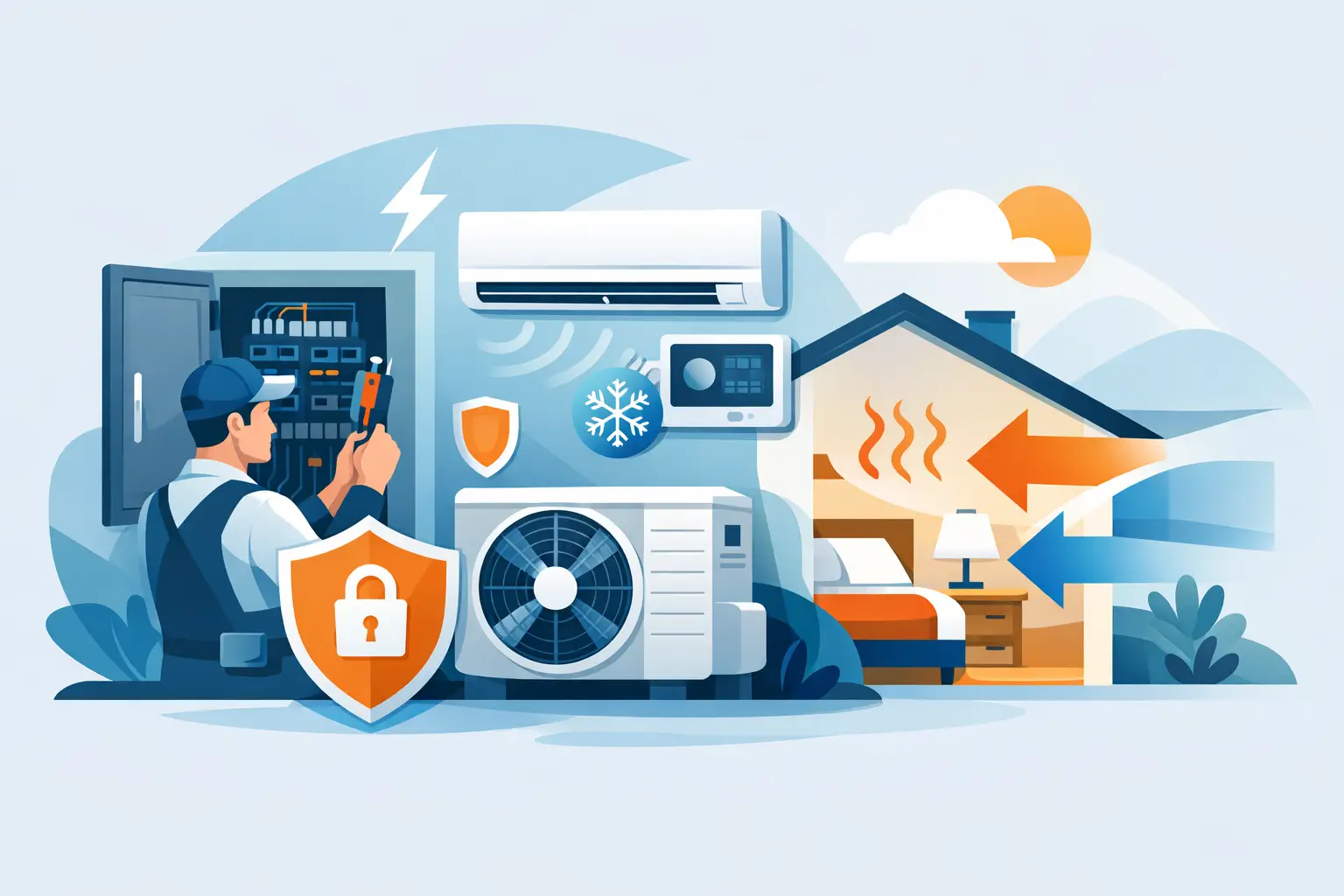
A new air conditioner or heat pump can look like a comfort upgrade, but its performance depends on the electrical system behind it. Electrical upgrades for HVAC make sure your home can safely supply the power your equipment needs, especially during the hottest Antelope Valley afternoons and cold winter nights.
When the electrical side is overlooked, homeowners may deal with tripped breakers, equipment shutdowns, costly service calls, or premature wear on an HVAC system that should have lasted for years. A qualified electrician can assess the home before installation, identify capacity concerns, and complete the work needed to support dependable heating and cooling.
Why HVAC Equipment Needs Proper Electrical Support
Modern HVAC equipment is more efficient than many older systems, but it still requires a dedicated, correctly sized electrical supply. Central air conditioners, heat pumps, air handlers, furnaces, condensers, and mini-split systems each have manufacturer requirements for circuit size, breaker type, wiring, and disconnects.
The issue is not simply whether the unit turns on. An undersized circuit or deteriorating wiring can create excessive heat, nuisance tripping, voltage problems, and strain on sensitive components. These problems may appear only when the system works hardest, which is exactly when your family needs reliable comfort.
Electrical work also matters when replacing older HVAC equipment. A home built decades ago may have a panel, circuit, or wiring method that was acceptable for the original system but is not a good match for a new heat pump or higher-capacity air conditioner. The right solution depends on the equipment specifications and the condition of the home’s existing electrical system.
Electrical Upgrades for HVAC: What May Be Needed
Not every HVAC replacement requires a full electrical overhaul. In some homes, the existing dedicated circuit is in good condition and properly sized for the new unit. In others, a targeted upgrade or a larger electrical project is needed before the equipment can be installed safely.
A dedicated HVAC circuit
Most central HVAC equipment needs its own dedicated circuit. That means the circuit serves the heating or cooling equipment only, rather than sharing power with lighting, receptacles, garage tools, or other appliances. A dedicated circuit helps prevent overloads and makes it easier to service the equipment safely.
An electrician will verify the breaker rating, conductor size, and circuit condition against the HVAC manufacturer’s electrical data. Installing a larger breaker without confirming that the wiring can handle it is not a safe fix. The breaker and wiring must work together to protect the circuit.
A properly sized electrical panel
Your main electrical panel distributes power to every major system in the home. If it is already full, shows signs of wear, or lacks the capacity for a new HVAC load, a panel upgrade may be recommended.
A panel upgrade is often worth considering when homeowners are also adding an EV charger, remodeling a kitchen, installing a pool or spa, or converting from a gas appliance to an electric heat pump. These improvements can add up quickly. Planning for the home’s total electrical demand can prevent the frustration of completing one project only to discover that the next one requires more work.
That said, a panel upgrade is not automatic. A licensed electrician should evaluate the panel condition, available space, service capacity, and anticipated loads before recommending a solution. In some cases, adding a correctly installed circuit is all that is needed.
New or upgraded wiring
HVAC wiring may run through an attic, crawl space, exterior wall, or conduit between the panel and outdoor equipment. Heat damage, age, rodent activity, improper splices, and previous alterations can all affect its condition.
New wiring may be needed if the existing conductors are undersized, damaged, or unable to meet the requirements of the replacement system. This is especially common when a homeowner upgrades from a smaller older unit to a larger system or changes to a heat pump. Quality wiring installation supports safe operation and gives the equipment a stable power supply.
An outdoor service disconnect
Outdoor condensers and heat pump units require a nearby disconnecting means so technicians can safely service the equipment. The disconnect enclosure, conduit, and connections must be weather-resistant and securely installed.
If your existing disconnect is corroded, cracked, loose, or difficult to operate, replacement should be part of the HVAC project. This is a relatively small component, but it plays a major role in electrical safety and future maintenance.
Signs Your Home May Need an Upgrade
Some electrical problems are obvious, while others only show up when the HVAC system starts. If your breaker trips when the air conditioner comes on, that is a clear reason to schedule an evaluation. Repeated resets are not a normal part of running your heating and cooling system.
Other warning signs include flickering lights when the compressor starts, buzzing or heat at the electrical panel, a burning odor, damaged conduit near the outdoor unit, or an older fuse panel. A system that struggles to start, cycles off unexpectedly, or loses power during heavy use can also point to an electrical concern, although HVAC mechanical issues can cause similar symptoms.
Do not assume the HVAC unit is the only source of the problem. A trusted electrical inspection can separate a circuit or panel issue from an equipment issue, helping you avoid repairs that do not address the real cause.
Plan the Electrical Work Before HVAC Installation
The best time to evaluate the electrical system is before the new HVAC equipment arrives. Waiting until installation day can create delays, change the project cost, and leave your household without cooling or heating longer than expected.
Start by providing the electrician with the proposed equipment information, including the model number and electrical ratings when available. The electrician can review the existing panel, calculate the home’s electrical load, inspect the circuit path, and determine whether permits or additional coordination are needed.
This planning is particularly useful for heat pump installations. A heat pump may replace both air conditioning and part or all of the home’s heating load, so it can change the home’s year-round electrical demand. The HVAC contractor and electrician should work from the same equipment specifications rather than making assumptions based on the old system.
Safety and Code-Conscious Work Protects the Investment
HVAC equipment is a major home investment. Electrical work that is rushed or treated as an afterthought can put that investment at risk. Correct breaker sizing, secure connections, proper grounding and bonding, protected wiring, and weather-rated outdoor components all contribute to safe long-term performance.
Permits and inspections may apply depending on the work being completed and local requirements. While paperwork can feel like one more step, it helps ensure the installation is reviewed for safety and gives homeowners greater confidence in a major upgrade.
For homes in Palmdale, Lancaster, and surrounding Antelope Valley communities, electrical equipment also faces demanding conditions. Summer heat, dust, and exposure around outdoor units can accelerate wear. Keeping the panel, circuits, and disconnects in good condition supports dependable service when temperatures climb.
Avoid Common Shortcuts
Homeowners can protect themselves by being cautious about a few common shortcuts. Never keep resetting a breaker that trips repeatedly, and do not replace a breaker with a larger size as a do-it-yourself solution. The breaker is designed to protect the wiring. Increasing its size without a full evaluation can create a fire hazard.
It is also wise to avoid relying on temporary extension cords or improvised outdoor connections for permanent HVAC equipment. These arrangements are not designed for the sustained demand of central heating and cooling systems.
Finally, do not base an electrical decision on the age of the equipment alone. A newer unit can still need electrical upgrades, while an older home may have a sound circuit that remains appropriate. The correct answer comes from an inspection of the actual equipment requirements and the home’s electrical condition.
A Better Foundation for Year-Round Comfort
Reliable heating and cooling begin with more than a thermostat setting. Before installing or replacing HVAC equipment, have the electrical system evaluated by a licensed professional who can identify what the home needs now and what may be worth planning for later.
A1 Home Electric helps homeowners make practical electrical decisions that support safety, comfort, and long-term home performance. A properly prepared circuit and panel give your HVAC system the foundation it needs to serve your household through every season.