

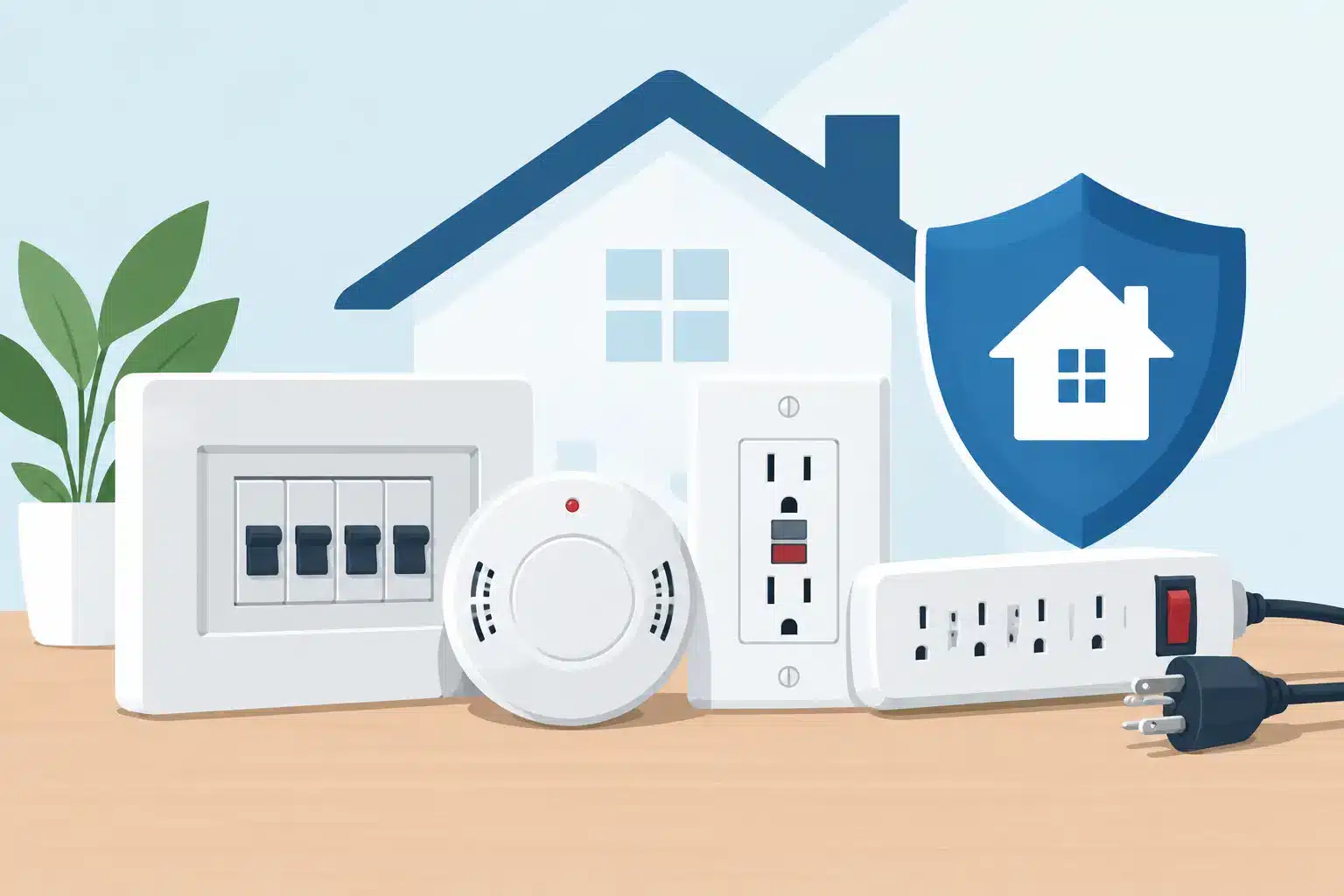
A tripped breaker, a warm outlet, or a flickering light can seem like a small inconvenience until it points to a larger problem behind the walls. Essential electrical safety devices are designed to interrupt dangerous conditions before they become shocks, overheated wiring, or electrical fires. For homeowners, the goal is not to memorize electrical code. It is to know what protects the home, recognize when protection may be missing, and call a qualified electrician before a concern grows.
Why Electrical Protection Matters in a Home
Your electrical system works quietly every day, supplying power to appliances, HVAC equipment, lighting, electronics, and more. That convenience depends on wiring, connections, and protective devices all working as intended. When a circuit is overloaded, an appliance develops a fault, or wiring starts to arc, the right protective device can shut off power quickly.
Many Antelope Valley homes have experienced additions, remodeled rooms, garage conversions, or years of increasing electrical demand. A panel that was adequate decades ago may now serve computers, kitchen appliances, entertainment equipment, and an electric vehicle charger. Safety devices are not optional extras in those situations. They are a practical layer of protection for the people and property you care about.
Essential Electrical Safety Devices Every Home Should Have
Circuit Breakers and a Properly Sized Electrical Panel
Circuit breakers are the first line of defense against overloaded circuits and short circuits. When too much current flows through a circuit, the breaker trips to stop the flow of electricity before wires overheat. Unlike old-style fuses, breakers can usually be reset after the underlying problem is identified and corrected.
A breaker that trips once after a temporary overload may not signal a major issue. A breaker that trips repeatedly should never be treated as an annoyance or held in the on position. Frequent tripping can point to an overloaded circuit, a damaged appliance, loose wiring, or a more serious fault.
The breakers can only protect a home effectively when the panel itself is in sound condition and correctly sized for the household’s needs. Warning signs include corrosion, heat around the panel, buzzing, breakers that will not reset, or a lack of available capacity for planned improvements. Panel inspections and upgrades are especially worthwhile before adding large electrical loads such as an EV charger, hot tub, workshop equipment, or a major kitchen appliance.
GFCI Outlets for Wet and Outdoor Areas
Ground-fault circuit interrupters, commonly called GFCIs, are designed to reduce the risk of electrical shock. They monitor the flow of electricity and shut off power in a fraction of a second when they detect current taking an unsafe path, such as through water or a person.
GFCI protection is commonly needed in bathrooms, kitchens, garages, laundry areas, unfinished spaces, exterior outlets, and other locations where moisture is likely. You can often recognize a GFCI outlet by its Test and Reset buttons. In some homes, one GFCI outlet or breaker protects several downstream outlets, so an outlet that suddenly stops working may be tied to a tripped GFCI elsewhere.
Homeowners can press the Test button periodically to verify that a GFCI trips and then use Reset to restore power. If it will not reset, trips often, feels warm, or has visible damage, avoid relying on it until an electrician evaluates the circuit. A GFCI replacement may be straightforward, but repeated tripping can indicate moisture intrusion, a damaged appliance, or a wiring issue that needs professional attention.
AFCI Protection for Hidden Wiring Faults
Arc-fault circuit interrupters, or AFCIs, protect against a different type of electrical hazard. An arc fault occurs when electricity jumps across a damaged or loose connection. These faults can create intense heat and may occur inside walls, at worn receptacles, in damaged cords, or where wiring connections have deteriorated.
AFCI breakers are commonly used to protect living areas and bedroom circuits, where cords, furniture, and everyday appliance use can place wear on electrical components. Because arc faults may not cause enough current to trip a standard breaker, AFCI protection adds an important safeguard against fire risks that can otherwise remain hidden.
AFCIs can trip because of an actual wiring problem, a failing appliance, or occasionally certain equipment with normal electrical characteristics. That does not mean the device should be bypassed. An electrician can determine whether the issue is with the circuit, a connected device, or the breaker itself. The safest answer depends on the source of the trip, not on how inconvenient it is.
Whole-Home Surge Protection
Power surges are not limited to lightning strikes. They can also come from utility switching, neighborhood power disruptions, or major equipment inside the home turning on and off. Smaller, repeated surges may gradually damage televisions, computers, smart appliances, HVAC controls, and charging equipment without leaving an obvious sign.
A whole-home surge protective device is installed at or near the electrical panel to help limit voltage spikes before they reach branch circuits. It works best as part of a layered approach. Point-of-use surge strips still have value for sensitive electronics, but they do not replace panel-level protection.
Surge protection has limits. It cannot correct unsafe wiring, solve a grounding problem, or guarantee that every electronic device will survive every event. Still, it is a sensible investment for households with valuable electronics, solar equipment, smart-home systems, or EV charging equipment.
Grounding and Bonding Systems
Grounding is less visible than an outlet or breaker, but it is a critical part of electrical safety. A properly grounded system gives unwanted electrical current a controlled path back to the electrical system, helping breakers and other protective devices operate when a fault occurs. Bonding connects metal components that could become energized, reducing dangerous voltage differences.
Older homes may have ungrounded outlets, outdated wiring methods, or electrical changes completed over many years. A three-slot outlet does not always prove that the circuit has a functional equipment ground. Replacing old two-slot receptacles with three-slot outlets without addressing the wiring can create a false sense of security.
If you are buying an older home, renovating, or noticing shocks or tingling from appliances or fixtures, an electrical inspection can identify grounding concerns. The appropriate correction varies by the home’s existing wiring and panel configuration, which is why this work should be handled by a licensed electrician.
Tamper-Resistant Receptacles
Tamper-resistant receptacles use internal shutters to block access to the energized parts of an outlet unless a plug is inserted properly. They are particularly valuable in homes with young children or frequent visitors, but they provide an extra measure of safety in any household.
These receptacles look similar to standard outlets and do not change how you use normal plugs. They are a simple upgrade during outlet replacement, remodeling, or electrical updates. If a receptacle is loose, cracked, discolored, or unable to hold a plug securely, it should be replaced rather than covered with a decorative faceplate.
Smoke and Carbon Monoxide Alarms Support Electrical Safety
Smoke alarms and carbon monoxide alarms do not prevent electrical faults, but they are essential life-safety devices when something goes wrong. An electrical fire can begin inside a wall or appliance before anyone sees smoke. Properly placed, functioning alarms provide the early warning needed to get outside quickly.
Test alarms according to the manufacturer’s instructions and replace batteries when required. Also check the age of the units. Many alarms have a limited service life even when they still chirp or appear to work. Hardwired alarms should be professionally evaluated if they fail to sound, trigger randomly, or lose power.
Warning Signs That Protection Needs Attention
Electrical safety devices are not a substitute for paying attention to changes in the home. Arrange professional service promptly if you notice repeated breaker trips, GFCI outlets that will not reset, flickering lights, burning odors, buzzing, sparks, hot switches or outlets, or an electrical panel that feels warm.
Do not keep resetting a breaker to restore power without identifying why it tripped. Do not use extension cords as permanent wiring, and do not remove the grounding pin from a plug to make it fit an older outlet. These workarounds can turn a manageable repair into a safety problem.
When an Electrical Inspection Makes Sense
An inspection is a practical choice before purchasing an older property, after a major renovation, when adding high-demand equipment, or when the home has a history of recurring electrical issues. It can also provide useful peace of mind if the panel is outdated or the home’s electrical capacity has not been reviewed in years.
A qualified electrician can assess the panel, breakers, outlets, visible wiring conditions, grounding, and the protection required for the spaces in your home. For homeowners in Palmdale, Lancaster, and nearby communities, A1 Home Electric provides trusted electrical repair and inspection services focused on quality and safety.
The best electrical safety device is the one that is correctly installed, working properly, and matched to the home it protects. If something in your electrical system no longer feels reliable, addressing it early helps protect your home, your comfort, and the people under your roof.