

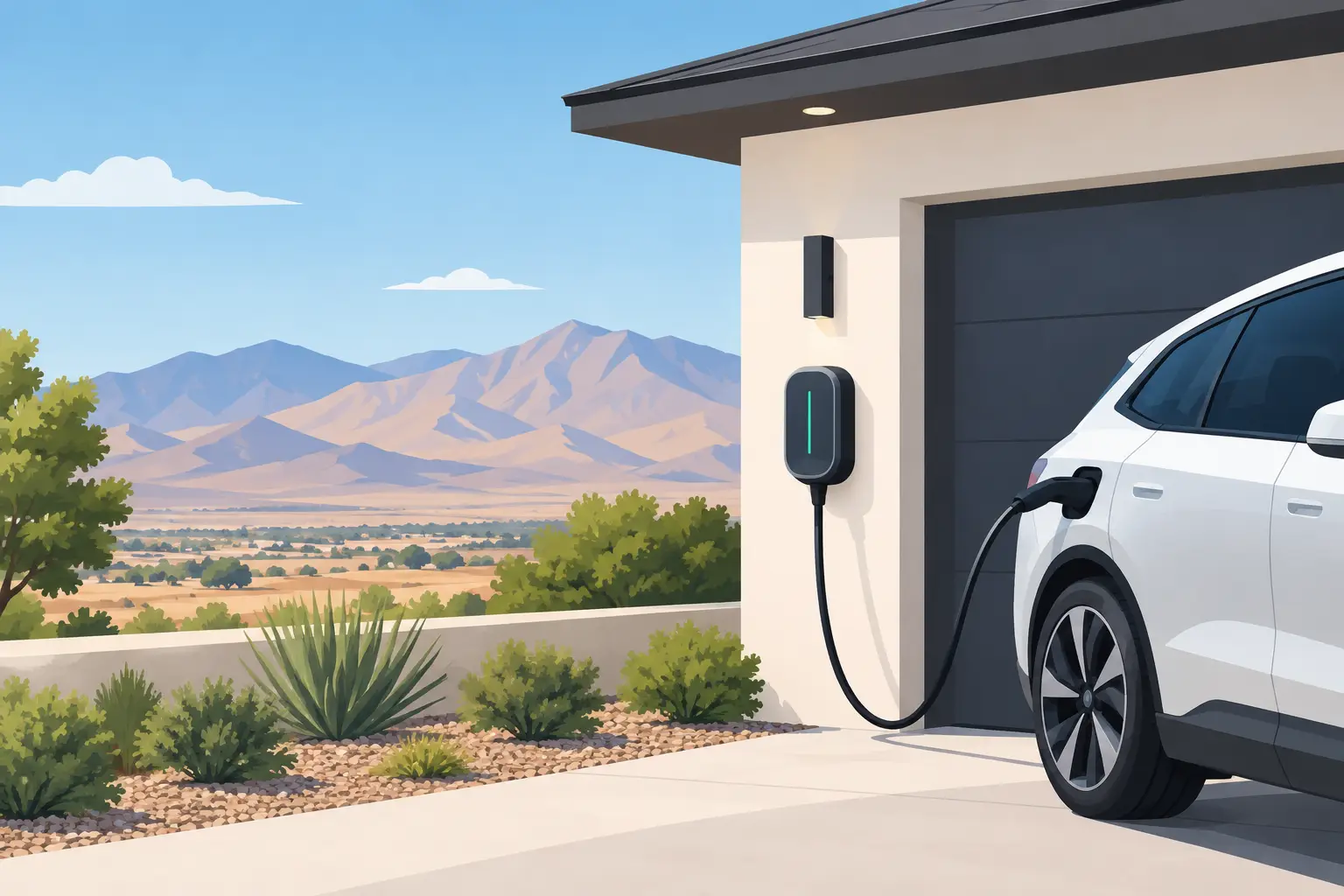
A new electric vehicle had changed one Palmdale homeowner’s daily routine faster than expected. Public charging worked for the first few weeks, but it meant planning errands around charging stops and waiting when stations were busy. This EV charger install case study follows the practical decisions behind bringing reliable Level 2 charging home, from the first electrical inspection through permitting, utility coordination, and final testing.
The homeowner’s goal was simple: arrive home, plug in, and wake up with enough range for the next day. The electrical work required more careful planning. A home charger is not just another outlet. It is a continuous electrical load that needs the right circuit, wiring, breaker protection, equipment location, and capacity at the electrical panel.
The Starting Point: An Older Panel and a New Charging Need
The home had an older electrical panel that was already serving air conditioning, kitchen appliances, laundry equipment, lighting, and general household circuits. The homeowner wanted a Level 2 charger in the garage, which would provide substantially faster charging than a standard 120-volt outlet.
Before recommending equipment or quoting an installation, the electrician inspected the existing panel, the meter location, the proposed charger location, and the route needed to run wiring. This first step matters because two homes with the same charger can require very different work. A newer home with open panel space and available electrical capacity may need a straightforward dedicated circuit. An older home may need a panel upgrade before a charger can be installed safely.
In this case, the panel did not have enough capacity for the household’s existing demand plus the planned charger load. There was also limited room for a new breaker. Adding the charger without addressing those issues could have created nuisance tripping, overloaded equipment, or work that did not meet current code requirements.
The recommendation was a service panel upgrade paired with the EV charger installation. It was a larger project than the homeowner initially expected, but it addressed the home as a whole instead of forcing a high-demand appliance onto an already strained electrical system.
Planning the EV Charger Installation
Once the homeowner approved the scope of work, the next decision involved charger size. Bigger is not always better. The right charging rate depends on the vehicle, the home’s electrical capacity, the owner’s daily driving needs, and the charger manufacturer’s requirements.
For this household, the electrician discussed how many miles the family drove on a typical day and when the vehicle would be parked at home. Because the vehicle would charge overnight, there was no need to size the system around the fastest possible charge rate. A properly sized Level 2 charger would comfortably restore the daily driving range while keeping the installation practical and cost-conscious.
The charger location also deserved attention. The garage wall offered a protected mounting area near where the vehicle would park. That reduced the length of the charging cable needed and helped prevent a cord from crossing a walkway. The installation plan included a dedicated circuit from the new panel to the charger location, with appropriately rated wiring and protection selected for the equipment and installation conditions.
For homeowners considering an outdoor charger, the same planning applies with additional weather and mounting considerations. A charger needs to be listed for its intended location, securely mounted, and installed where the cable can reach the vehicle without becoming a tripping hazard. The best location is usually the one that combines convenience with long-term protection for the equipment.
Why a Dedicated Circuit Matters
An EV charger should not share a circuit with garage outlets, refrigerators, freezers, or other household equipment. Charging can continue for several hours, which makes proper circuit design especially important. A dedicated circuit gives the charger the electrical support it needs while helping protect the rest of the home’s system.
The electrician also reviewed the charger instructions before installation. Manufacturer specifications affect breaker sizing, wiring, connection methods, mounting clearances, and required protection. Quality and safety depend on following both the equipment requirements and applicable electrical codes, not on using a one-size-fits-all approach.
Permits, Utility Coordination, and Inspection
A panel upgrade is not a project that should be handled casually. It typically involves permits, an inspection, and coordination with the utility because the power may need to be disconnected while the service equipment is replaced.
For this project, the electrician handled the permit process with the city and coordinated with Southern California Edison for the required meter and service work. That gave the homeowner a clear path forward instead of leaving them to sort through utility scheduling and inspection requirements on their own.
On installation day, the crew prepared the work area, replaced the panel equipment, labeled circuits, installed the new EV charging circuit, and mounted the charger equipment. The home’s power was off during the service work, so the homeowner planned ahead for refrigeration, internet service, garage access, and other daily needs. Knowing this in advance made the temporary interruption manageable.
After the work was completed, the installation was inspected and the service was restored. The final steps included testing the charger, confirming that the vehicle could begin charging properly, and reviewing basic use with the homeowner.
Permitting can feel like an extra step, but it protects the homeowner. It provides an independent review of the work and helps ensure the project is completed with the right safety measures. It can also be important for insurance documentation, future property sales, and rebate eligibility.
The Rebate Conversation
The homeowner also wanted to know whether financial assistance might be available. Southern California Edison programs may offer qualifying customers rebates of up to $4,200 for eligible panel upgrades and EV charger installations. Availability, program terms, income qualifications, equipment requirements, and application rules can change, so a rebate should never be treated as automatic.
The practical value of working with an experienced local electrician is having the installation planned with those requirements in mind. Documentation, permits, equipment details, and utility coordination may all play a role. A1 Home Electric helps homeowners understand the process and works with Southern California Edison when service upgrades and qualifying rebate opportunities are involved.
For households on a tighter budget, this can make a needed electrical upgrade more achievable. For homeowners preparing a property for long-term ownership, it can reduce the out-of-pocket impact of improving the home’s capacity and convenience.
Results After the Installation
Once the charger was operating, the homeowner no longer had to rely on public stations for routine charging. The vehicle could charge while parked overnight, and the family could begin each morning with predictable range. The new panel also gave the home room for future electrical needs, whether that meant additional appliances, a workshop circuit, or another planned upgrade.
The biggest result was peace of mind. The homeowner knew the charging equipment had a dedicated circuit, the panel had been evaluated for the added load, the work had been permitted, and the installation had been inspected. That is a very different experience from plugging a vehicle into an existing outlet and hoping the electrical system can handle it.
What This EV Charger Install Case Study Can Help You Plan
Every home is different, but this EV charger install case study highlights a few decisions worth making early. Start with an on-site electrical evaluation rather than choosing a charger based only on price or charging speed. Ask whether your current panel has enough capacity, whether a panel upgrade is necessary, where the charger should be located, and what permits or utility scheduling may be required.
It also helps to think beyond the car you own today. If your household expects to add another electric vehicle, replace gas appliances with electric models, or make other upgrades later, a properly planned panel upgrade can avoid repeated work. On the other hand, if your daily mileage is modest and your panel has available capacity, a smaller charger installation may be all you need.
A home charging project should make life easier, not introduce uncertainty. A licensed electrician can inspect the system, explain the options in plain language, and complete the work with the care your home deserves. Before buying charger equipment, schedule an evaluation so the installation can be designed around your home, your vehicle, and the way you actually use both.